
Nicola Abbagnano Biography Quotes 1 Report mistakes
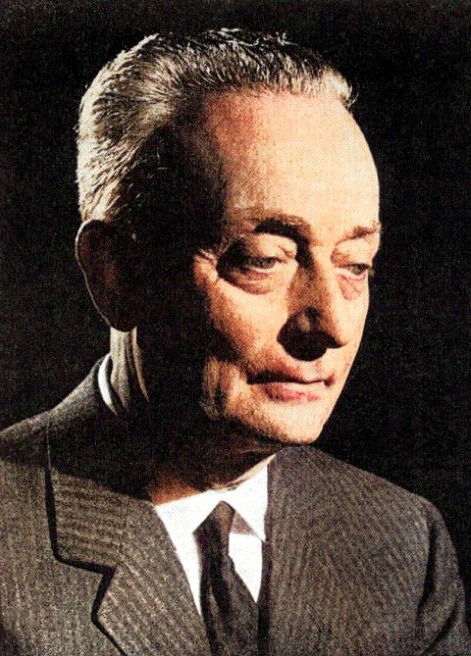
| 1 Quotes | |
| Occup. | Philosopher |
| From | Italy |
| Born | July 15, 1901 Salerno, Kingdom of Italy |
| Died | September 9, 1990 Milan, Italy |
| Aged | 89 years |
| Cite | |
Citation Formats
APA Style (7th ed.)
Nicola abbagnano biography, facts and quotes. (2026, February 11). FixQuotes. https://fixquotes.com/authors/nicola-abbagnano/
Chicago Style
"Nicola Abbagnano biography, facts and quotes." FixQuotes. February 11, 2026. https://fixquotes.com/authors/nicola-abbagnano/.
MLA Style (9th ed.)
"Nicola Abbagnano biography, facts and quotes." FixQuotes, 11 Feb. 2026, https://fixquotes.com/authors/nicola-abbagnano/. Accessed 27 Mar. 2026.
Early Life and Background
Nicola Abbagnano was born on July 15, 1901 in Salerno, in Italy's still-young liberal kingdom, where the promises of national unification were shadowed by regional inequality and the anxieties of mass politics. He grew up during a period that would soon be defined by World War I, postwar upheaval, and the rise of Fascism - an environment that trained ambitious Italian intellectuals to think in terms of institutions, collective myths, and the fragile conditions under which a free public life can survive.The temper of his early years mattered to his inner life: he became suspicious of systems that claimed historical necessity and of philosophies that dissolved the individual into destiny. That suspicion did not harden into cynicism; instead it became a disciplined attentiveness to limits - to what can be justified, what can be hoped for, and what must remain open. His later work repeatedly returned to the idea that philosophical seriousness begins not with grand revelation but with the concrete vulnerability of human choice.
Education and Formative Influences
Abbagnano studied philosophy in Naples and trained in an academic culture still strongly marked by Benedetto Croce and Giovanni Gentile, whose idealism had dominated Italian thought. Yet the broader European scene was shifting: scientific method, neo-Kantian rigor, phenomenology, and the first wave of existentialism provided alternative vocabularies for confronting modernity. Abbagnano absorbed the classical tradition and the Italian debate over idealism, but he increasingly sought a philosophy that could honor human freedom without pretending to omniscient foundations.Career, Major Works, and Turning Points
He built his career in Italian universities, teaching most prominently at the University of Turin, where he helped shape postwar philosophical culture in a city identified with industry, labor politics, and a renewed civil society. His major works include Introduzione all'esistenzialismo (1942), in which he mapped European existentialism while resisting its more tragic or irrationalist temptations, and his influential Dizionario di filosofia (first issued in the mid-20th century), a tool of conceptual clarification that reflected his conviction that public reason requires shared definitions. In the post-1945 climate, he argued for a "positive" existentialism - an existential analysis oriented toward possibility, method, and responsibility rather than toward metaphysical despair - and he became a widely read interpreter of the philosophical stakes of democracy, science, and cultural pluralism.Philosophy, Style, and Themes
Abbagnano's signature move was to treat existence as a field of possibilities structured by risk, limitation, and decision. Against both idealist absolutism and purely emotive irrationalism, he framed philosophy as a disciplined inquiry into what can be justified in finite human conditions. His prose favored clarity and architecture over rhetorical intoxication, a style that matched his ethical preference for modest, checkable claims. In his "positive existentialism", the self is not a heroic exception but an agent embedded in history, exposed to error, and nevertheless capable of orientation through method, dialogue, and revisable commitments.Psychologically, Abbagnano's thought is best read as a temperament of intellectual sobriety: he mistrusted any stance that claimed immunity from critique. “Reason itself is fallible, and this fallibility must find a place in our logic”. That sentence functions as autobiography in miniature - a confession that the mind's dignity lies not in certainty but in accountable procedures for correcting itself. For Abbagnano, fallibility is not a defeat; it is the condition of freedom and of a humane politics, because it forces the thinker to leave room for the other, for evidence, and for the future. His existentialism thus leaned toward civic virtues: tolerance, institutional restraint, and the patient work of clarification - a philosophy written for a society that had seen the costs of metaphysical certainty fused to power.
Legacy and Influence
Abbagnano died on September 9, 1990, having helped redirect Italian philosophy from the hegemony of idealism toward a more plural, historically aware, and method-conscious landscape in which existential questions could be treated without sacrificing rational standards. Through his teaching in Turin, his synthesis of existentialism, and the durable utility of his Dizionario di filosofia, he influenced students, journalists, and scholars who needed concepts that travel across ideologies. His enduring relevance lies in the way he made fallibility intellectually respectable and politically necessary: a model of philosophy as clear speech under pressure, committed to possibility rather than to prophecy.Our collection contains 1 quotes written by Nicola, under the main topics: Reason & Logic.
Nicola Abbagnano Famous Works
- 1961 Dictionary of Philosophy (Book)
- 1946 History of Philosophy (Book)
- 1942 The Problem of Art (Book)
Source / external links