
Osama bin Laden Biography Quotes 12 Report mistakes
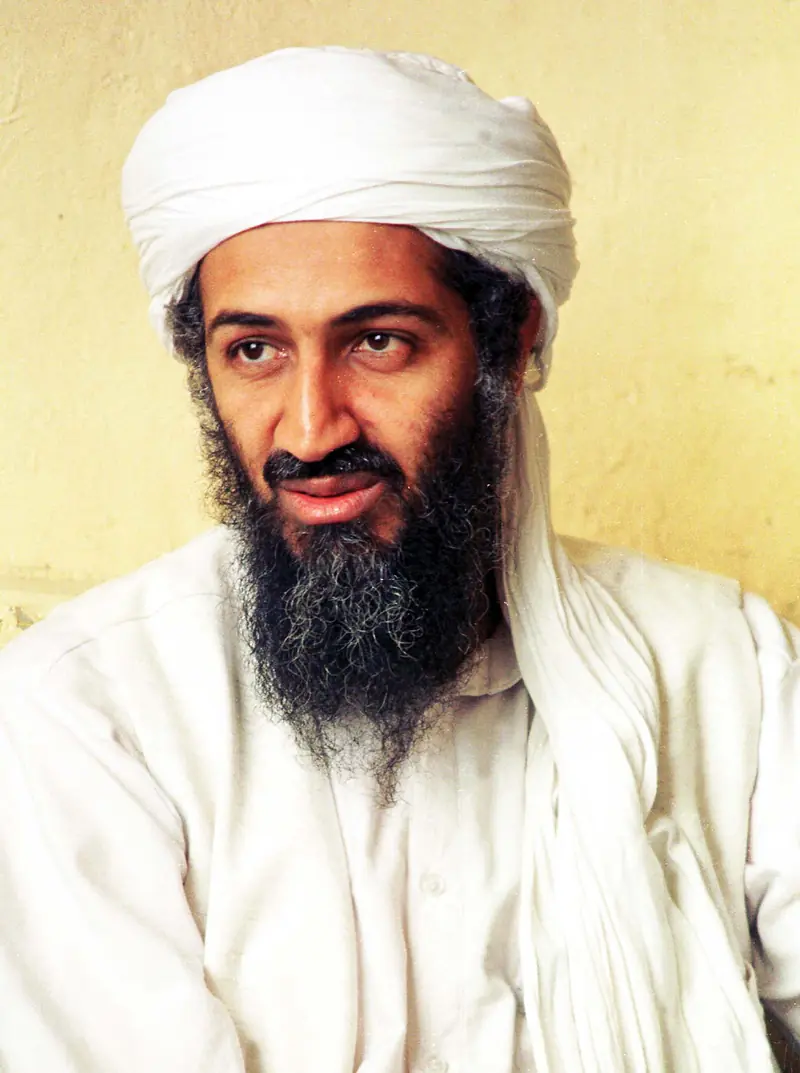
| 12 Quotes | |
| Occup. | Criminal |
| From | Saudi Arabia |
| Born | March 10, 1957 |
| Died | May 2, 2011 |
| Aged | 54 years |
Osama bin Mohammed bin Awad bin Laden was born in Riyadh, Saudi Arabia, in 1957 to a prominent and wealthy family. His father, Mohammed bin Laden, was a Yemeni-born construction magnate who founded the Saudi Binladin Group and maintained close ties with the Saudi royal court. His mother, Alia Ghanem, had Syrian roots and divorced Mohammed when Osama was young. Raised primarily in Jeddah, he grew up among many half-siblings in a privileged but conservative milieu. He attended elite schools and later studied at King Abdulaziz University, where he was exposed to Islamist thinkers. Accounts from contemporaries describe his outlook as increasingly shaped by religious conservatism, and he encountered teachers and activists influenced by the ideas of Sayyid Qutb. During his student years he became acquainted with figures who would loom large in his future, including the Palestinian scholar Abdullah Azzam.
From the Afghan Jihad to Al-Qaeda
The Soviet invasion of Afghanistan in 1979 galvanized a generation of Islamist volunteers. Bin Laden traveled to Pakistan and Afghanistan in the early 1980s, channeling personal wealth and fundraising from Gulf donors to support mujahideen fighters. With Abdullah Azzam and others he helped establish Maktab al-Khidamat (the Services Bureau), which facilitated travel, logistics, and financial support for foreign volunteers. Though not initially a battlefield commander, he contributed to building infrastructure such as guesthouses and rudimentary training facilities.
By the late 1980s, as the anti-Soviet war drew to a close, bin Laden and a small circle of associates began to formalize a separate organization. That network, known as al-Qaeda, coalesced around 1988, 1989. Early figures included Ayman al-Zawahiri, an Egyptian physician and veteran of Islamist activism; Abu Ubaidah al-Banshiri; and Mohammed Atef (Abu Hafs al-Masri). The group sought to preserve the cadre of battle-hardened veterans and to develop a structure for training and operations beyond Afghanistan.
Sudan Years and Expulsion
After returning briefly to Saudi Arabia following the Soviet withdrawal, bin Laden became increasingly critical of the Saudi government, particularly over the presence of U.S. troops in the kingdom after Iraq's 1990 invasion of Kuwait. He was stripped of Saudi citizenship in 1994. In the early 1990s he relocated to Sudan, where Islamist leader Hassan al-Turabi presided over a regime that hosted various militant figures. In Sudan, bin Laden invested in businesses and agricultural projects while maintaining training and logistical networks. During this period, U.S. officials began to publicly identify him as a sponsor of international terrorism. Mounting pressure from the United States, Egypt, Saudi Arabia, and others led Sudan to expel him in 1996.
Return to Afghanistan and Alliance with the Taliban
Bin Laden resettled in eastern Afghanistan in 1996 and later moved to areas controlled by the Taliban, who were consolidating power under Mullah Mohammad Omar. He pledged allegiance to Omar and found sanctuary that allowed al-Qaeda to expand training camps and to host militants from across the region. While managing the organization's leadership councils and shura, he cultivated ties with like-minded figures, including Egyptian Islamic Jihad veterans around Ayman al-Zawahiri. Relationships with Afghan and Pakistani intermediaries and tribal networks facilitated the group's security and communications.
Declarations, Attacks, and Global Notoriety
In 1996 bin Laden issued a lengthy statement often called the Declaration of War Against the Americans Occupying the Land of the Two Holy Places, followed in 1998 by a fatwa in the name of the World Islamic Front for Jihad Against Jews and Crusaders, co-signed by al-Zawahiri and others. These documents framed the United States and its allies as primary targets and urged attacks against military and civilian interests.
In August 1998, nearly simultaneous truck bombings struck the U.S. embassies in Nairobi, Kenya, and Dar es Salaam, Tanzania, killing more than 200 people and injuring thousands. U.S. authorities indicted bin Laden and placed him on the FBI's Most Wanted list. In October 2000, suicide attackers bombed the USS Cole in Aden, Yemen, killing 17 American sailors; investigators connected the operation to al-Qaeda. Planning for the September 11, 2001 attacks was overseen at a strategic level by bin Laden and carried out by an operational cell that included Khalid Sheikh Mohammed and Ramzi bin al-Shibh, with hijackers recruited from al-Qaeda's circles in Afghanistan. The attacks killed nearly 3, 000 people and transformed global security agendas.
U.S. Response and the War in Afghanistan
The United States launched cruise missile strikes on al-Qaeda camps in Afghanistan and a suspected facility in Sudan after the 1998 embassy bombings. After September 11, 2001, the United States and partners invaded Afghanistan to dismantle al-Qaeda and topple the Taliban regime that sheltered it. Bin Laden was believed to have been in the Tora Bora region in late 2001, where he evaded capture amid intense fighting. Many al-Qaeda members were killed, captured, or dispersed to Pakistan and elsewhere, while the organization adapted into a more decentralized network guided by senior leaders in hiding.
Years in Hiding and Internal Networks
From 2002 onward, bin Laden communicated sparingly through couriers and periodic audio and video recordings. His closest adviser, Ayman al-Zawahiri, increasingly served as the group's public voice. The inner circle relied on trusted operatives, including couriers such as Abu Ahmed al-Kuwaiti, to maintain secrecy. Affiliates pledged allegiance to al-Qaeda, including groups in Iraq, the Arabian Peninsula, North Africa, and South Asia. Figures like Abu Musab al-Zarqawi in Iraq developed their own trajectories, sometimes straining ties with al-Qaeda leadership due to differing tactics and target selection.
Bin Laden's family life remained largely concealed. He had multiple wives, including Najwa Ghanem and Amal al-Sadah, and numerous children. Some family members left Afghanistan around 2001, while others reportedly stayed with him during periods of hiding. His isolation grew as international efforts to track him intensified, involving U.S. and allied intelligence agencies and Pakistani security services. Intercepts, detainee interrogations, and analysis of communications patterns narrowed the search, but the leadership preserved compartmentalization to reduce risk.
Death in Abbottabad
On May 2, 2011 (May 1 in the United States), U.S. special operations forces conducted a covert raid on a compound in Abbottabad, Pakistan. Bin Laden was killed during the operation. U.S. officials reported that his identity was confirmed using multiple methods, including DNA analysis. According to U.S. accounts, his body was buried at sea. The raid ended one of the most extensive manhunts of the early 21st century and prompted immediate questions about how he had evaded detection for years in a garrison town near Pakistan's military institutions. Subsequent releases of documents from the Abbottabad compound shed light on aspects of al-Qaeda's internal correspondence, strategic debates, and attempts to manage affiliates.
Ideology, Image, and Legacy
Bin Laden's ideology drew on Salafi-jihadist concepts that prioritized warfare against what he termed the far enemy as a means to destabilize local regimes he opposed. He cultivated an image of piety and austerity, often appearing in fatigues and speaking in measured language that aimed to frame violence as defensive. Interviews with journalists such as Peter Arnett and John Miller in the late 1990s projected his message to global audiences. At the same time, governments, international organizations, and many Muslim scholars condemned his calls for attacks on civilians and designated al-Qaeda a terrorist organization.
After his death, Ayman al-Zawahiri announced he would lead al-Qaeda. The movement he helped build continued through regional branches such as al-Qaeda in the Arabian Peninsula, al-Qaeda in the Islamic Maghreb, and al-Shabaab's affiliation in Somalia, each led by their own commanders and shaped by local conflicts. Rival jihadist factions also emerged, reflecting ideological and strategic splits. Bin Laden's life intersected with a cast of allies and adversaries: Abdullah Azzam as an early mentor; Mohammed Atef as a military chief; Mullah Mohammad Omar as a protector; Khalid Sheikh Mohammed as an architect of a major plot; and a wide array of security officials and investigators who pursued him for years. His trajectory from privileged upbringing to clandestine warfare left a profound, destructive imprint on global politics and security, defining an era of counterterrorism campaigns, wars, and debates about the balance between civil liberties and national defense.
Our collection contains 12 quotes who is written by Osama, under the main topics: Justice - Freedom - Faith - Peace - War.
Other people realated to Osama: Barack Obama (President), Kathryn Bigelow (Director)
Osama bin Laden Famous Works
Source / external links