
Patton Oswalt Biography Quotes 15 Report mistakes
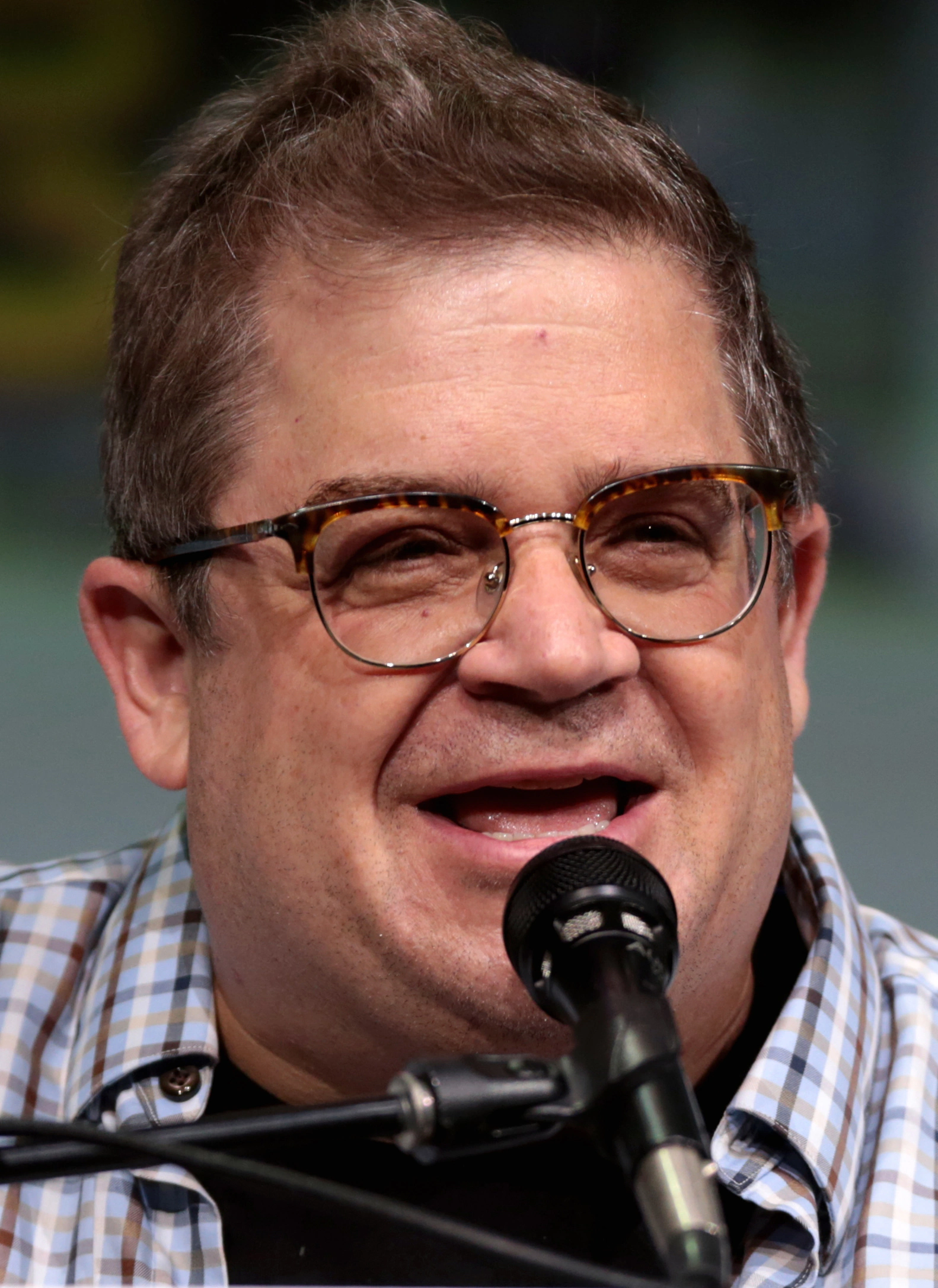
Attr: Gage Skidmore, CC BY-SA 3.0
| 15 Quotes | |
| Occup. | Comedian |
| From | USA |
| Born | January 27, 1969 |
| Age | 57 years |
| Cite | |
Citation Formats
APA Style (7th ed.)
Patton oswalt biography, facts and quotes. (2026, February 11). FixQuotes. https://fixquotes.com/authors/patton-oswalt/
Chicago Style
"Patton Oswalt biography, facts and quotes." FixQuotes. February 11, 2026. https://fixquotes.com/authors/patton-oswalt/.
MLA Style (9th ed.)
"Patton Oswalt biography, facts and quotes." FixQuotes, 11 Feb. 2026, https://fixquotes.com/authors/patton-oswalt/. Accessed 12 Feb. 2026.
Early Life and Background
Patton Peter Oswalt was born on January 27, 1969, in Portsmouth, Virginia, into a transient military household shaped by the routines and silences of Cold War America. His father, Larry J. Oswalt, was a U.S. Marine Corps officer; the family moved frequently, and the young Oswalt learned early how to read a room quickly, entertain himself, and turn isolation into observation - habits that would later become the engine of his comedy.
He grew up partly in Virginia and later in Florida, absorbing the mismatched textures of suburban life: strip malls, cable television, genre movies, and the small humiliations of adolescence. A sharp, bookish kid in an environment that prized toughness, he built an inner refuge out of pop culture and imagination, developing the comic stance that would define him - equal parts enthusiasm and defense, the nerd as narrator who refuses to apologize for caring too much.
Education and Formative Influences
Oswalt attended William & Mary in Williamsburg, Virginia, graduating in 1991 with an English degree, a training that sharpened his ear for argument, rhythm, and character. In the late 1980s and early 1990s he was also absorbing the comedy shift from broad club caricature to confessional, idea-driven stand-up - the era of alternative rooms, indie sensibilities, and cultural criticism - and he began performing during and after college, learning to translate his obsessions into premises that could survive a skeptical crowd.
Career, Major Works, and Turning Points
After moving into stand-up full-time, Oswalt worked the club circuit through the 1990s and became a defining voice of alternative comedy, eventually breaking wider through television and film: as Spence Olchin on The King of Queens (1998-2007), through stand-up specials and albums, and as the voice of Remy in Pixar's Ratatouille (2007). His career broadened into character acting (from Magnolia to Young Adult), writing (including the memoir Silver Screen Fiend), and a steady public presence as a critic of politics and culture; a profound personal turning point came with the sudden death of his first wife, true-crime writer Michelle McNamara, in 2016, after which he became both a more openly grief-marked performer and a guardian of her work, helping bring her book Ill Be Gone in the Dark to publication and later adaptation.
Philosophy, Style, and Themes
Oswalt's comedy is built on maximal specificity - the over-described memory, the nerd taxonomy, the moral tangent that turns into a punchline. He treats stand-up less as a string of jokes than as a lived essay, where the audience follows his mind as it toggles between delight and dread. That approach comes with an artisan's humility about craft and failure: "90% of every art form is garbage - dance and stand-up, painting and music. Focus on the 10% that's good, suck it up, and drive on". The sentence reads like a private mantra, revealing a worker's psychology: he is not chasing purity, he is chasing repetition - show up, discard the junk, keep the workable shards, and build a set from what survives.
The persona that emerges is simultaneously earnest and combative: a fan who has learned that fandom can be a shield, and a citizen who refuses to treat power as a joke just because he is a comedian. His political material aims at diagnosis rather than dunking, describing systems as ethical choices, not accidents, as in: "George Bush is not stupid. He's evil. OK? There's a huge difference between stupid and evil". Even his absurdism tends to underline how cruelty hides inside casual mythmaking; a line like "If you hit a midget on the head with a stick, he turns into 40 gold coins". is funny partly because it exposes the childish violence embedded in folklore and entertainment. Over time, grief and middle age deepened these instincts, making his work more openly about vulnerability, responsibility, and the stubborn need to keep making meaning out of chaos.
Legacy and Influence
Oswalt endures as a bridge figure: a comedian who helped normalize "smart" stand-up as mainstream entertainment, an actor who brought comic intelligence to supporting roles, and a cultural commentator who treats taste, politics, and personal pain as part of one continuous life. His influence can be heard in later generations of hyperliterate, pop-culture-fluent comics who build long, argumentative bits, and it can be felt in how openly contemporary stand-up now discusses mental health, fandom, and mourning without surrendering the laugh; he modeled a way to be both a serious craftsman and an unguarded human being onstage.
Our collection contains 15 quotes written by Patton, under the main topics: Witty One-Liners - Funny - Art - Dark Humor - Sarcastic.
Other people related to Patton: Joel Hodgson (Entertainer)
Source / external links