
Paul Lynde Biography Quotes 31 Report mistakes
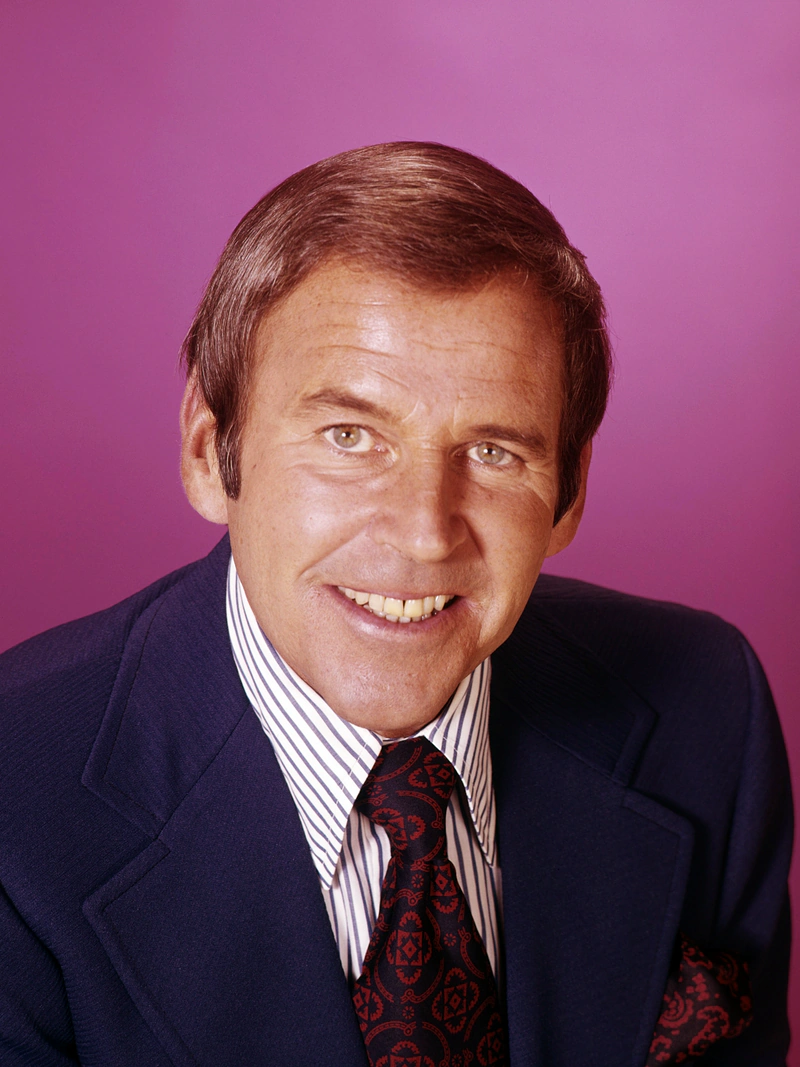
Attr: Paul Lynde - IMDb
| 31 Quotes | |
| Born as | Paul Edward Lynde |
| Occup. | Comedian |
| From | USA |
| Born | June 13, 1926 Mount Vernon, Ohio, U.S. |
| Died | January 10, 1982 Beverly Hills, California, U.S. |
| Cause | heart attack |
| Aged | 55 years |
| Cite | |
Citation Formats
APA Style (7th ed.)
Paul lynde biography, facts and quotes. (2026, February 11). FixQuotes. https://fixquotes.com/authors/paul-lynde/
Chicago Style
"Paul Lynde biography, facts and quotes." FixQuotes. February 11, 2026. https://fixquotes.com/authors/paul-lynde/.
MLA Style (9th ed.)
"Paul Lynde biography, facts and quotes." FixQuotes, 11 Feb. 2026, https://fixquotes.com/authors/paul-lynde/. Accessed 12 Feb. 2026.
Early Life and Background
Paul Edward Lynde was born June 13, 1926, in Mount Vernon, Ohio, a small Midwestern town whose churches, school pageants, and close-set social expectations shaped his earliest sense of performance as both refuge and disguise. He grew up during the Depression and came of age in the shadow of World War II, when public life prized conformity and private difference could be costly. That tension - wanting to be seen, needing to be careful - became a lifelong motor in his comedy, where self-exposure arrived wrapped in precision timing and a weaponized eyebrow.Lynde was one of several children in a conventional, respectable household, and he learned early how to read a room: what could be said aloud, what had to be coded, and how laughter could change the weather. Mid-century America offered limited templates for a man whose manner and instincts ran theatrical, and he responded by sharpening an onstage persona that could be instantly legible without ever being fully confessing. The result was a performer who seemed to live in quotation marks, turning social pressure into a distinctive, high-wire style.
Education and Formative Influences
After local schooling in Ohio, Lynde pursued higher education in the Midwest before moving toward the larger stages that could accommodate his ambition. Like many postwar strivers, he migrated to New York seeking the machinery of show business - auditions, callbacks, and the apprenticeship circuit of summer stock and Broadway-adjacent work - and he studied the craft the hard way: by being cast, being cut, and learning how to hold an audience with voice alone. His formative influences were less a single mentor than an environment - the era of network television, nightclub comics, and Broadway character actors - where timing and type could make a career, and where queerness often survived by being translated into "camp" and "sass" that mainstream America could consume.Career, Major Works, and Turning Points
Lynde broke through as a scene-stealer on Broadway in "Bye Bye Birdie" (1960), originating the role of Harry MacAfee and later appearing in the 1963 film adaptation, which fixed his image as the acerbic, tightly wound American dad. Television made him ubiquitous: he played Uncle Arthur on the ABC sitcom "Bewitched" (1965-1971), and he became a defining presence on game shows, especially "Hollywood Squares", where his center-square wisecracks turned him into a national shorthand for barbed wit. His fame peaked in the 1970s with specials and "The Paul Lynde Show" (1972), a short-lived attempt to convert a magnetic supporting player into a conventional sitcom lead; the mismatch between his singular, insinuating persona and the era's family-sitcom template became a turning point. Off-camera, he contended with the pressures of celebrity, heavy drinking, and a private life constrained by the period's taboos, until his sudden death in Beverly Hills on January 10, 1982, at 55.Philosophy, Style, and Themes
Lynde's comedy was built on friction: the formal diction of a scold collided with the delighted cruelty of a gossip, and underneath both sat a performer using nerves as fuel. "If I ever completely lost my nervousness I would be frightened half to death". That confession reads less like a punch line than a method - anxiety transmuted into timing, tension released in a snap, the laugh arriving as proof that danger has been successfully managed for another beat. Even his voice carried the psychology: a clipped, nasal precision that suggested control while advertising how hard control had to be maintained.He also treated work as both salvation and trap, the place where the self could be edited into a persona the world would reward. "If I'm not working, I don't know what to do". The line explains his relentless visibility in the 1960s and 1970s - panels, guest spots, bit parts that he dominated - and hints at the cost of downtime, when the protective architecture of rehearsal and audience approval disappeared. And beneath the show-biz hustle sat a starkly American hunger for arrival: "I was obsessed with being rich and famous". In Lynde's case, that obsession sharpened his style into something economically ruthless: jokes that landed quickly, characters defined in seconds, innuendo delivered with just enough ambiguity to pass network standards while still signaling to those who could hear the extra register.
Legacy and Influence
Lynde endures as a prototype of the modern television wit - the guest-star who steals the scene, the panelist who turns a format into a stage, the comic whose persona is simultaneously armor and autobiography. Later generations of performers drew from his blend of camp inflection, caustic speed, and coded self-revelation, while historians of American entertainment see in him a case study of how mid-century media profited from queer style while policing queer truth. His work remains a vivid record of an era: the laugh lines and the fault lines, preserved in reruns and clips where a single raised eyebrow still reads like defiance.Our collection contains 31 quotes written by Paul, under the main topics: Witty One-Liners - Funny - Sarcastic - Deep - Anxiety.