
Peter Bart Biography Quotes 20 Report mistakes
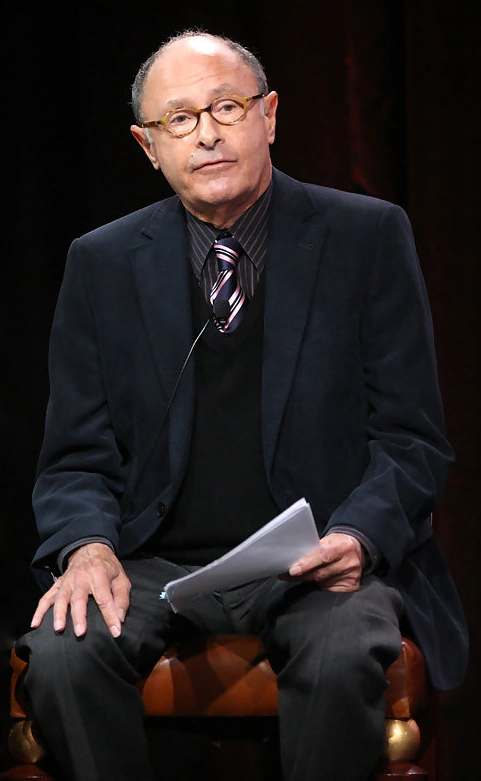
| 20 Quotes | |
| Born as | Peter Benton Bart |
| Occup. | Editor |
| From | USA |
| Spouses | Dorothy Callmann (1961-1981) Leslie Cox (1982-2005) Phyllis Fredette (2008-) |
| Born | July 24, 1932 New York City, New York, USA |
| Age | 93 years |
| Cite | |
Citation Formats
APA Style (7th ed.)
Peter bart biography, facts and quotes. (2026, February 11). FixQuotes. https://fixquotes.com/authors/peter-bart/
Chicago Style
"Peter Bart biography, facts and quotes." FixQuotes. February 11, 2026. https://fixquotes.com/authors/peter-bart/.
MLA Style (9th ed.)
"Peter Bart biography, facts and quotes." FixQuotes, 11 Feb. 2026, https://fixquotes.com/authors/peter-bart/. Accessed 31 Mar. 2026.
Early Life and Background
Peter Benton Bart was born on July 24, 1932, in the United States, into a century in which movies functioned as both mass entertainment and a shadow government of glamour, morals, and aspiration. He came of age with studio-era mythology still intact - the idea that a few moguls, a few stars, and a handful of trade papers could choreograph the public imagination. That early proximity to Hollywood as a system, not merely as an art form, would shape him less as a romantic fan than as an interpreter of power: who makes decisions, who gets protected, and who absorbs the costs when fantasies fail.His temperament, as it later appeared on the page, suggested an observer trained to listen for subtext - the business logic beneath the creative alibis. Bart would build a career not by making films but by tracking the forces that made them possible or impossible. The private engine of his work was curiosity sharpened into skepticism: an insistence that reputations, budgets, and box office numbers tell a truer story when read together, and that Hollywoods self-narration is always, in part, a sales pitch.
Education and Formative Influences
Bart entered professional life in an era when the postwar studio system had fractured, television had siphoned audiences, and corporate ownership was beginning to rewrite the rules of risk. Journalism and editing offered him a front-row seat to the new Hollywood - one where talent still mattered, but control was increasingly dispersed among lawyers, financiers, and executives who spoke in forecasts. Those conditions became his classroom: instead of a single auteurist lens, he developed a trade editors habit of mind, weighing artistry against distribution realities, marketing muscle, and the psychology of executives who must justify decisions to committees.Career, Major Works, and Turning Points
Bart became best known as an editor and chronicler of the film business, serving as editor-in-chief of Variety and later as editor of Variety.com, roles that placed him at the nexus of news, deal-making, and industry mythmaking. Under his stewardship, coverage of Hollywood was treated as a serious beat with its own geopolitics - labor, conglomerates, international markets, and celebrity as an economic instrument. In addition to trade leadership, he wrote widely on Hollywood history and the behavior of stars and studios, helping codify a modern style of film-industry reportage: narrative in tone but forensic in its attention to incentives, leverage, and the quiet mechanics of green-lighting.Philosophy, Style, and Themes
Bart wrote like an editor who never forgot the cost of a sentence - plain, controlled, and angled toward the point where creative rhetoric meets balance-sheet reality. He viewed Hollywood less as a dream factory than as a negotiation among ego, capital, and audience appetite, with the negotiation increasingly shaped by scale. When he observed that “The biggest danger of Hollywood becoming a purely corporate town resides in the creative process”. , he was diagnosing a psychological shift as much as an economic one: the tendency of institutions to protect quarterly certainty by sanding down the oddness that makes movies memorable. His skepticism was not anti-art; it was a defense of risk as the condition for originality.His themes returned again and again to decision-making under uncertainty - who holds authority, how consensus dilutes vision, and why surprise is the only durable advantage in a crowded marketplace. “That's how you get surprises, because what movies are all about is surprises”. In Bart's framing, surprise is not a slogan but a critique of process: as committees multiply, taste becomes averaged, and averaged taste produces expensive familiarity. When he notes that “The green-light decision process today consists of maybe of 30 or 40 people”. , the implication is intimate and psychological: responsibility becomes shared enough to feel weightless, while fear becomes concentrated enough to steer choices. His writing, at its best, reads as a running argument that the industry survives by manufacturing novelty but often governs itself to avoid it.
Legacy and Influence
Bart's enduring influence lies in how he helped readers - inside the industry and far beyond it - understand Hollywood as a living institution with a memory, a vocabulary, and recurring pathologies. He modeled a form of film journalism that neither worshiped stars nor dismissed them, instead placing celebrity, corporate strategy, and audience behavior on the same analytic plane. In doing so, he left a map of modern Hollywoods inner workings: the pressures that shape what gets made, the rationalizations that follow, and the fragile, necessary space where a risky idea can still become a mainstream event.Our collection contains 20 quotes written by Peter, under the main topics: Equality - Movie - Work - Business - Marketing.
Peter Bart Famous Works
- 2011 Infamous Players: A Tale of Movies, the Mob, and Sex (Book)
- 2002 Shoot Out: Surviving the Fame and (Mis)fortune of Hollywood (Book)
- 1999 The Gross: The Hits, the Flops - The Summer That Ate Hollywood (Book)
- 1990 Fade Out: The Calamitous Final Days of MGM (Book)
Source / external links