
Potter Stewart Biography Quotes 12 Report mistakes
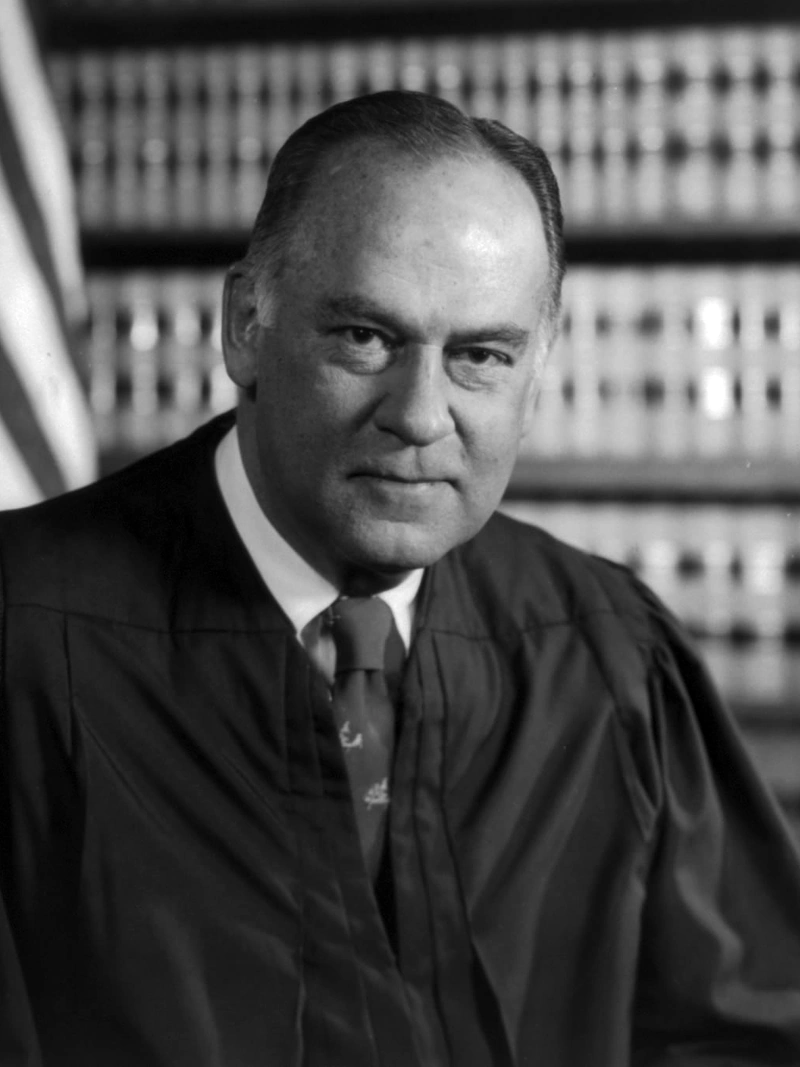
| 12 Quotes | |
| Occup. | Judge |
| From | USA |
| Born | January 23, 1915 Cincinnati, Ohio, USA |
| Died | December 7, 1985 New Hampshire, USA |
| Cause | Stroke |
| Aged | 70 years |
| Cite | |
Citation Formats
APA Style (7th ed.)
Potter stewart biography, facts and quotes. (2026, February 11). FixQuotes. https://fixquotes.com/authors/potter-stewart/
Chicago Style
"Potter Stewart biography, facts and quotes." FixQuotes. February 11, 2026. https://fixquotes.com/authors/potter-stewart/.
MLA Style (9th ed.)
"Potter Stewart biography, facts and quotes." FixQuotes, 11 Feb. 2026, https://fixquotes.com/authors/potter-stewart/. Accessed 5 Mar. 2026.
Early Life and Background
Potter Stewart was born January 23, 1915, in Cincinnati, Ohio, into a Republican household where law, politics, and civic service were spoken as practical duties rather than abstractions. His father, James Garfield Stewart, was a prominent Cincinnati lawyer and later a judge, and the family moved comfortably among the citys professional elite. That environment gave Stewart an early sense that public authority should look restrained and procedural, not theatrical - a disposition that would later mark his judicial temperament.The shadow over his youth was not private scandal but the public mood of his time: the aftershocks of World War I, the Great Depression, and then the gathering storm overseas. Stewart came of age watching institutions get tested - banks fail, governments improvise, demagogues rise - and he absorbed an instinctive suspicion of sweeping certainty. The result was a personality that prized steadiness, fact-bound judgment, and a quiet belief that legitimacy in a constitutional system is earned case by case.
Education and Formative Influences
Stewart attended the Hotchkiss School in Connecticut and then Yale, where he edited the Yale Law Journal and graduated from Yale Law School in 1941. Yale in the late 1930s and early 1940s trained lawyers to think in doctrines but also in consequences, and Stewart took from it a lifelong preference for narrow holdings and careful distinctions. World War II then supplied the hardest formative influence: he served in the U.S. Navy (including on the staffs of senior commanders) and reached the rank of lieutenant commander, learning how power operates in practice, how errors cascade, and how rules are both necessary and never fully sufficient.Career, Major Works, and Turning Points
After the war Stewart returned to Cincinnati law practice and entered politics, serving on the Cincinnati City Council and as mayor in the late 1940s, a period when cities wrestled with postwar growth, labor conflict, and machine politics. In 1954 President Dwight D. Eisenhower appointed him to the U.S. Court of Appeals for the Sixth Circuit; four years later, in 1958, Eisenhower elevated him to the U.S. Supreme Court, where Stewart served from 1958 to 1981. He became a defining voice of the Courts center during the Warren and Burger eras, often decisive in fractured cases on criminal procedure, voting, federalism, and speech. His opinions ranged from the widely quoted concurrence in Jacobellis v. Ohio (1964) on obscenity to major Fourth Amendment work in Katz v. United States (1967) and Chimel v. California (1969), reflecting a judge trying to preserve constitutional principle while resisting both moral panic and doctrinal overreach. He retired in 1981 and died December 7, 1985.Philosophy, Style, and Themes
Stewarts inner life as a judge was built around a temperament: cautious, empirically minded, allergic to slogans, and committed to the courts credibility. He distrusted the idea that justice could be reduced to speed or fervor, and his reasoning repeatedly treated procedure as the moral architecture of a free society. “Swift justice demands more than just swiftness”. That sentence captures his psychological center - impatience with shortcuts, and an awareness that error, once blessed by authority, can become permanent.He also carried a personal libertarian streak that was less ideological than protective: a sense that the individual needs secure spaces against the state and the mob. In Fourth Amendment cases he insisted that privacy was not a sentimental value but a constitutional boundary line: “The 4th Amendment and the personal rights it secures have a long history. At the very core stands the right of a man to retreat into his own home and there be free from unreasonable governmental intrusion”. Yet Stewart was not a utopian. His most famous line - “I shall not today attempt further to define the kinds of material but I know it when I see it”. - reveals both humility and realism: he admitted that legal categories sometimes lag behind human experience, and he preferred honest judgment to false precision. Across issues, his method was incremental and conscience-aware, seeking fairness without pretending to final philosophical closure.
Legacy and Influence
Stewarts legacy is the model of the centrist, institution-minded Justice whose influence is measured less by grand manifestos than by the shape of workable doctrine and the credibility of outcomes. He helped modernize Fourth Amendment law for an age of wiretaps and police professionalism, anchored limits on searches incident to arrest, and provided swing votes that forced ideological camps to write narrower, more defensible opinions. His aphorisms entered the civic bloodstream, but the deeper inheritance is stylistic and ethical: a disciplined preference for fact, restraint, and clear language that treats judging as an act of responsibility rather than self-expression. In an era when the Court was a theater of cultural conflict, Stewart proved that moderation could be principled - and that the durability of constitutional law often depends on judges who are willing to decide less than they could, but more carefully than they might.Our collection contains 12 quotes written by Potter, under the main topics: Ethics & Morality - Justice - Freedom - Human Rights.
Other people related to Potter: Floyd Abrams (Lawyer), William J. Brennan, Jr. (Judge), Arthur J. Goldberg (Judge), Louis Malle (Director), Tom C. Clark (Politician)