
Prince Harry Biography Quotes 20 Report mistakes
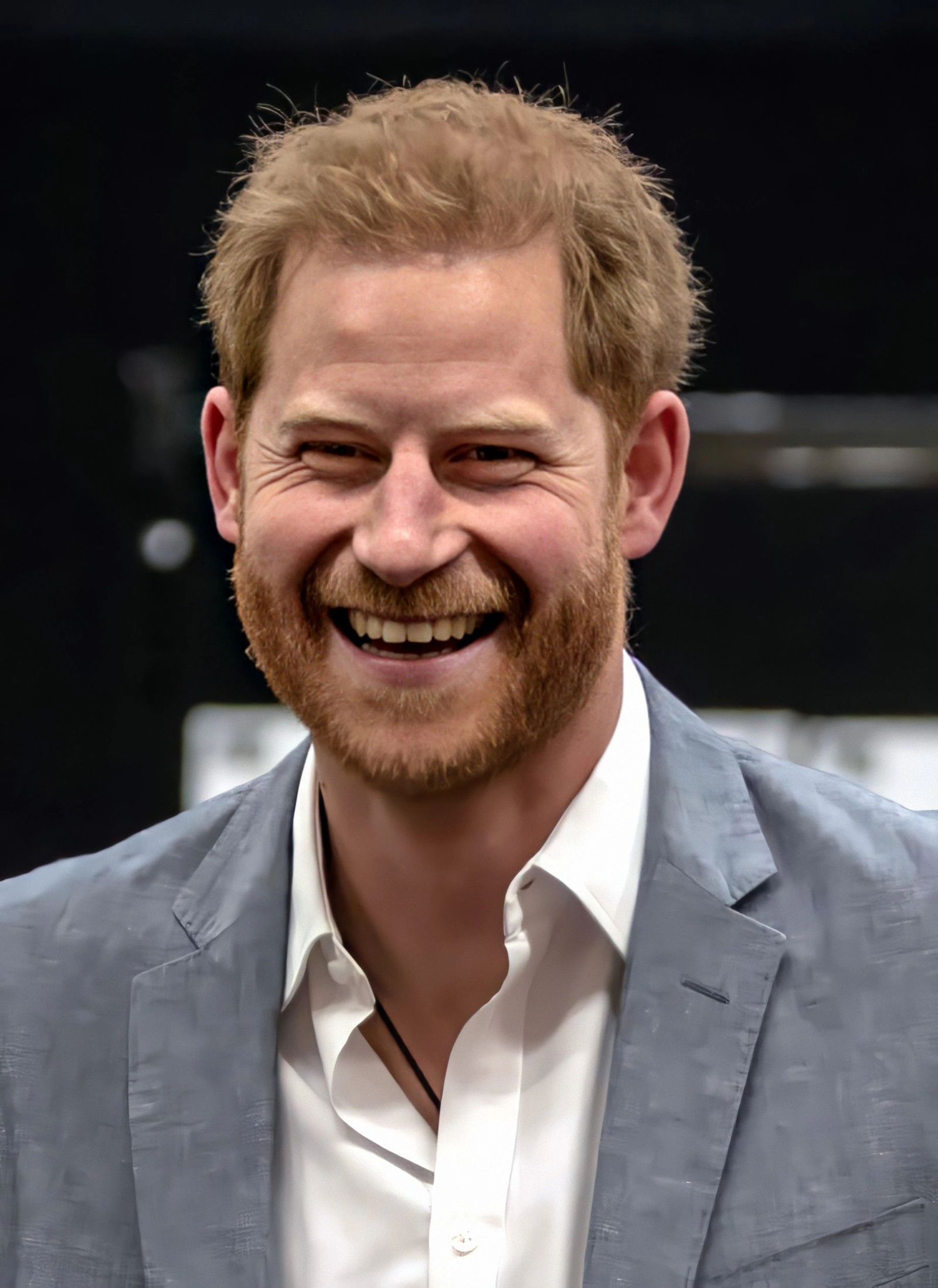
Attr: Defensie, CC0
| 20 Quotes | |
| Born as | Henry Charles Albert David Mountbatten-Windsor |
| Known as | Duke of Sussex |
| Occup. | Royalty |
| From | United Kingdom |
| Born | September 15, 1984 St Mary's Hospital, London, United Kingdom |
| Age | 41 years |
| Cite | |
Citation Formats
APA Style (7th ed.)
Prince harry biography, facts and quotes. (2026, March 22). FixQuotes. https://fixquotes.com/authors/prince-harry/
Chicago Style
"Prince Harry biography, facts and quotes." FixQuotes. March 22, 2026. https://fixquotes.com/authors/prince-harry/.
MLA Style (9th ed.)
"Prince Harry biography, facts and quotes." FixQuotes, 22 Mar. 2026, https://fixquotes.com/authors/prince-harry/. Accessed 24 Mar. 2026.
Early Life and Background
Prince Harry was born Henry Charles Albert David on 15 September 1984 at St Mary's Hospital, Paddington, the second son of Charles, Prince of Wales, and Diana, Princess of Wales. He entered a monarchy already recasting itself for television, tabloid culture, and the aftershocks of postwar social change. As a younger son - exuberant, less burdened than his elder brother William by the certainty of kingship - he was from infancy both insider and spare, protected by rank yet exposed to a national appetite for royal drama. His childhood unfolded across Kensington Palace, Highgrove, Balmoral, and the ritual geography of British monarchy, but also in the emotionally volatile world created by his parents' failing marriage.
That tension marked him deeply. Diana gave both boys unusual exposure to hospitals, homelessness, and the anti-landmine campaign, teaching Harry that royalty could be useful rather than merely ceremonial. Yet the public collapse of his parents' marriage, and Diana's death in Paris in August 1997, fixed the central wound of his life. At twelve, walking behind her coffin under global scrutiny, he became for many people not just a prince but a bereaved child enlisted into public symbolism. The experience hardened his distrust of the press, complicated his relationship with duty, and left a pattern that recurs throughout his adult life: beneath the jocular, impulsive exterior lay anger, grief, and an intense need to protect the people he loved from forces he felt had once destroyed his mother.
Education and Formative Influences
Harry attended Mrs. Mynors' Nursery School, Wetherby School in London, and Ludgrove School in Berkshire before entering Eton College, where he was known less as a scholar than as a sociable, athletic student drawn to rugby, polo, and outdoor life. He completed A-levels in geography and art, then took a gap year that proved more formative than his formal schooling: he spent time in Australia, worked on a cattle station, and traveled in Lesotho, where contact with AIDS orphans and Prince Seeiso sharpened his social conscience and eventually led to Sentebale, the charity they co-founded in 2006. A young man often caricatured as the unruly royal was, by this stage, already searching for identity through service, physical challenge, and distance from palace choreography. The army, which he entered at Sandhurst in 2005, offered the discipline, comradeship, and meritocratic code he had lacked elsewhere.
Career, Major Works, and Turning Points
Commissioned into the Blues and Royals, Harry served in the British Army for a decade and became the first senior royal in generations to see active combat, first in Helmand after a press embargo collapsed, then as an Apache helicopter pilot and co-pilot gunner on a second Afghanistan tour in 2012-13. Military life gave him credibility and purpose; it also provided the template for his most admired institution-building achievement, the Invictus Games, launched in 2014 for wounded, injured, and sick service personnel. Alongside military and charitable work, he became a high-profile royal campaigner on HIV/AIDS, conservation, and mental health, especially through Heads Together with William and Catherine. His marriage to Meghan Markle in 2018 initially seemed to renew the monarchy's modernizing promise, but escalating conflict with the press, palace structures, family tensions, and racism directed at Meghan drove a historic rupture. In 2020 the couple stepped back from official royal duties, moved first to Canada and then California, and pursued financial and media independence through Archewell, documentary and audio projects, and Harry's memoir, Spare (2023), a raw account of grief, war, family rivalry, and institutional estrangement.
Philosophy, Style, and Themes
Harry's public philosophy is built around an unusual blend of princely obligation and anti-institutional candor. He has repeatedly framed belonging as moral action rather than inherited status: “Being a part of society, being a part of a community, is something that's always been important to me”. That emphasis reflects Diana's influence and his own suspicion of insulated privilege. Equally central is his insistence on emotional realism. “We are all human, and we all have challenges. And the majority of those challenges will be invisible”. The sentence captures both his advocacy for mental health and his autobiographical method. Harry's most consequential theme is not rebellion for its own sake, but the cost of suppression - of grief buried, vulnerability mocked, and individuality flattened by role.
His style has therefore oscillated between soldierly plain-speaking, aristocratic banter, and confessional testimony. At his best, he has translated status into access, using the authority of a prince to validate the experiences of veterans, trauma survivors, and young people under pressure. At his most divisive, the same candor has looked to critics like grievance elevated into spectacle. Yet his recurring ideal is psychological integrity: “The biggest challenge is to just be yourself... in a world that is trying to make you like everyone else”. That line is almost a key to his adult life - the younger son resisting dynastic scripting, the bereaved son fighting media intrusion, the husband defining loyalty as protection. Whether in charity work, interviews, or memoir, Harry's inner argument has remained consistent: dignity requires truth-telling, and service without humanity becomes performance.
Legacy and Influence
Prince Harry's legacy is still unfolding, but several effects are already clear. He helped normalize mental-health discussion within a family built on stoicism, gave wounded veterans an enduring international platform through Invictus, and expanded the public imagination of what a modern prince might do when he refuses the old bargain of silence in exchange for status. He has also become a disruptive figure in the history of monarchy itself: a royal who exposed the emotional and media machinery behind the institution while still speaking the language of service. For admirers, he is a flawed but serious reformer shaped by trauma into empathy; for detractors, a man whose search for freedom turned private pain into public combat. Either way, he has altered the conversation about hereditary power, celebrity, race, privacy, and duty in the 21st century, making his life one of the most revealing royal biographies of the contemporary age.
Our collection contains 20 quotes written by Prince, under the main topics: Motivational - Nature - Life - Mental Health - Mother.
Other people related to Prince: Prince William (Royalty), Kate Middleton (Celebrity), Andrew Morton (Writer), Meghan Markle (Actress)
Source / external links