
Ray Kroc Biography Quotes 16 Report mistakes
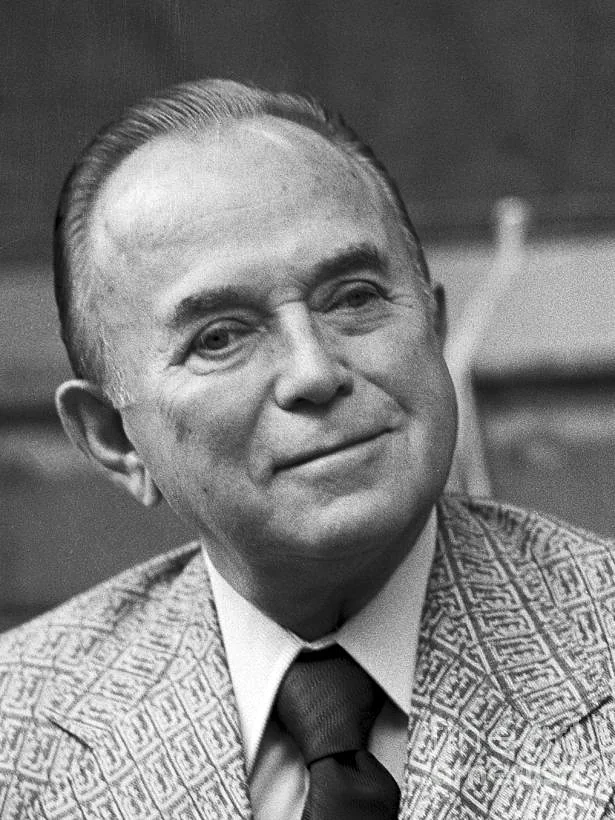
Attr: Bettmann
| 16 Quotes | |
| Occup. | Businessman |
| From | USA |
| Born | October 5, 1902 |
| Died | January 14, 1984 |
| Aged | 81 years |
| Cite | |
Citation Formats
APA Style (7th ed.)
Ray kroc biography, facts and quotes. (2026, February 11). FixQuotes. https://fixquotes.com/authors/ray-kroc/
Chicago Style
"Ray Kroc biography, facts and quotes." FixQuotes. February 11, 2026. https://fixquotes.com/authors/ray-kroc/.
MLA Style (9th ed.)
"Ray Kroc biography, facts and quotes." FixQuotes, 11 Feb. 2026, https://fixquotes.com/authors/ray-kroc/. Accessed 6 Mar. 2026.
Early Life and Influences
Raymond Albert Kroc was born on October 5, 1902, in Oak Park, Illinois, a suburb of Chicago. The son of Czech-American parents, he grew up in a community that valued thrift, diligence, and self-reliance, qualities that he later brought to his life in business. As a teenager during World War I, he lied about his age to join the Red Cross as an ambulance driver; the war ended before he saw service overseas, but the experience reinforced his taste for responsibility and for selling himself on ambitious goals. He would later recount, with affection and some amusement, that he had been in the same training program as the young Walt Disney, a reminder of the era and its restless, creative energy. After the war he sampled a parade of jobs: piano player in small bands, real estate salesman, and finally a traveling salesman, seeking a line that rewarded persistence and personality.From Cups to Multimixers
Kroc found his way into a career through sales. He worked in paper products, learning the rhythms of routes, the discipline of cold calls, and the economics of consumables. In the 1930s and 1940s he became associated with the Prince Castle company, selling a high-capacity milkshake machine known as the Multimixer. The Multimixer required volume to make sense, and Kroc learned to spot the rare restaurants that had mastered speed and consistency. That nose for operational excellence, more than any single product, would prove decisive. By the early 1950s, he was a seasoned salesman who believed that process and repetition, when paired with customer focus, could be a formula in any American city.Encounter with the McDonald Brothers
In 1954, Kroc received an unusual order: a small drive-in in San Bernardino, California, operated by brothers Richard and Maurice McDonald, wanted several Multimixers. Intrigued, he visited. What he found impressed him profoundly. The McDonalds had stripped their menu to essentials and engineered a production line for hamburgers, fries, and shakes. Their Speedee Service System produced food quickly, cleanly, and predictably. Kroc immediately saw the franchising potential of that method. He proposed to the brothers that he would lead a national expansion. They agreed, and Kroc formed McDonald's System, Inc., obtaining the right to franchise the concept using the McDonald name and processes while the brothers focused on their original operation.Building McDonald's
Kroc opened his first McDonald's franchised restaurant in Des Plaines, Illinois, in 1955. He was relentless about uniformity. He insisted that fries be cut, cooked, and salted the same way in every store, that shakes taste identical, and that service be fast. He viewed deviation as a betrayal of the brand. He nurtured franchisees carefully, demanding adherence to standards but also teaching the methods that made stores work. Two colleagues became central to this effort: June Martino, who helped organize the young company's finances and operations from its earliest days, and Fred Turner, a detail-driven manager who codified procedures and later led the company. With their help, Kroc turned a method into a system and a system into a culture.Franchising and the Real Estate Strategy
A pivotal collaborator was Harry Sonneborn, who devised a financial model that positioned the company as a real estate enterprise as well as a franchisor. The corporation would lease or own the land and buildings and then rent them to franchisees, aligning incentives and creating stable cash flow. This approach gave McDonald's leverage to enforce standards and financial strength to fund growth. It was a structural innovation as important as any menu decision, and it helped the young company survive lean periods while expanding into new markets across the United States.Brand, Design, and Operational Discipline
Kroc was a curator of symbols and systems. He embraced the Golden Arches motif that the McDonald brothers had popularized with the help of architect Stanley Meston and made it a consistent, nationwide signature. He promoted a corporate mantra summarized as Quality, Service, Cleanliness, and Value. He resisted distractions like jukeboxes and cigarette machines, believing they undermined the family environment he wanted. He also created routines and training modules that became legendary. The facility known as Hamburger University, launched in the early 1960s, taught operators and managers everything from equipment maintenance to crew scheduling and customer service, embedding the culture in every new cohort.Buyout and Corporate Consolidation
By 1961, differing visions made it clear that centralized control would be necessary for further expansion. Kroc negotiated the purchase of the McDonald brothers' remaining interests in the concept and the name for $2.7 million, a figure large enough to leave each brother financially independent after taxes. With the buyout complete, McDonald's Corporation could standardize decisions without compromise. The company moved its headquarters to the Chicago area and built centralized support for franchisees, investing in research, distribution, and training. Kroc's autobiography, Grinding It Out, published in 1977, documented the climb in plainspoken terms, framing the story as one of grit and obsession more than luck.Public Image and Philanthropic Support
As the chain grew, Kroc became a public figure associated with the postwar boom and the idea of efficient, affordable dining. He supported community-oriented initiatives around the restaurants and backed the formation of charitable efforts connected to the brand, including the early development of Ronald McDonald House programs, which would expand in later years with corporate and community partners. The broader philanthropic legacy of the fortune he built was shaped decisively by his third wife, Joan Kroc, whose gifts in the decades after his death funded major initiatives in health, arts, and community services.Sports Ownership and Later Years
Kroc purchased a controlling interest in the San Diego Padres baseball team in 1974, bringing the same impatience for mediocrity and showman's instinct that marked his business career. He became known for public expressions of frustration when the team performed poorly, yet his ownership stabilized the franchise in San Diego. He shifted much of his life to Southern California and maintained a hands-on interest in both baseball and the restaurant business, even as day-to-day leadership at McDonald's passed to trusted executives like Fred Turner.Personal Life
Kroc's private life threaded through his public pursuits. He married Ethel Fleming in his youth, a union that spanned his early sales years and the precarious period when he bet everything on franchising. After their divorce, he married Jane Dobbins Green in the early 1960s, a brief chapter during a demanding corporate pivot. In 1969 he married Joan, whose partnership was marked by shared interests in music, community causes, and the Padres. Colleagues remembered him as demanding, direct, and generous to those who embraced the system. He could be brusque with dissent but was loyal to operators who delivered results and upheld standards.Death and Legacy
Ray Kroc died on January 14, 1984, in San Diego, California. By the time of his death, McDonald's had become a global brand, recognized for speed, consistency, and a distinct service culture. The organization he built out of the McDonald brothers' original insight set new norms for franchising, real estate-driven growth, training, and brand management. Figures such as Harry Sonneborn, June Martino, and Fred Turner formed an inner circle that turned Kroc's relentless expectations into institutional practice, while the earlier collaboration with Richard and Maurice McDonald supplied the foundational production ethos. Through Joan Kroc's later philanthropy, the wealth generated by his approach radiated beyond business into civic life. Kroc's story endures as a case study in how process discipline, franchise alignment, and brand stewardship can transform a local operation into a worldwide enterprise, and how the personalities around an entrepreneur shape, challenge, and ultimately define that legacy.Our collection contains 16 quotes written by Ray, under the main topics: Witty One-Liners - Leadership - Work Ethic - Success - Honesty & Integrity.
Other people related to Ray: Dave Winfield (Athlete), Jerry Coleman (Athlete)
Ray Kroc Famous Works
- 1977 Grinding It Out: The Making of McDonald's (Autobiography)