
Richard Brautigan Biography Quotes 7 Report mistakes
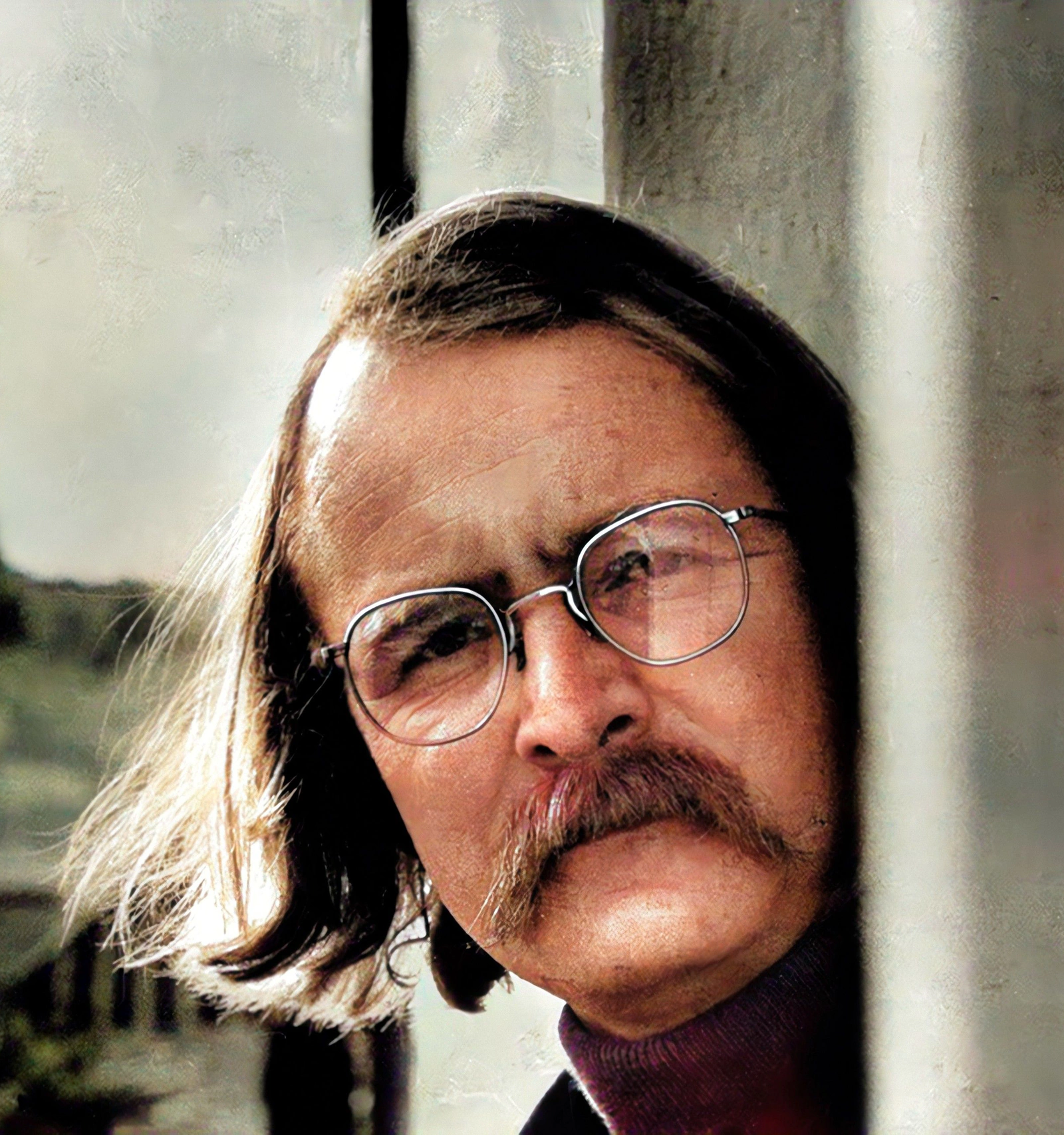
| 7 Quotes | |
| Born as | Richard Gary Brautigan |
| Occup. | Writer |
| From | USA |
| Born | January 30, 1935 Tacoma, Washington, USA |
| Died | October 14, 1984 Bolinas, California, USA |
| Cause | Suicide by gunshot |
| Aged | 49 years |
| Cite | |
Citation Formats
APA Style (7th ed.)
Richard brautigan biography, facts and quotes. (2026, February 11). FixQuotes. https://fixquotes.com/authors/richard-brautigan/
Chicago Style
"Richard Brautigan biography, facts and quotes." FixQuotes. February 11, 2026. https://fixquotes.com/authors/richard-brautigan/.
MLA Style (9th ed.)
"Richard Brautigan biography, facts and quotes." FixQuotes, 11 Feb. 2026, https://fixquotes.com/authors/richard-brautigan/. Accessed 26 Mar. 2026.
Early Life and Background
Richard Gary Brautigan was born January 30, 1935, in Tacoma, Washington, during the long aftershock of the Depression and on the eve of a war economy that promised stability to some and hardship to many. He grew up largely in the Pacific Northwest in a shifting, precarious household marked by poverty, frequent moves, and absent or unreliable father figures. The insecurity of those early years - patchwork families, rented rooms, the sense of being fed by luck as much as by adults - left him with a lifelong alertness to small comforts and sudden reversals, the emotional weather that later made his work feel both innocent and bruised.As a boy and teen he lived in Washington and Oregon, often on the margins of town life, where creeks, empty lots, and cheap diners could feel like private kingdoms. The postwar boom modernized the Northwest, but it did not necessarily modernize his home life; Brautigan learned early how to improvise a self out of thin resources. That talent became aesthetic: an ability to turn sparse facts into glittering, off-kilter scenes, as if the world could be made livable by rearranging its sentences.
Education and Formative Influences
Brautigan did not follow a conventional academic path; his real education came through public libraries, local literary circles, and the mid-century American poetry underground. After moving to San Francisco in the mid-1950s, he absorbed the citys Beat-adjacent energy and the practical lessons of hustling art into being - readings, small presses, friends who treated poems like currency. The atmosphere of North Beach and later Haight-Ashbury gave him permission to be both earnest and strange, while his own bouts of psychological crisis and institutionalization in the late 1950s sharpened his sensitivity to authority and to the thin line between whimsy and despair.Career, Major Works, and Turning Points
Brautigan began as a poet, publishing early collections such as The Return of the Rivers (1957) and The Galilee Hitch-Hiker (1958), but his breakthrough came with the fiction that made him an emblem of the 1960s counterculture. Trout Fishing in America (1967) fused vignette, satire, and lyric meditation into a book that behaved like a collage of American longings; it was followed by In Watermelon Sugar (1968), The Abortion: An Historical Romance 1966 (1971), and the comic-noir The Hawkline Monster: A Gothic Western (1974). As the 1970s progressed, his public aura shifted: from cult hero of Summer of Love San Francisco to a writer increasingly out of step with a harsher, more politicized literary marketplace. He kept publishing - including Willard and His Bowling Trophies (1975), Sombrero Fallout (1976), and Dreaming of Babylon (1977) - but the later years were marked by isolation, heavy drinking, and the ache of being treated as a period piece rather than a living artist. He died by suicide in Bolinas, California; his death is generally dated to October 1984, discovered on October 25, after he had been alone for days.Philosophy, Style, and Themes
Brautigans inner life reads, in retrospect, like a tug-of-war between a childs faith in tenderness and an adults inventory of disappointments. He often approached existence sideways, using humor to test pain the way a finger tests hot water. His line “It's strange how the simple things in life go on while we become more difficult”. is not just a folksy observation - it is a psychological x-ray. The world, in his books, keeps running - rivers keep moving, sugar keeps dissolving, towns keep selling groceries - while the self accrues anxieties, memories, and defensive cleverness. That mismatch produced his signature tone: bright, plainspoken sentences carrying a private weight, like a paper lantern lit by complicated electricity.His style treated metaphor as a place to live rather than a decoration, and he used absurdity as a moral instrument: it exposes the ways Americans mythologize freedom while feeling trapped in roles. “All of us have a place in history. Mine is clouds”. captures his desire to evade the heavy machinery of chronology and ideology, to become atmospheric - present, drifting, hard to seize. Yet the clouds are not only escapist; they are also the viewpoint from which he could see the violence beneath ordinary surfaces without preaching. Even his cosmic jokes can be read as self-defense, as in “Probably the closest things to perfection are the huge absolutely empty holes that astronomers have recently discovered in space. If there's nothing there, how can anything go wrong?” The fantasy of an unfillable emptiness suggests a mind exhausted by the ways love, fame, and community can curdle into obligation - and still hungry for a clean, silent room inside the universe.
Legacy and Influence
Brautigan endures as a singular American voice: a writer who made minimalist lyricism, deadpan comedy, and damaged innocence coexist on the same page. To readers he remains a gateway to the possibilities of hybrid form - the novel as poem-sequence, the joke as elegy - and to writers he offers a template for sincerity without sentimentality. His reputation has cycled with the culture that first adopted him, but the best of his work outlives fashion because it records a durable human experience: the longing to keep life simple, even as the self grows more complicated, and the stubborn hope that imagination can still make a small refuge in the middle of history.Our collection contains 7 quotes written by Richard, under the main topics: Witty One-Liners - Writing - Deep - Life - Equality.
Other people related to Richard: Haruki Murakami (Writer)
Richard Brautigan Famous Works
- 1977 Dreaming of Babylon (Novel)
- 1976 Sommbrero Fallout: A Japanese Novel (Novel)
- 1974 The Hawkline Monster (Novel)
- 1968 In Watermelon Sugar (Novel)
- 1967 Trout Fishing in America (Novel)
- 1964 A Confederate General from Big Sur (Novel)
Source / external links