
Ring Lardner Biography Quotes 8 Report mistakes
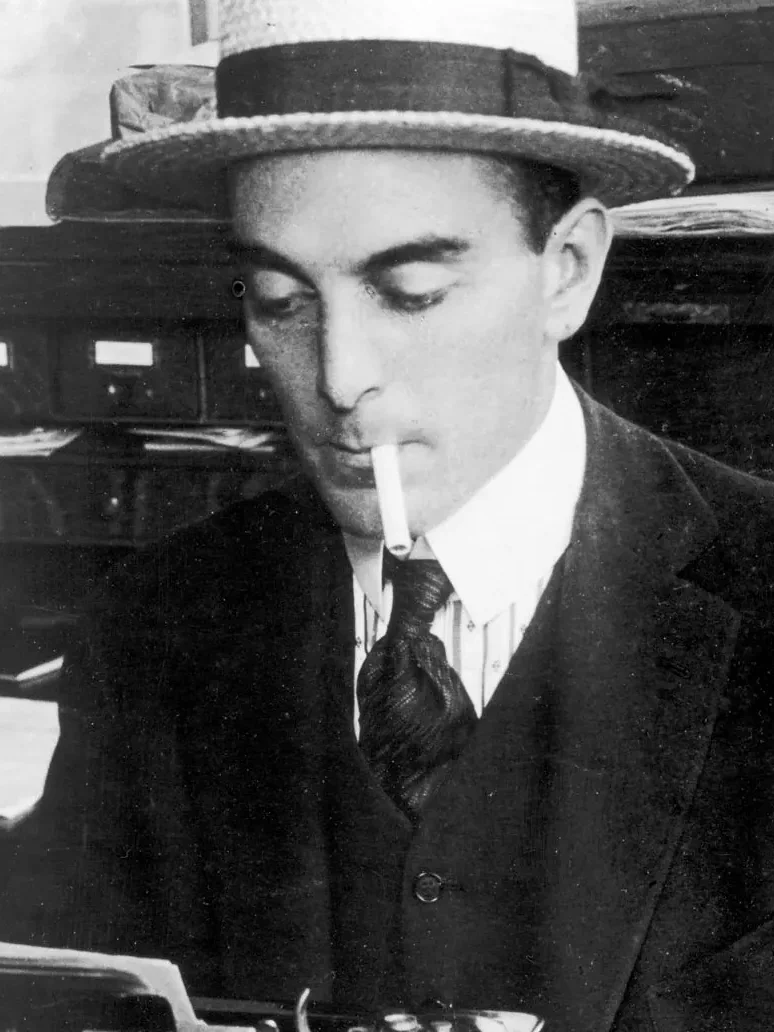
| 8 Quotes | |
| Born as | Ringgold Wilmer Lardner |
| Occup. | Comedian |
| From | USA |
| Born | March 6, 1885 Niles, Michigan, U.S. |
| Died | September 25, 1933 East Hampton, New York, U.S. |
| Aged | 48 years |
| Cite | |
Citation Formats
APA Style (7th ed.)
Ring lardner biography, facts and quotes. (2026, February 11). FixQuotes. https://fixquotes.com/authors/ring-lardner/
Chicago Style
"Ring Lardner biography, facts and quotes." FixQuotes. February 11, 2026. https://fixquotes.com/authors/ring-lardner/.
MLA Style (9th ed.)
"Ring Lardner biography, facts and quotes." FixQuotes, 11 Feb. 2026, https://fixquotes.com/authors/ring-lardner/. Accessed 28 Mar. 2026.
Early Life and Background
Ringgold Wilmer Lardner was born on March 6, 1885, in Niles, Michigan, the youngest child in a prosperous but gradually tightening Midwestern household. His parents, wealthy by local standards, carried the contradictions of the Gilded Age: comfort alongside anxiety, propriety alongside the American appetite for spectacle. That tension mattered. Lardner grew up watching men perform versions of themselves - in business, in church, on the street - and he became unusually alert to the gap between what people said and what they meant.After his father, James Lardner, died in 1898, the family moved to South Bend, Indiana, and the adolescent Ring faced both financial contraction and a sharpened awareness of social ranking. He played baseball, cultivated music and theater, and learned early how humor can be both shield and scalpel. The future satirist was already assembling his lifelong subject: the ordinary American voice under pressure - boastful, sentimental, self-excusing, and heartbreakingly human.
Education and Formative Influences
Lardner attended South Bend High School and then enrolled at the Armour Institute of Technology in Chicago, but he was an indifferent student and left without a degree. Chicago gave him what classrooms did not: newspapers, ballparks, saloons, vaudeville, and the clang of a modern city where language was currency. He trained his ear on slang, misspellings, and the rhythm of speech, absorbing the era's new mass entertainment - especially professional baseball - and recognizing that the American vernacular, written with precision, could carry as much tragedy and comedy as any "literary" diction.Career, Major Works, and Turning Points
He began as a sportswriter, working in South Bend and then Chicago, where his baseball coverage for papers including the Chicago Tribune and the Chicago Daily News evolved into something stranger and richer: character-driven comedy built from the idioms of fans and players. His breakthrough came with "You Know Me Al" (serialized 1914-1915), the faux-naive letters of pitcher Jack Keefe, a masterpiece of self-revelation through self-deception. Lardner moved to New York, wrote for magazines such as The Saturday Evening Post and for the theater, and became entwined with the literary and Broadway worlds of the 1910s and 1920s. His stories and sketches, collected in volumes like "How to Write Short Stories (with Samples)" and "The Love Nest", expanded beyond sports to marriage, money, celebrity, and the quiet despair behind American optimism. He socialized with figures of the Jazz Age, contributed lyrics and satire, and helped define a new, dry-eyed comedic realism. Lardner died on September 25, 1933, in East Hampton, New York, after years of ill health, at the edge of the Depression era that made his skepticism look prophetic.Philosophy, Style, and Themes
Lardner's method was psychological eavesdropping. He wrote as if the page were a barstool and the narrator had cornered you with a story that accidentally confesses everything. His great innovation was not simply dialect but moral X-ray: spelling errors, malapropisms, and bragging became instruments for exposing vanity, loneliness, and the transactional nature of affection. He distrusted uplift and treated romance and success as performances people stage to keep panic at bay. Even his throwaway one-liners carry an anthropologist's chill: “He looked at me as if I were a side dish he hadn't ordered”. It is funny, but it is also a theory of American social life - we appraise one another like commodities, then blame the other person for not fitting our appetite.Underneath the comedy is a harsh sobriety about human agency. Lardner watched careers wrecked by drink, and he made self-sabotage a recurring engine of plot: “No one, ever, wrote anything as well even after one drink as he would have done with out it”. The sentence reads like a quip, but it is also a creed: clarity is fragile, and the modern world offers endless ways to blur it. His satire of the publishing business is similarly double-edged, mocking both editors and the writer's hope of special treatment: "A good many young writers make the mistake of enclosing a stamped, self-addressed envelope, big enough for the manuscript to come back in. This is too much
Our collection contains 8 quotes written by Ring, under the main topics: Witty One-Liners - Sarcastic - Writing - Sports - Romantic.