
Rio Ferdinand Biography Quotes 14 Report mistakes
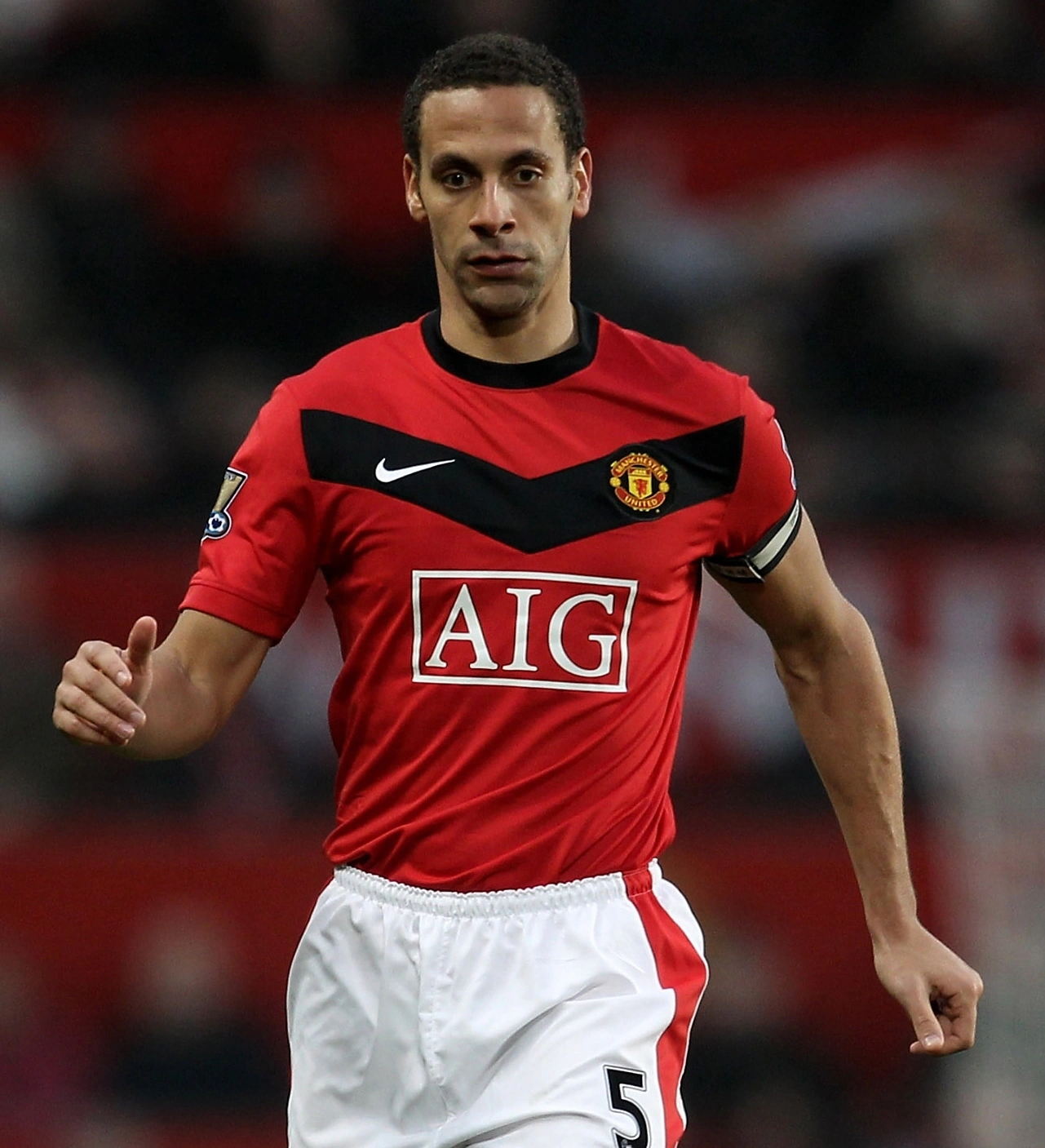
| 14 Quotes | |
| Born as | Rio Gavin Ferdinand |
| Occup. | Athlete |
| From | England |
| Born | November 7, 1978 Peckham, London, England |
| Age | 47 years |
| Cite | |
Citation Formats
APA Style (7th ed.)
Rio ferdinand biography, facts and quotes. (2026, February 11). FixQuotes. https://fixquotes.com/authors/rio-ferdinand/
Chicago Style
"Rio Ferdinand biography, facts and quotes." FixQuotes. February 11, 2026. https://fixquotes.com/authors/rio-ferdinand/.
MLA Style (9th ed.)
"Rio Ferdinand biography, facts and quotes." FixQuotes, 11 Feb. 2026, https://fixquotes.com/authors/rio-ferdinand/. Accessed 5 Mar. 2026.
Early Life and Background
Rio Gavin Ferdinand was born on November 7, 1978, in Peckham, south London, into a mixed-heritage family shaped by the citys working-class pressures and multicultural networks. His father, Julian Ferdinand, was from Saint Lucia and worked as a tailor; his mother, Janice, was English-Irish. The neighborhoods he moved through - Peckham and nearby Camberwell - were places where street football, schoolyard status, and the constant negotiation of identity trained him early in reading people as much as reading play.That instinct for social navigation later became central to his public life: a defender expected to lead, a young Black British star scrutinized for composure, and eventually a celebrity whose calm could be misread as indifference. From the start he was athletic in multiple directions - he boxed, ran track, and played football - but his temperament leaned toward the slow, controlled confidence of someone who preferred to anticipate rather than collide.
Education and Formative Influences
Ferdinand attended Camberwell schools and emerged through the London youth pipeline at a time when Englands academies were becoming more professionalized, with West Ham United building a reputation for producing technically educated players. Coached inside the "Academy of Football" tradition, he absorbed a defenders unusual mandate: be comfortable in possession, step into midfield, and treat the ball as a tool for dictating tempo rather than merely ending danger - influences reinforced by watching continental center-backs and by the Premier Leagues late-1990s shift toward speed, broadcast scrutiny, and tactical hybridization.Career, Major Works, and Turning Points
He debuted for West Ham in 1996, became a first-team regular, and in 2000 joined Leeds United in a British-record fee for a defender, a transfer that placed expectation on his technique as much as his tackling. The defining club turn came in 2002 when Manchester United signed him; under Sir Alex Ferguson he matured into the clubs defensive organizer during a period of transition after the 1999 generation, winning multiple Premier League titles and the 2007-08 UEFA Champions League. Internationally he earned 81 England caps, played in three World Cups, and was named captain, but his England story also includes the 2004 missed drug test and subsequent ban that kept him out of Euro 2004 - a reputational rupture that tested his resilience. Late in his career he shifted from physical dominance to positional mastery, then left United in 2014, had a final season at Queens Park Rangers, and retired in 2015.Philosophy, Style, and Themes
Ferdinands game was built on controlled authority: he defended by reducing chaos. He would delay rather than dive, angle rather than smash, and use passing to turn defense into an opening move. The aesthetic had psychological consequences - a calm face under pressure invites projection. He addressed that mismatch directly: “I've heard people say it looks as if I don't care and I've certainly read that, but the way I play is natural. I don't think I can change it. I know I'm working as hard as the next man, even if it doesn't always look that way”. The line reads like a thesis on his inner life - effort as an internal standard, not a performance for cameras - and it explains why he could look untroubled in moments when he was actually calculating.That self-scrutiny also shaped how he processed failure and criticism in an era when English players lived under relentless media judgment. He framed the dressing room as harsher than the headlines: “Most professional players are their own biggest critics. Some of the things you read in the papers that strike you as bang out of order will already have been thought by the players themselves”. With England, he spoke in the language of duty rather than glamour: “No matter how much money you have or what kind of cocoon you live in, the reality is that you have lost a game of football and let England's fans down. We are bothered”. Across these themes runs a consistent motive - to be judged by standards of responsibility and decision-making, not by stereotypes of how passion should look.
Legacy and Influence
Ferdinand helped normalize the modern English center-back: quick across the ground, composed in buildup, and comfortable leading a high line in elite European competition. For Manchester United supporters he symbolizes the bridge between eras - the defender who stabilized the post-Treble years and anchored the 2008 Champions League side - while for England he represents both the promise and the weight of the so-called Golden Generation. Beyond the pitch, his later work in broadcasting and advocacy, and his willingness to speak about grief after the death of his wife, Rebecca Ellison, in 2015, expanded his public identity from icon to witness, influencing how elite athletes in England talk about vulnerability, scrutiny, and the cost of appearing perpetually composed.Our collection contains 14 quotes written by Rio, under the main topics: Victory - Sports - Work Ethic - Teamwork - Learning from Mistakes.
Other people related to Rio: Wayne Rooney (Athlete), Ryan Giggs (Athlete)
Source / external links