
Robert Benchley Biography Quotes 35 Report mistakes
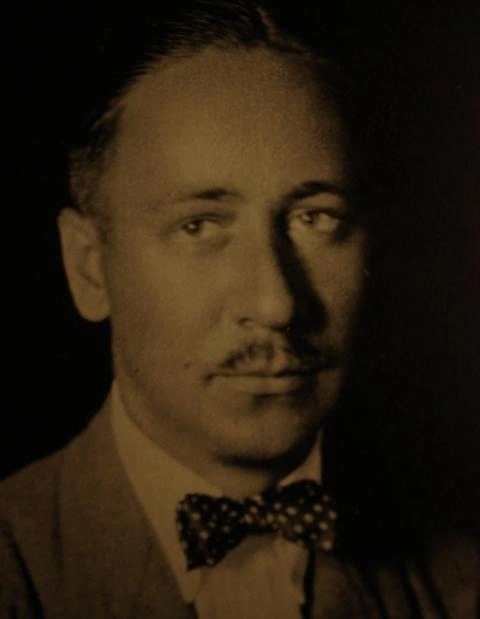
| 35 Quotes | |
| Occup. | Comedian |
| From | USA |
| Born | September 15, 1889 |
| Died | September 21, 1945 |
| Aged | 56 years |
| Cite | |
Citation Formats
APA Style (7th ed.)
Robert benchley biography, facts and quotes. (2026, February 11). FixQuotes. https://fixquotes.com/authors/robert-benchley/
Chicago Style
"Robert Benchley biography, facts and quotes." FixQuotes. February 11, 2026. https://fixquotes.com/authors/robert-benchley/.
MLA Style (9th ed.)
"Robert Benchley biography, facts and quotes." FixQuotes, 11 Feb. 2026, https://fixquotes.com/authors/robert-benchley/. Accessed 26 Mar. 2026.
Early Life and Background
Robert Charles Benchley was born on September 15, 1889, in Worcester, Massachusetts, into a comfortable New England household that prized wit, reading, and the mild competitive polish of the professional class. His father, Charles Henry Benchley, was a lawyer; his mother, Maria Benchley (nee Duryea), came from a family with cultural ambitions and a strong sense of social expectation. Benchley grew up in a late-Victorian America that was industrializing quickly and building a mass audience for newspapers, vaudeville, and magazine humor - arenas that would later reward his gift for making private anxieties sound like public commonsense.A defining absence shaped him early. His older brother Edmund died in the Spanish-American War (1898), a family wound that turned patriotic ceremony into something more complicated, and Benchley into a man who often used comedy as a pressure valve for grief, worry, and self-doubt. The Benchley persona - genial, flustered, overcivilized, always slightly behind the demands of modern life - was not only a comic mask but also a way of living inside loss without giving it the last word.
Education and Formative Influences
Benchley attended Worcester Academy and entered Harvard, graduating in 1911 amid the ferment of student theatricals and literary societies. At Harvard he wrote and edited for the Harvard Lampoon, absorbing the magazine tradition of tightly engineered nonsense, parody, and the mock-serious essay. The campus also offered him a rehearsal stage for his later public self: the courteous satirist who could puncture pomposity while sounding as if he were apologizing for the intrusion. After college he began working in journalism and magazine writing, learning the disciplines of deadlines, editors, and the urban readership that wanted laughter without cruelty.Career, Major Works, and Turning Points
In New York, Benchley moved through the early-20th-century ecosystem that joined newspapers, Broadway, and glossy magazines. He wrote for Vanity Fair and became one of its signature humorists, then helped launch The New Yorker in 1925, where his essays and reviews helped define the magazine's metropolitan voice. He was part of the Algonquin Round Table circle - not a formal club so much as a publicity-ready constellation of writers and performers including Dorothy Parker, George S. Kaufman, and Alexander Woollcott - and he made his name onstage with monologues that treated everyday tasks as existential trials. A major turning point came with his short film "How to Sleep" (1935), which won an Academy Award and transformed his fumbling-scholar persona into a screen commodity; he went on to appear in numerous Hollywood features as the polite bumbler or distracted expert, even as the demands of studio work and travel pulled him away from the calmer craft of magazine prose.Philosophy, Style, and Themes
Benchley's comedy is the comedy of modern overload. He did not present himself as a conqueror of life but as a man perpetually negotiating it - forms to fill out, trains to catch, parties to endure, children to manage, drinks to consider. His narrators drift into digression, misread instructions, and turn simple problems into baroque systems, a method that anticipates later observational humor: the joke is not merely that the world is absurd, but that our attempts to be competent can become their own kind of slapstick. Beneath the airy surface sits a serious sensitivity to status and embarrassment. He understood that the educated middle class feared not tragedy in the grand sense but small humiliations, and he built a literature of minor panics that made readers feel less alone.His lines often function as miniature self-portraits: the man who survives by reframing failure as a reasonable lifestyle choice. “Anyone can do any amount of work, provided it isn't the work he is supposed be doing at that moment”. The sentence is funny because it is true - and because it reveals a psyche that treats duty as an invasive species, always arriving at the worst time. He also used conviviality as a philosophy of mercy, offering distraction as a humane response to strain: “Why don't you get out of that wet coat and into a dry martini?” The wit is a rescue rope, but it also hints at the era's sophisticated evasions, where cocktails served as both social lubricant and anesthetic. Finally, he distrusted certainty, especially the belligerent kind: “Behind every argument is someone's ignorance”. That skepticism shaped his tone - gently anti-dogmatic, alert to the ways people weaponize conviction to cover insecurity.
Legacy and Influence
Benchley died on September 21, 1945, in New York City, as America was emerging from World War II into a new age of mass media. His lasting influence lies in a particular model of comic intelligence: urbane yet accessible, self-deprecating without self-pity, and structurally inventive in how it turns logic inside out. He helped set the early template for The New Yorker humor essay, proved that a literary voice could survive translation to film shorts, and provided later comedians and writers - from radio and television monologists to magazine satirists - a durable character type: the civilized adult who suspects he is unqualified for adulthood. His work endures because it makes anxiety articulate, and then makes it laughable, without pretending it ever fully goes away.Our collection contains 35 quotes written by Robert, under the main topics: Witty One-Liners - Dark Humor - Writing - Freedom - Aging.
Other people related to Robert: Peter Benchley (Author), Robert E. Sherwood (Playwright), Franklin Pierce Adams (Writer), Harold Ross (Editor)
Source / external links