
Robin Williams Biography Quotes 32 Report mistakes
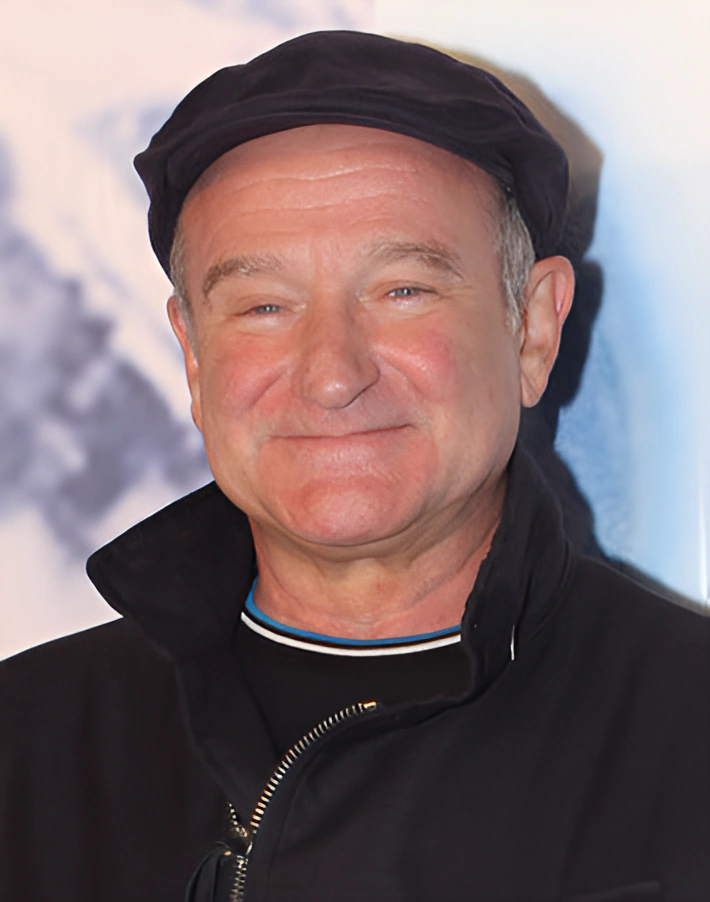
Attr: Eva Rinaldi, CC BY-SA 2.0
| 32 Quotes | |
| Born as | Robin McLaurin Williams |
| Occup. | Comedian |
| From | USA |
| Spouses | Susan Schneider (2011–2014) Marsha Garces (1989–2010) Valerie Velardi (1978–1988) |
| Born | July 21, 1952 Chicago, Illinois, USA |
| Died | August 11, 2014 Tiburon, California, USA |
| Cause | Suicide by hanging |
| Aged | 62 years |
| Cite | |
Citation Formats
APA Style (7th ed.)
Robin williams biography, facts and quotes. (2026, February 11). FixQuotes. https://fixquotes.com/authors/robin-williams/
Chicago Style
"Robin Williams biography, facts and quotes." FixQuotes. February 11, 2026. https://fixquotes.com/authors/robin-williams/.
MLA Style (9th ed.)
"Robin Williams biography, facts and quotes." FixQuotes, 11 Feb. 2026, https://fixquotes.com/authors/robin-williams/. Accessed 5 Mar. 2026.
Early Life and Background
Robin McLaurin Williams was born on July 21, 1952, in Chicago, Illinois, to a family that embodied mid-century American mobility and contradiction. His father, Robert Fitzgerald Williams, was a senior executive at Ford Motor Company; his mother, Laurie McLaurin, a former model from Mississippi, carried the polish and social ease of a different America. Materially comfortable, Williams grew up amid the postwar boom, a time when television and advertising began to standardize national culture even as the Cold War and civil rights struggles destabilized old certainties.Much of his childhood was marked less by deprivation than by loneliness and observation. After early years in Illinois, the family moved to suburban Detroit and then to the San Francisco Bay Area, settling in Tiburon, California. Shy, overweight, and often isolated in large houses with long silences, he learned to self-entertain with voices and characters, turning private play into a laboratory for performance. The skill that later read as manic spontaneity was, at root, a survival mechanism: a way to win attention, dissolve awkwardness, and convert anxiety into motion.
Education and Formative Influences
Williams attended Redwood High School in Larkspur, where he found community through drama and was voted "Most Likely Not to Succeed" - a joke that also revealed how his talent arrived as something disruptive, not yet legible as a career. He briefly studied political science at Claremont McKenna College before committing to acting, training at the College of Marin and then at The Juilliard School in New York. At Juilliard (early 1970s), he studied alongside Christopher Reeve under teachers like John Houseman, absorbing classical discipline while sharpening the improvisational gifts that did not fit neatly into conservatory categories.Career, Major Works, and Turning Points
After stand-up breakthroughs in San Francisco and Los Angeles, Williams became a national figure as Mork on "Happy Days" and then "Mork and Mindy" (1978-1982), where his velocity and alien innocence matched a post-Vietnam appetite for comic release. His films tracked a rare arc from comic firestorm to dramatic authority: "Popeye" (1980), "The World According to Garp" (1982), "Good Morning, Vietnam" (1987), "Dead Poets Society" (1989), "The Fisher King" (1991), "Aladdin" (1992, voice of the Genie), "Mrs. Doubtfire" (1993), "Jumanji" (1995), and "Good Will Hunting" (1997), which earned him an Academy Award. By the late 1990s and 2000s, he alternated family hits with darker roles in "One Hour Photo" (2002) and "Insomnia" (2002), while returning repeatedly to stand-up, even as periods of substance abuse recovery and later health strains complicated the public image of inexhaustible joy.Philosophy, Style, and Themes
Williams performed like a mind refusing stillness. His comedy fused stream-of-consciousness riffing, pitch-perfect impressions, and a restless empathy that let him inhabit both the bully and the bruised. He treated the stage as a place to metabolize fear - of awkwardness, of death, of being ordinary - into language, accents, and moral fables. The manic surface was not simply a persona; it was an engine that kept pain from congealing. Even in his warmest roles, he played men improvising their own salvation, as if love and laughter were crafts rather than feelings.His jokes repeatedly argued for imagination as a form of resilience: “You're only given a little spark of madness. You mustn't lose it”. That "spark" was both permission and warning - a credo for someone who relied on intensity to feel alive, yet sensed how easily it could burn. He also used the absurd to puncture solemn authority, making the world seem negotiable: “Reality: What a concept!” The line reads like pure gag, but it also reveals a psychology that experienced "reality" as a heavy set of rules to be dodged through play. Even his bawdiest riffs often hid a bleak anthropology, as in his famous observation about divided human drives: “See, the problem is that God gives men a brain and a penis, and only enough blood to run one at a time”. Underneath the punchline sits a recurring theme in his work - the mismatch between our ideals and our appetites, and the tenderness required to live with that mismatch without contempt.
Legacy and Influence
Williams died on August 11, 2014, in Paradise Cay, California; his death, later linked to severe depression and Lewy body dementia, reframed his life for many as a case study in the distance between performance and private suffering. Yet his enduring influence lies in how he expanded the emotional bandwidth of American comedy: proving that improvisational brilliance could coexist with classical acting, that a blockbuster star could risk ugliness, and that kindness could be a dramatic force rather than a soft garnish. Generations of comedians cite his fearlessness and speed; actors cite his humanity; audiences return to his work because it makes room for grief without surrendering wonder - a legacy of a man who turned loneliness into voices and then offered those voices back as shelter.Our collection contains 32 quotes written by Robin, under the main topics: Witty One-Liners - Wisdom - Puns & Wordplay - Dark Humor - Sarcastic.
Other people related to Robin: Peter Coyote (Actor), John Lithgow (Actor), Calista Flockhart (Actress), Barry Levinson (Director), David Duchovny (Actor), Adrian Cronauer (Entertainer), Kirsten Dunst (Actress), Yakov Smirnoff (Comedian), Eriq La Salle (Actor), John Irving (Novelist)
Source / external links