
Rodney Dangerfield Biography Quotes 51 Report mistakes
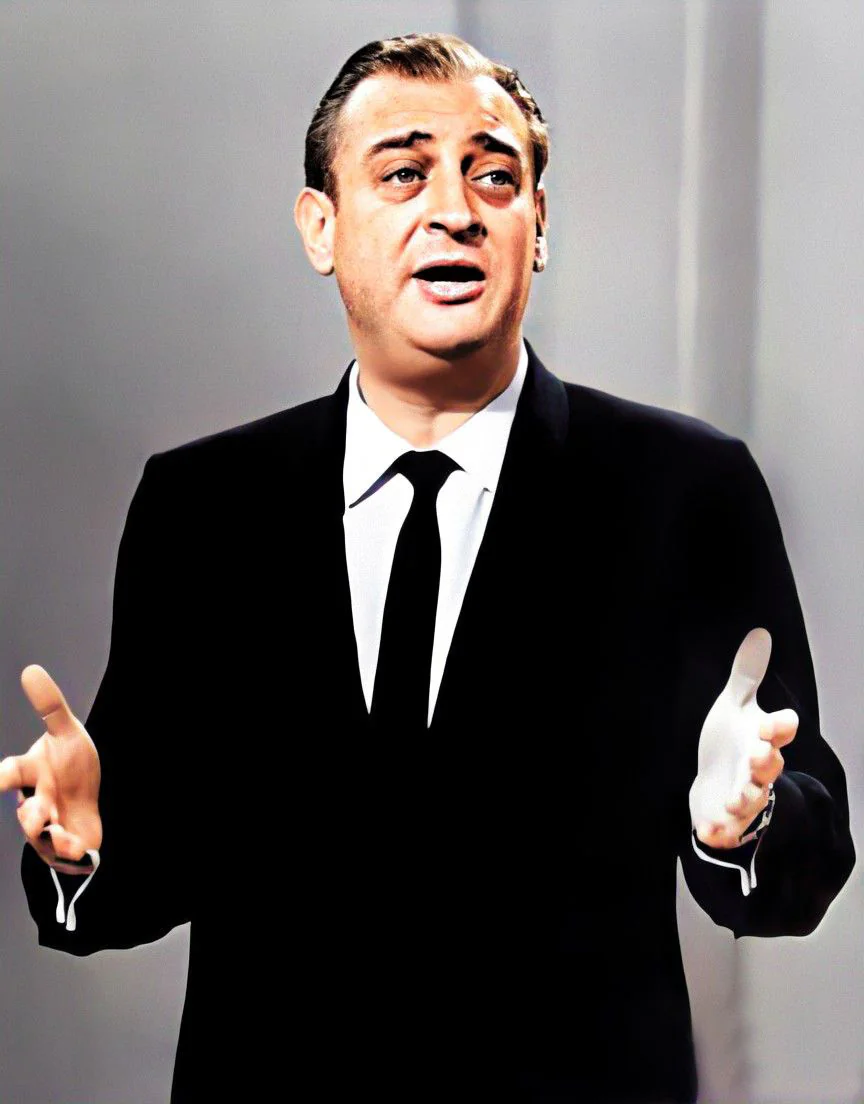
Attr: Press photo
| 51 Quotes | |
| Born as | Jacob Rodney Cohen |
| Occup. | Comedian |
| From | USA |
| Born | November 22, 1921 Deer Park, New York, USA |
| Died | October 5, 2004 Los Angeles, California, USA |
| Cause | Complications after heart surgery |
| Aged | 82 years |
| Cite | |
Citation Formats
APA Style (7th ed.)
Rodney dangerfield biography, facts and quotes. (2026, February 11). FixQuotes. https://fixquotes.com/authors/rodney-dangerfield/
Chicago Style
"Rodney Dangerfield biography, facts and quotes." FixQuotes. February 11, 2026. https://fixquotes.com/authors/rodney-dangerfield/.
MLA Style (9th ed.)
"Rodney Dangerfield biography, facts and quotes." FixQuotes, 11 Feb. 2026, https://fixquotes.com/authors/rodney-dangerfield/. Accessed 11 Feb. 2026.
Early Life and Background
Rodney Dangerfield was born Jacob Rodney Cohen on November 22, 1921, in Babylon, Long Island, New York, and grew up largely in Queens. His parents were Jewish immigrants; his father, Philip Cohen, worked sporadically and was often absent, and the household carried the kind of instability that later became raw material for his comic persona. Dangerfield repeatedly returned, onstage and off, to the feeling of being unseen - not as a posture, but as an early emotional fact that hardened into a worldview.The America of his boyhood and adolescence was shaped by the Great Depression and then World War II - years that rewarded conformity and punished vulnerability. In that climate, a shy, anxious kid with a quick mind learned that a laugh could function like armor. The signature refrain "I don't get no respect" would eventually sound like a catchphrase, but its durability came from the recognizably bruised inner life beneath it: humiliation turned outward before it could be inflicted by someone else.
Education and Formative Influences
Cohen attended Richmond Hill High School in Queens, where he began testing jokes and one-liners as a way to cut through fear and social distance. He was drawn to the Borscht Belt tradition and the nightclub circuits that fed postwar American comedy, absorbing the rhythms of vaudeville, the insult comic, and the tightly engineered setup-punchline. Early work in small clubs and resorts taught him the craft as trade labor: pacing, timing, and the ability to win a room that did not arrive predisposed to like you.Career, Major Works, and Turning Points
He started performing in the 1940s under his birth name and other stage names, but commercial success was slow and uneven; by the early 1950s he stepped away from show business, selling aluminum siding to support his family, a detour that deepened his sense of being an outsider to the dream he wanted. In the 1960s he returned as Rodney Dangerfield, building a persona around social rejection and relentless self-deprecation, and broke through nationally with TV appearances, including on "The Ed Sullivan Show" and later "The Tonight Show Starring Johnny Carson". The 1970s and 1980s made him both a headliner and a brand: he opened Dangerfield's club in New York City in 1969, a proving ground for younger comics, and he crossed into film with "Caddyshack" (1980) and a starring role in "Back to School" (1986), balancing broad comedy with a surprisingly controlled performance style. His later years included continued touring, a memoir ("It's Not Easy Bein' Me"), and declining health; he died on October 5, 2004, in Los Angeles, leaving behind a persona so consistent it sometimes obscured the work it took to build it.Philosophy, Style, and Themes
Dangerfield's comedy was an architecture of small humiliations. He took the everyday arenas where status is negotiated - family, medicine, romance, work - and made them into traps that always snapped on him first, creating laughter through the tension between dignity and its constant theft. His lines sounded like offhand complaints, but they were engineered: short clauses, hard turns, and an instinct for punchlines that doubled as character exposition. "I told my psychiatrist that everyone hates me. He said I was being ridiculous - everyone hasn't met me yet". The joke is a miniature autobiography: insecurity presented as certainty, then undercut by a final twist that exposes how deeply the fear runs.Behind the rim-shot rhythm was a consistent psychology - a man who performed rejection so he could control it. He made cruelty safe by making himself the target, and in that act he invited the audience to recognize their own private shame without naming it. "Life is just a bowl of pits". That bleakness, framed as a quip, reveals his comic thesis: suffering is ordinary, the best response is precision, and self-mockery can be a form of survival. Even his domestic one-liners implied a larger skepticism about intimacy and power: "I haven't spoken to my wife in years. I didn't want to interrupt her". In his world, love is real but transactional, and the only reliable authority is the ability to land the joke before the world lands its judgment.
Legacy and Influence
Dangerfield endured because he turned a single idea - disrespect as a universal wound - into a flexible language that fit stages, television, and film, while never losing the sting that made it credible. His club helped institutionalize stand-up as a ladder for newcomers, and his persona influenced generations of comics who use self-deprecation not as surrender but as strategy. In an era that increasingly prized confessional comedy, he showed that a tightly written one-liner could still carry biography, class anxiety, and emotional truth - and that behind the laugh could live a serious, lifelong negotiation with insecurity, ambition, and the need to be seen.Our collection contains 51 quotes written by Rodney, under the main topics: Witty One-Liners - Art - Puns & Wordplay - Work Ethic - Father.
Other people related to Rodney: Jonathan Brandis (Actor), Sam Kinison (Comedian)
Source / external links