
Sarah Silverman Biography Quotes 16 Report mistakes
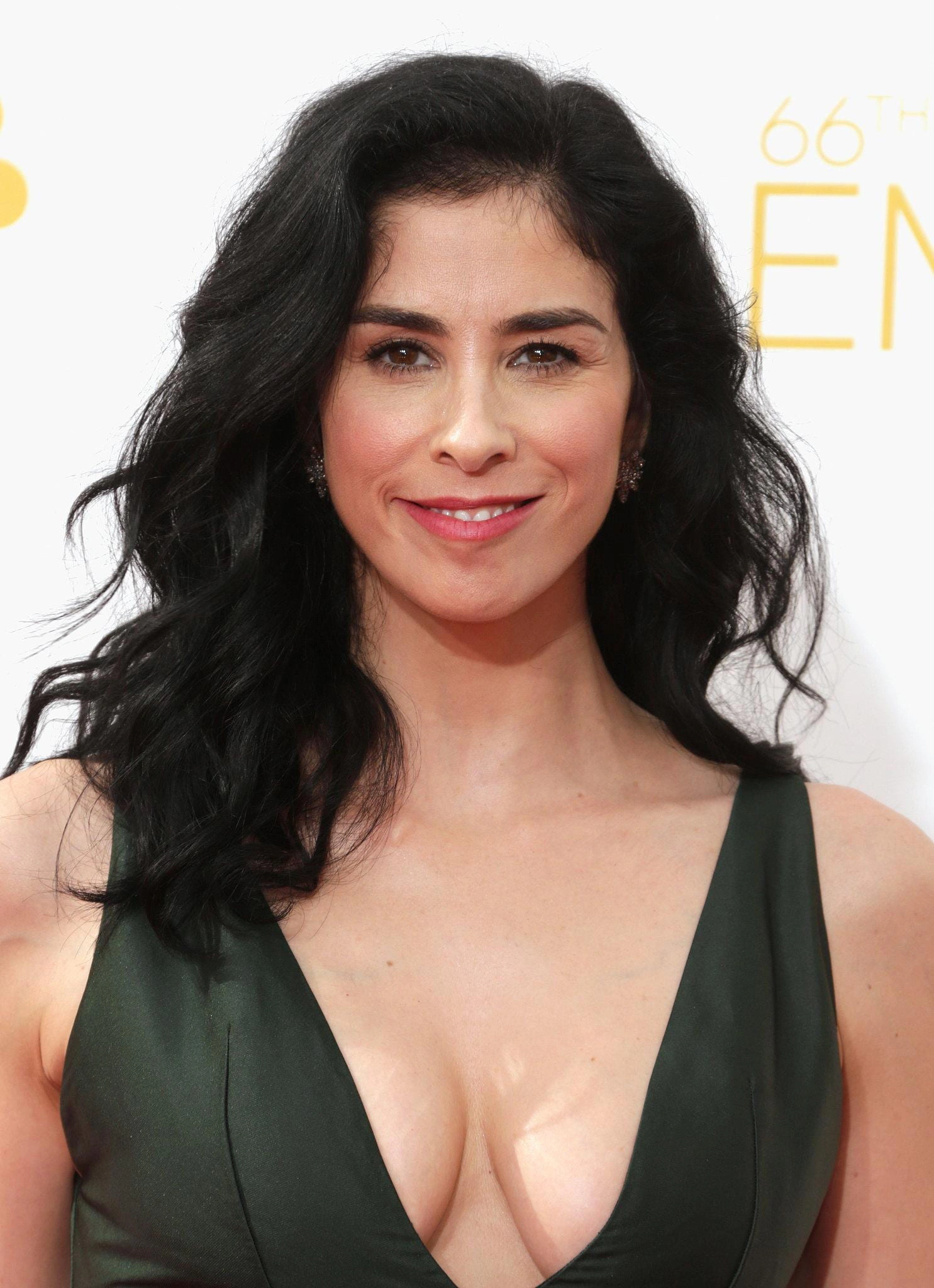
| 16 Quotes | |
| Born as | Sarah Kate Silverman |
| Occup. | Comedian |
| From | USA |
| Born | December 2, 1970 Bedford, New Hampshire, USA |
| Age | 55 years |
| Cite | |
Citation Formats
APA Style (7th ed.)
Sarah silverman biography, facts and quotes. (2026, March 16). FixQuotes. https://fixquotes.com/authors/sarah-silverman/
Chicago Style
"Sarah Silverman biography, facts and quotes." FixQuotes. March 16, 2026. https://fixquotes.com/authors/sarah-silverman/.
MLA Style (9th ed.)
"Sarah Silverman biography, facts and quotes." FixQuotes, 16 Mar. 2026, https://fixquotes.com/authors/sarah-silverman/. Accessed 26 Mar. 2026.
Early Life and Background
Sarah Kate Silverman was born on December 1, 1970, in Bedford, New Hampshire, and grew up in nearby Manchester in a Jewish family whose household mixed affection, volatility, and a sharp comic sensibility. Her father, Donald Silverman, ran a clothing store and later worked in theater; her mother, Beth Ann Halpin Silverman, was active in politics and community life. She was the youngest of five children in a family marked by strong personalities, quick wit, and tragedy. One brother died in infancy before her birth, a loss that lingered in family memory and shaped the emotional weather in which she was raised. Silverman has often described childhood as both lively and destabilizing, a place where humor became not simply entertainment but a survival skill.
That doubleness - love and damage, performance and pain - is central to understanding her later work. Silverman has spoken openly about depression, childhood loneliness, and later struggles with addiction and anxiety, subjects that complicate the public image of the smiling provocateur. In suburban New Hampshire during the 1970s and 1980s, she developed the outsider's eye that would define her comedy: she was close enough to American normality to mimic it perfectly, yet detached enough to expose its hypocrisies. Her stage persona - sweet-voiced, apparently naive, then suddenly ruthless - grew out of that tension between belonging and estrangement.
Education and Formative Influences
Silverman attended The Derryfield School in Manchester and briefly enrolled at New York University, but formal education gave way quickly to performance. “The first time I did stand-up was the summer I was 17”. , a fact that places her origin squarely in the late 1980s club circuit, where comedy was still shaped by the afterlife of Lenny Bruce, Joan Rivers, Richard Pryor, and the confessional neurosis of post-Woody Allen stand-up. She absorbed the mechanics of joke writing early, but just as important was her grasp of persona: she learned that the most explosive material lands hardest when delivered with innocence, musical cadence, and a face that seems not to understand its own transgression. Her Jewish background, New England reserve, and immersion in alternative comedy scenes helped her build a voice that was both classic Borscht Belt mischief and distinctly Gen X irony.
Career, Major Works, and Turning Points
After moving into New York comedy, Silverman was hired as a writer and featured performer on Saturday Night Live for the 1993-1994 season, though most of her sketches never aired - an early professional disappointment that taught her how institutions often misread singular voices. She later joked, “By the time I would have graduated, at 22, I was a writer and featured performer on Saturday Night Live”. , capturing both ambition and the abruptness of her ascent. Through the 1990s she built a reputation in stand-up, on Mr. Show with Bob and David, in independent film, and on television appearances that made her a cult figure. Her breakthrough came with Jesus Is Magic, first as a stage show and then as the 2005 concert film that distilled her signature method: taboo material delivered in the language of cheerful sincerity. The Sarah Silverman Program, which ran from 2007 to 2010 on Comedy Central, expanded that persona into a satirical suburban universe of narcissism, prejudice, and arrested development. She later widened her range with memoir writing in The Bedwetter, dramatic acting in I Smile Back, voice work as Vanellope von Schweetz in Wreck-It Ralph, and political commentary in the Trump era, when her activism, podcasting, and online presence showed a comedian increasingly willing to move between mischief, vulnerability, and civic argument.
Philosophy, Style, and Themes
Silverman's comedy is built on a calculated moral friction. She often performs a version of ignorance in order to expose the real ignorance circulating beneath polite culture. Her central wager is that comedy can reveal structures of cruelty more effectively than direct sermonizing, because laughter catches audiences admitting what they would rather deny. “But I think you can make fun of anything as long as it's funny enough”. That line is less a license than a standard: the joke must earn its trespass by producing insight, surprise, or self-recognition. At her best, she is not mocking the vulnerable but dramatizing the mind that would do so, then making the audience feel its own complicity in laughing.
This is why her work has always invited dispute. “I don't set out to offend or shock, but I also don't do anything to avoid it”. The sentence captures a temperament suspicious of prophylactic niceness and deeply invested in intention, framing, and target. Yet she has never argued that all offense is meaningless; rather, she treats offense as evidence of psychic pressure, a clue to what a culture cannot metabolize. “It shows the truth - that the real meaning of a word is only as powerful or harmless as the emotion behind it”. Her style therefore depends on tonal instability - cute and brutal, intimate and theatrical, confessional and satirical - because she wants the audience to keep asking who exactly is being exposed: the comic, the character, or themselves.
Legacy and Influence
Silverman helped redefine what a female stand-up comic could sound like in American culture after the 1990s - not merely autobiographical or observational, but philosophically aggressive, structurally daring, and willing to weaponize likability itself. Her influence can be felt in later generations of comedians who use innocence, self-implication, and taboo language to interrogate power, identity, and performance. She also broadened the public idea of the comic as a whole artist: stand-up, actor, memoirist, voice performer, activist, and digital personality. If her career has been shadowed by debates about taste and harm, that too is part of her importance. Silverman forced audiences, critics, and fellow comics to confront where satire ends, where empathy begins, and whether comedy's job is comfort, freedom, or exposure. Her enduring significance lies not only in the jokes she told, but in the unstable moral stage she built for modern American laughter.
Our collection contains 16 quotes written by Sarah, under the main topics: Witty One-Liners - Funny - Truth - Art - Dark Humor.
Other people related to Sarah: Jimmy Kimmel (Celebrity), Sarah Polley (Actress)
Frequently Asked Questions
- What's Sarah Silverman known for? Sarah Silverman is known for her dark, satirical, and controversial humor. She has gained fame through stand-up comedy, TV shows like 'The Sarah Silverman Program', and various acting roles.
- What are Sarah Silverman best jokes? Some popular Sarah Silverman jokes include her bits on racial stereotypes, religion, and relationships. Her humor is often self-deprecating and politically incorrect.
- How old is Sarah Silverman? She is 55 years old
Source / external links