
Sinbad Biography Quotes 8 Report mistakes
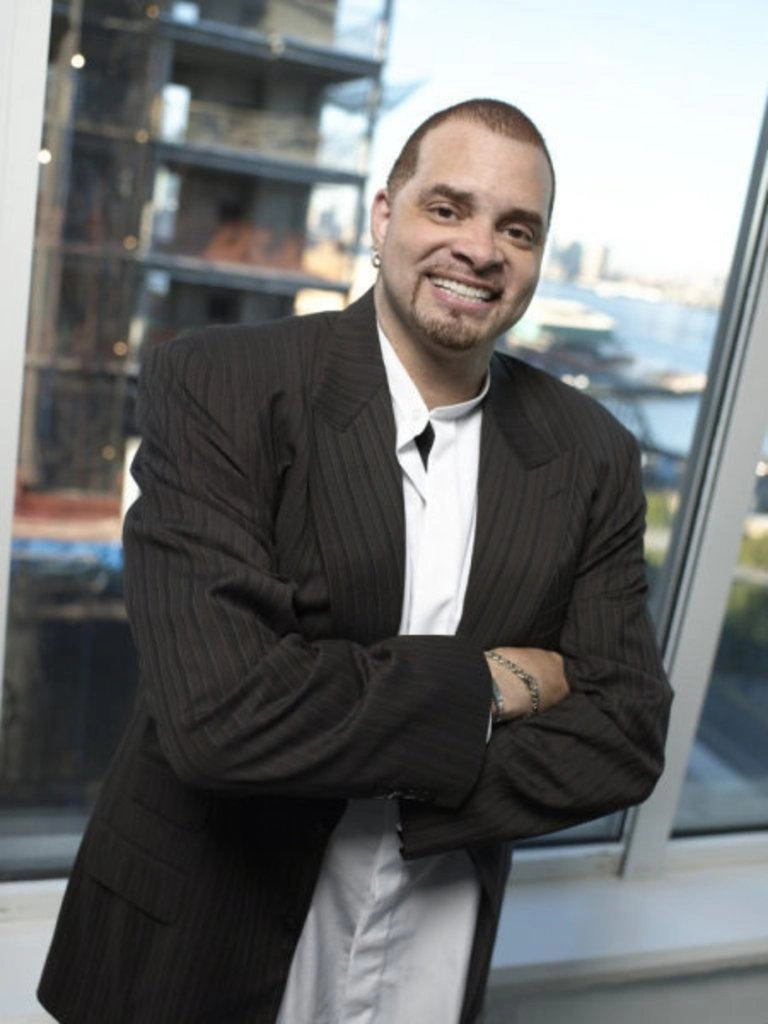
| 8 Quotes | |
| Born as | David Adkins |
| Occup. | Comedian |
| From | USA |
| Born | November 18, 1956 Benton Harbor, Michigan, U.S. |
| Age | 69 years |
| Cite | |
Citation Formats
APA Style (7th ed.)
Sinbad biography, facts and quotes. (2026, February 11). FixQuotes. https://fixquotes.com/authors/sinbad/
Chicago Style
"Sinbad biography, facts and quotes." FixQuotes. February 11, 2026. https://fixquotes.com/authors/sinbad/.
MLA Style (9th ed.)
"Sinbad biography, facts and quotes." FixQuotes, 11 Feb. 2026, https://fixquotes.com/authors/sinbad/. Accessed 13 Feb. 2026.
Early Life and Background
Sinbad was born David Adkins on November 18, 1956, in Benton Harbor, Michigan, a Lake Michigan industrial town whose boom-and-bust cycles sharpened his ear for how ordinary people talk about money, pride, and survival. He grew up in a large family in a Midwestern culture where humor often functioned as social glue - a way to cut tension, test boundaries, and keep dignity intact when circumstances felt fixed.Even before the spotlight, Adkins showed the traits that would define his stage persona: buoyant charisma, quick emotional reads, and a refusal to let cynicism win. The name "Sinbad" - larger-than-life, instantly theatrical - hinted at a performer who wanted escapade and warmth without cruelty, a comedian who could be loud and physical yet still aim for communal recognition rather than shock.
Education and Formative Influences
He attended the University of Denver and later transferred to Wichita State University, but the more decisive training came through structured service and constant movement: the United States Air Force. That combination of campuses and barracks forged his most durable sensibility - that status, swagger, and self-mythology collapse fast when you live and work in close quarters, and that the best jokes are field-tested among people who will not flatter you.Career, Major Works, and Turning Points
In the early 1980s he emerged from the stand-up circuit into national attention, breaking through on "Star Search" and then becoming a familiar face via "A Different World" as Coach Walter Oakes, a role that matched his athletic physicality and grounded warmth. He built a popular 1990s run of stand-up specials and family-friendly comic acting, including "Necessary Roughness" (1991), "Houseguest" (1995), "First Kid" (1996), and "Jingle All the Way" (1996), positioning himself as a kinetic everyman who could carry studio comedy without relying on cruelty. As tastes shifted toward edgier personas and irony, Sinbad leaned into live performance and touring, protecting a relationship with audiences that valued empathy and recognizable domestic stress over fashionable contempt.Philosophy, Style, and Themes
Sinbad's style is elastic and story-driven: long riffs, sudden character pivots, and full-body punctuation that turns everyday frustration into choreography. His comedy lives in the gap between aspiration and the stubborn physics of real life - bills, relationships, and the tiny humiliations that expose self-delusion. He regularly frames responsibility not as a lecture but as a punchline-shaped truth, insisting, "We all want something else other than what we have and don't realize what you got works. It works. It does work. You gotta work. Marriage is work. Marriage is a career. It's not an adventure". That line is less marital advice than a self-portrait: a performer suspicious of fantasy thinking, using laughter to make discipline feel survivable.A second pillar is economic realism, delivered with the force of someone who watched people talk themselves into disaster: "We ask for way too much stuff - way too much stuff. You got a job making $100 a year and bought a house for $3 million. Talking about, 'I don't know what happened with the payment.'". Underneath the booming delivery is an inner moral engine - not puritanical, but protective - as if he is trying to rescue audiences from the embarrassment he can already see coming. Even his skepticism is caretaking: "Don't let people treat you like you're stupid. If it sounds too good to be true, it is". Psychologically, that refrain reveals a man who distrusts easy promises, prefers earned confidence, and treats comedy as a public-service translation of hard lessons into something people will actually remember.
Legacy and Influence
Sinbad endures as a bridge figure between the uplift-oriented, broadly accessible stand-up of the late 1980s and the celebrity-sitcom ecosystem of the 1990s, proving that a high-energy comic could remain largely family-friendly without becoming bland. His influence is felt in performers who build sets from lived domestic detail rather than contrarian shock, and in the continued demand for comics who radiate warmth while still telling the truth about work, marriage, and money. Even as memes and misremembered internet myths periodically recast his image, his core achievement remains stable: he made responsibility funny, and made laughter feel like a shared room rather than a battleground.Our collection contains 8 quotes written by Sinbad, under the main topics: Witty One-Liners - Wisdom - Military & Soldier - Marriage - Technology.
Other people related to Sinbad: John Barth (Novelist), Tom Baker (Actor), Ray Harryhausen (Director)
Source / external links