
Spike Milligan Biography Quotes 20 Report mistakes
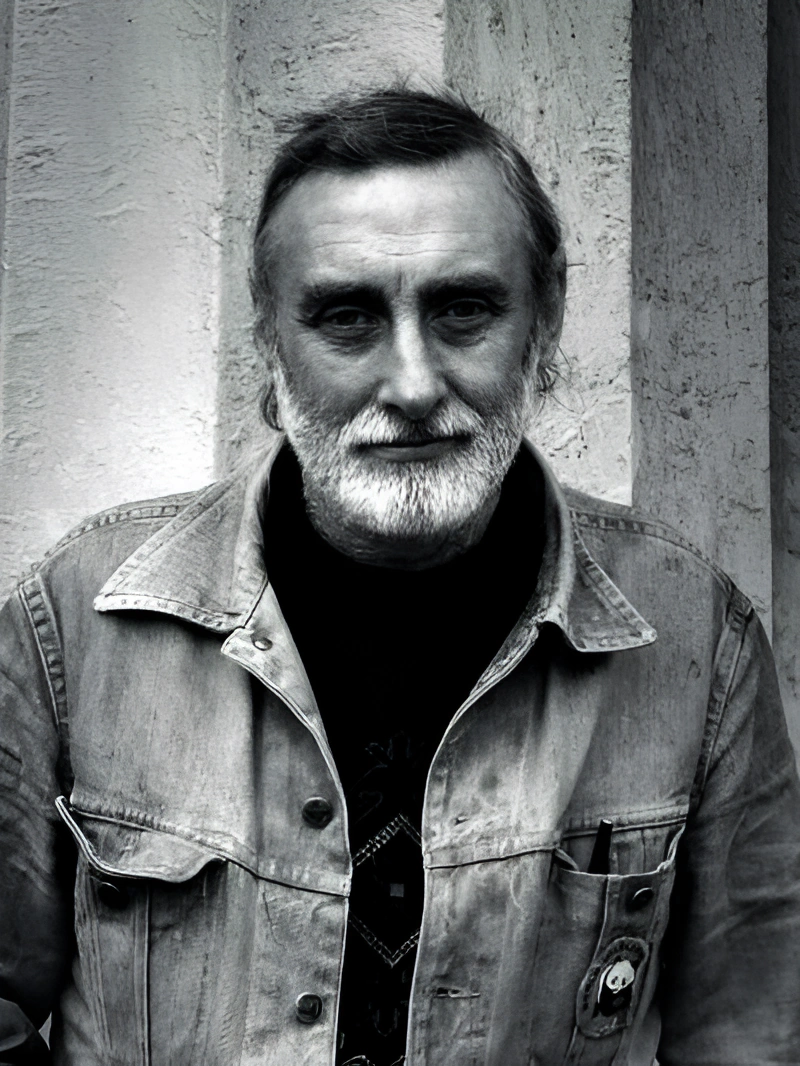
| 20 Quotes | |
| Born as | Terence Alan Milligan |
| Occup. | Comedian |
| From | Ireland |
| Born | April 16, 1918 Ahmednagar, India |
| Died | February 27, 2002 Rye, East Sussex, England |
| Aged | 83 years |
| Cite | |
Citation Formats
APA Style (7th ed.)
Spike milligan biography, facts and quotes. (2026, February 11). FixQuotes. https://fixquotes.com/authors/spike-milligan/
Chicago Style
"Spike Milligan biography, facts and quotes." FixQuotes. February 11, 2026. https://fixquotes.com/authors/spike-milligan/.
MLA Style (9th ed.)
"Spike Milligan biography, facts and quotes." FixQuotes, 11 Feb. 2026, https://fixquotes.com/authors/spike-milligan/. Accessed 5 Mar. 2026.
Early Life and Background
Terence Alan "Spike" Milligan was born on 1918-04-16 in Ahmednagar, British India, to an Irish father, Captain Leo Alphonso Milligan of the Indian Army, and an English mother, Florence Mary Winifred. Though often claimed by Ireland in shorthand biographies, his early identity was imperial and mixed: Irish ancestry and Catholic-inflected sensibility filtered through cantonment life, military routine, and the cosmopolitan oddity of the Raj. The family later lived in Poona, and Milligan grew up with music, marching bands, and the slapstick anarchy of army entertainments - a childhood of order constantly undermined by absurdity.In the mid-1930s the Milligans moved to England, and the young man arrived with a colonial accent, a restless ear for voices, and an outsider's hunger to belong. He found a kind of belonging in popular entertainment rather than institutions: dance bands, cinemas, music halls, and the new, intimate authority of radio. That mix of displacement and performance would become his psychological engine - the sense that identity is something you put on, take off, parody, and survive.
Education and Formative Influences
Milligan was not shaped by formal schooling so much as by apprenticeship: self-taught in trumpet and composition, fascinated by comedy records, film comedians, and the verbal ping-pong of variety turns. The decisive formative influence was war. Enlisted in 1940, he served in the Royal Artillery during World War II, eventually as a gunner in the North African and Italian campaigns. Combat left him with recurrent depression and episodes later understood as bipolar disorder; it also taught him the thin line between bravery and panic, and it stocked his memory with the raw material he would later transmute into anti-heroic memoir and surreal farce.Career, Major Works, and Turning Points
After demobilization he worked as a musician and writer, then detonated British radio comedy with The Goon Show (BBC, 1951-1960), created with Peter Sellers and Harry Secombe - a program that tore up the rulebook with linguistic sabotage, grotesque characters, sound effects as narrative, and plots that refused to behave. The show made Milligan a national voice while worsening the pressures that destabilized him; breakdowns and hospitalizations punctuated periods of manic productivity. He broadened into children's verse and television (including Q), wrote stage and screen pieces, and late in life published the Adolf Hitler: My Part in His Downfall war memoir sequence, where the chaos of battle is rendered with gag-rhythm precision and a soldier's tenderness for the frightened self. Honors followed (including a CBE), but his career remained a long oscillation between public laughter and private fragility.Philosophy, Style, and Themes
Milligan's comedy is often filed as "nonsense", but its inner logic is moral and psychological: he used absurdity to expose the brittle social scripts that pretend to keep terror at bay. His work returns to money, status, and the hidden humiliations they generate, not as economics but as emotional weather. “Money can't buy you happiness but it does bring you a more pleasant form of misery”. In that single turn you can hear his signature: a gag that lands as truth, a shrug that is also a diagnosis of modern longing. His suspicion of respectability - and of his own need for it - drives the recurrent theme of the clown who cannot cash in his clowning for peace.He also built an ethic of self-undermining, a refusal to posture as a stable hero. “I'm a hero with coward's legs”. The line reads like a throwaway, yet it is his war-haunted self-portrait: courage as performance, fear as physiology, identity split between what you wish to be and what your body will permit. Even when he jokes about fame and friendship, he reveals a sharp, defensive awareness of how social life curdles under ambition: “Money couldn't buy friends, but you got a better class of enemy”. The humor is armor, but also a confession - a man who needed companionship, mistrusted applause, and kept turning pain into precisely timed misdirection.
Legacy and Influence
Milligan helped invent the modern British comic voice: surreal yet intimate, technically audacious, and willing to let breakdown and brilliance share the same microphone. The Goon Show fed directly into Beyond the Fringe, Monty Python, The Beatles' studio playfulness, and generations of radio and panel comedians who treat sound, language, and interruption as instruments. His war memoirs widened the tradition of soldier-writing by insisting that fear, incompetence, and comedy belong in the historical record, while his lifelong openness - sometimes raw, sometimes masked - about mental illness made his public persona more complicated than "national jester". He died on 2002-02-27, leaving behind a body of work that still feels like a live wire: laughter as survival, and nonsense as a way of telling the truth when ordinary sentences fail.Our collection contains 20 quotes written by Spike, under the main topics: Witty One-Liners - Dark Humor - Deep - Father.
Other people related to Spike: Neil Innes (Writer), Richard Lester (Director)