
Stephen Fry Biography Quotes 35 Report mistakes
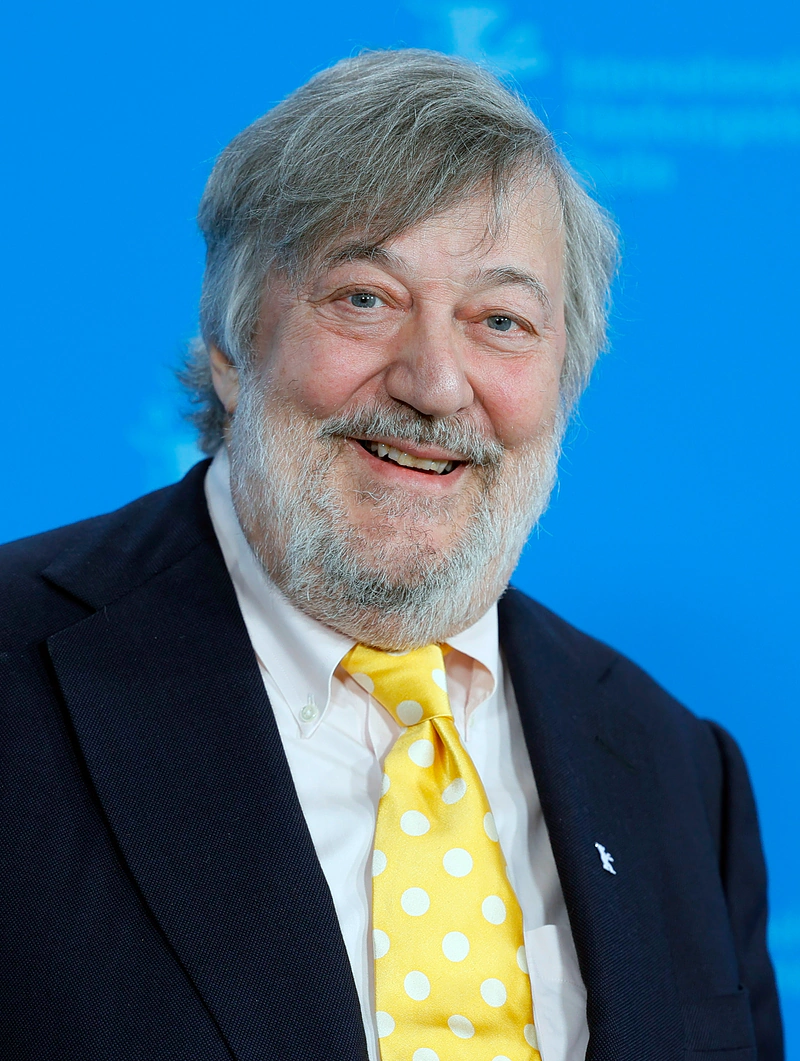
| 35 Quotes | |
| Born as | Stephen John Fry |
| Occup. | Comedian |
| From | United Kingdom |
| Born | August 24, 1957 Hampstead, London, England, UK |
| Age | 68 years |
| Cite | |
Citation Formats
APA Style (7th ed.)
Stephen fry biography, facts and quotes. (2026, February 11). FixQuotes. https://fixquotes.com/authors/stephen-fry/
Chicago Style
"Stephen Fry biography, facts and quotes." FixQuotes. February 11, 2026. https://fixquotes.com/authors/stephen-fry/.
MLA Style (9th ed.)
"Stephen Fry biography, facts and quotes." FixQuotes, 11 Feb. 2026, https://fixquotes.com/authors/stephen-fry/. Accessed 12 Feb. 2026.
Early Life and Background
Stephen John Fry was born on 24 August 1957 in Hampstead, London, and grew up largely in the Home Counties in postwar, class-conscious England. His father, Alan John Fry, worked as a physicist and inventor; his mother, Marianne (Newte), was of Hungarian-Jewish descent and survived a family history scarred by the Holocaust, a legacy Fry later explored publicly as part of his moral and historical imagination. Alongside his elder brother, Roger, he developed early appetites for language, performance, and the kind of conversational display prized in British middle-class life.Childhood, however, was also marked by restlessness, rule-breaking, and a hunger for acceptance that could tip into self-sabotage. As a teenager he was expelled from multiple schools, ran away, and committed theft, culminating in a period in prison for credit-card fraud. Those years seeded two enduring features of his inner life: a sharp sensitivity to shame and judgment, and a compensating drive to master words, charm, and social codes - tools that could transmute embarrassment into wit and control.
Education and Formative Influences
After a turning point in custody and rehabilitation, Fry rebuilt his prospects at City College Norwich and won a scholarship to Queens College, Cambridge, reading English literature. Cambridge in the late 1970s offered him a stage and a discipline: he joined the Footlights, where he met Hugh Laurie, Emma Thompson, and others who would define a generation of British comedy and acting. The period fused his love of classical and Victorian literature with the precise mechanics of sketch, parody, and panel-style improvisation, and it also revealed how public performance could coexist with, and sometimes camouflage, profound mood volatility.Career, Major Works, and Turning Points
Fry emerged on British television and radio in the 1980s through The Cambridge Footlights Revue and then, decisively, A Bit of Fry and Laurie (with Laurie) and the long-running quiz show QI, which he fronted from 2003 to 2015. He became a familiar screen actor (including roles in Blackadder, Jeeves and Wooster, and films such as Wilde, in which he portrayed Oscar Wilde) while building a parallel literary career with novels such as The Liar, The Hippopotamus, and Making History, plus memoirs including Moab Is My Washpot and The Fry Chronicles. Publicly, he became one of Britains most articulate advocates for LGBT equality and for frank discussion of mental illness, speaking about bipolar disorder, addiction, and periods of breakdown - including the highly visible crisis during a West End run in 1995 - as matters of medical reality rather than moral failing.Philosophy, Style, and Themes
Frys comedy is built on a distinctly English bargain: confession traded for charm, pain rearranged into pattern. His voice - whether in monologue, interview, or travelogue - treats conversation as a moral art, where precision and play are forms of care. That sensibility is allied to a modern, cosmopolitan patriotism: he can puncture national self-importance while still defending shared cultural inheritance, as when he notes how proximity to American presence clarifies Commonwealth affinities: "It only takes a room of Americans for the English and Australians to realise how much we have in common". The line reads as a joke, but psychologically it also reveals his instinct to seek belonging through comparative perspective, turning anxiety about identity into sociable insight.Under the elegance sits a candid fatalism about mood and the limits of will. Fry has repeatedly resisted the smug idea that rationality alone can repair despair, insisting instead on compassion, treatment, and time: "You can't reason yourself back into cheerfulness any more than you can reason yourself into an extra six inches in height". His writing often circles the same knot - the brain as both gift and trap - and uses humor not to deny suffering but to put it into language before it becomes silence. Even his cultural criticism carries a slightly abrasive ethics of usefulness, a preference for institutions that illuminate rather than posture, as in his jab at newsroom vanity: "Many people would no more think of entering journalism than the sewage business - which at least does us all some good". That bite is characteristic: affectionate toward human folly, impatient with professional sanctimony, and animated by a belief that words should serve truth rather than status.
Legacy and Influence
Fry stands as a bridge figure between eras: a Cambridge-trained wit who mastered broadcast celebrity, then adapted early to the internet age through blogging, podcasts, and social media, helping normalize the idea that erudition can be popular without being anti-intellectual. His lasting influence lies less in any single role than in a composite persona - humane, learned, fallible, and openly treated - that gave many audiences permission to take pleasure in language while taking suffering seriously. In British comedy and public discourse, he helped make vulnerability compatible with brilliance, and made curiosity itself - about history, science, religion, and the self - a form of entertainment with ethical weight.Our collection contains 35 quotes written by Stephen, under the main topics: Witty One-Liners - Wisdom - Truth - Puns & Wordplay - Love.
Other people related to Stephen: Robbie Coltraine (Actor), Joel McHale (Comedian), Kate Bush (Musician), Miranda Richardson (Actress), Jim Dale (Musician), Robbie Coltrane (Actor), Mark Rylance (Actor), Jude Law (Actor), Richard Curtis (Writer), Ben Elton (Comedian)