
Steven Wright Biography Quotes 82 Report mistakes
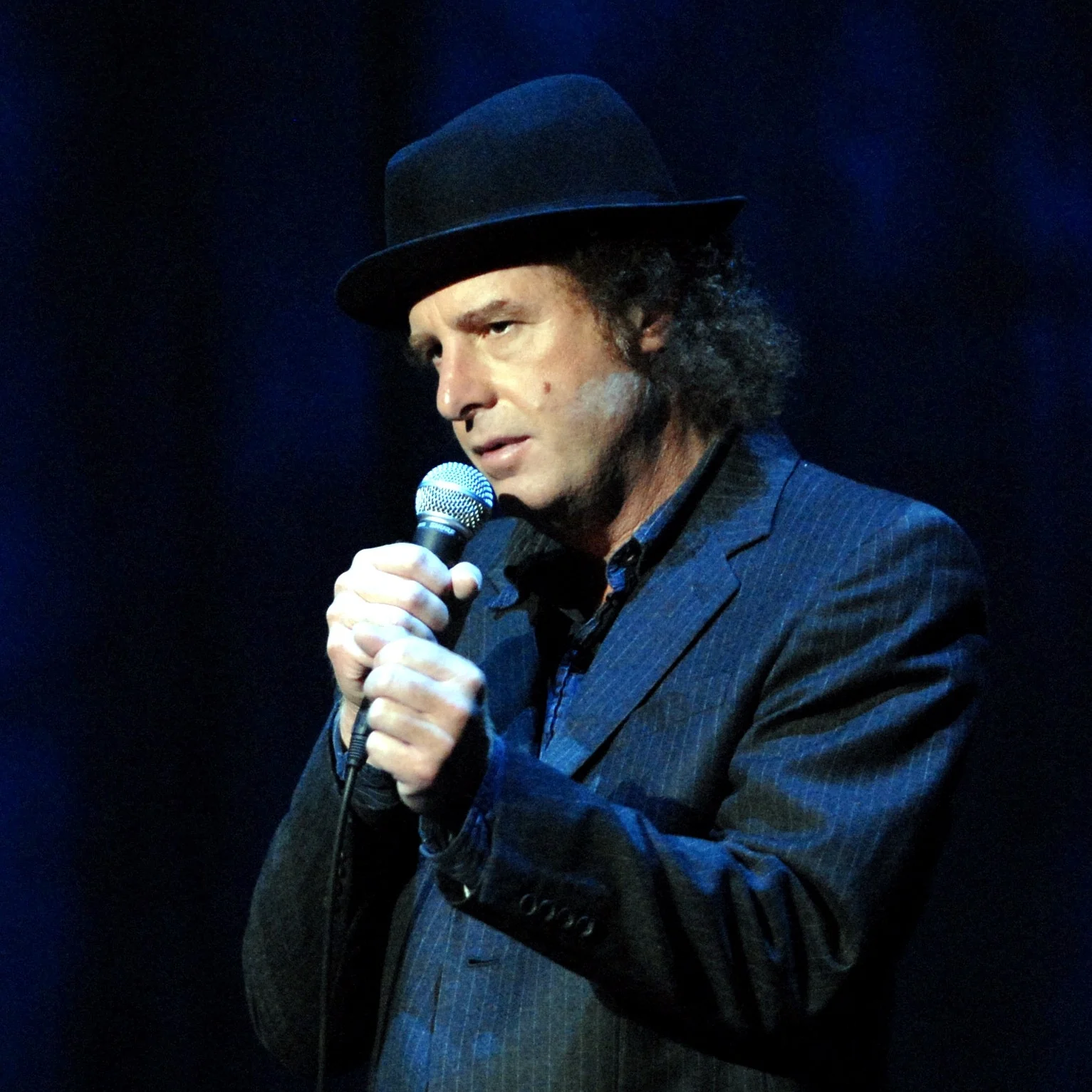
| 82 Quotes | |
| Occup. | Comedian |
| From | USA |
| Born | December 6, 1955 |
| Age | 70 years |
| Cite | |
Citation Formats
APA Style (7th ed.)
Steven wright biography, facts and quotes. (2026, February 2). FixQuotes. https://fixquotes.com/authors/steven-wright/
Chicago Style
"Steven Wright biography, facts and quotes." FixQuotes. February 2, 2026. https://fixquotes.com/authors/steven-wright/.
MLA Style (9th ed.)
"Steven Wright biography, facts and quotes." FixQuotes, 2 Feb. 2026, https://fixquotes.com/authors/steven-wright/. Accessed 31 Mar. 2026.
Early Life and Background
Steven Alexander Wright was born on December 6, 1955, in Cambridge, Massachusetts, and grew up in the nearby suburb of Burlington, a landscape of postwar New England practicality - split-level houses, steady routines, and the quiet confidence of the American middle class. That environment, with its clipped speech and preference for understatement, became a natural incubator for his later stage persona: deadpan, observant, and strangely philosophical about ordinary life.Friends and early audiences often described him as reserved, a listener who stored away the oddities of everyday language. The 1970s around Boston were years when stand-up was turning from nightclub patter into a writers art, shaped by television, college crowds, and the rise of alternative voices. Wright internalized that shift not by getting louder but by narrowing the beam - reducing comedy to spare sentences that landed like little logic puzzles.
Education and Formative Influences
Wright attended Middlesex Community College and later Emerson College in Boston, an institution closely tied to broadcasting and performance; he graduated in 1978. In those years he absorbed the mechanics of timing and the radio-like intimacy of a single voice in a room, while also learning to distrust easy punchlines. The Boston comedy circuit rewarded speed and swagger, but Wright gravitated toward the opposite: precision, patience, and a kind of literary compression, closer to a one-line short story than a conventional joke.Career, Major Works, and Turning Points
After starting in local clubs in the late 1970s, Wright broke nationally with a 1982 appearance on The Tonight Show Starring Johnny Carson, where his slow cadence and surreal, self-contained lines felt radically new; Carson reportedly invited him to sit on the couch, a rare seal of approval. His 1985 album I Have a Pony became a defining document of the era and earned a Grammy Award for Best Comedy Album, while subsequent specials and recordings (including the widely circulated A Steven Wright Special and later albums) cemented his reputation as a writers comedian. He also acted - most notably as the beleaguered radio DJ in Oliver Stones Talk Radio (1988) and in smaller film roles - and co-wrote and starred in the short film The Appointments of Dennis Jennings, which won the Academy Award for Best Live Action Short Film (1989). Through decades when stand-up tilted toward confessional storytelling, Wright remained committed to the crafted sentence, letting silence and stillness do as much work as the words.Philosophy, Style, and Themes
Wright built an inner world where everyday assumptions are gently sabotaged. His stage character speaks as if reporting facts from a slightly miscalibrated universe, and that mismatch exposes how much of reality is really agreement and habit. In his hands, the simplest proverb becomes a trapdoor: “If at first you don't succeed, then skydiving definitely isn't for you”. The laugh comes from the abrupt moral logic, but the deeper pleasure is psychological - a mind that distrusts motivational cliches because it sees the body, gravity, and consequence underneath the pep talk.His humor also treats language as a physical object that can be bent until it shows its seams. "I went to a restaurant that serves "breakfast at any time“. So I ordered French Toast during the Renaissance”. The sentence performs his signature move: taking a figure of speech literally, then traveling farther than literalness should allow, into history, time, and absurd specificity. And when he asks, “You can't have everything. Where would you put it?” the joke reveals a recurring theme - limits, storage, space, and the quiet panic of accumulation. Beneath the deadpan is a worldview that feels both minimalist and cosmic: he notices how desire expands faster than rooms, how logic collapses under its own neatness, and how a calm voice can make the impossible sound like a reasonable complaint.
Legacy and Influence
Wright helped define what later audiences would call alternative comedy: observational without being topical, surreal without being theatrical, and emotionally cool without being empty. His influence runs through generations of joke writers and performers who prize economy and conceptual turns - from late-night monologue craft to the one-liner revival and the internet age of quotable micro-comedy - yet his work remains distinct because it is less about persona confession than about thought itself. By turning silence into tension and a sentence into a miniature universe, he proved that stand-up could be as compressed and revisitable as poetry, and that a comedians deepest signature might be not volume or vulnerability, but the shape of a mind.Our collection contains 82 quotes written by Steven, under the main topics: Witty One-Liners - Puns & Wordplay.
Source / external links