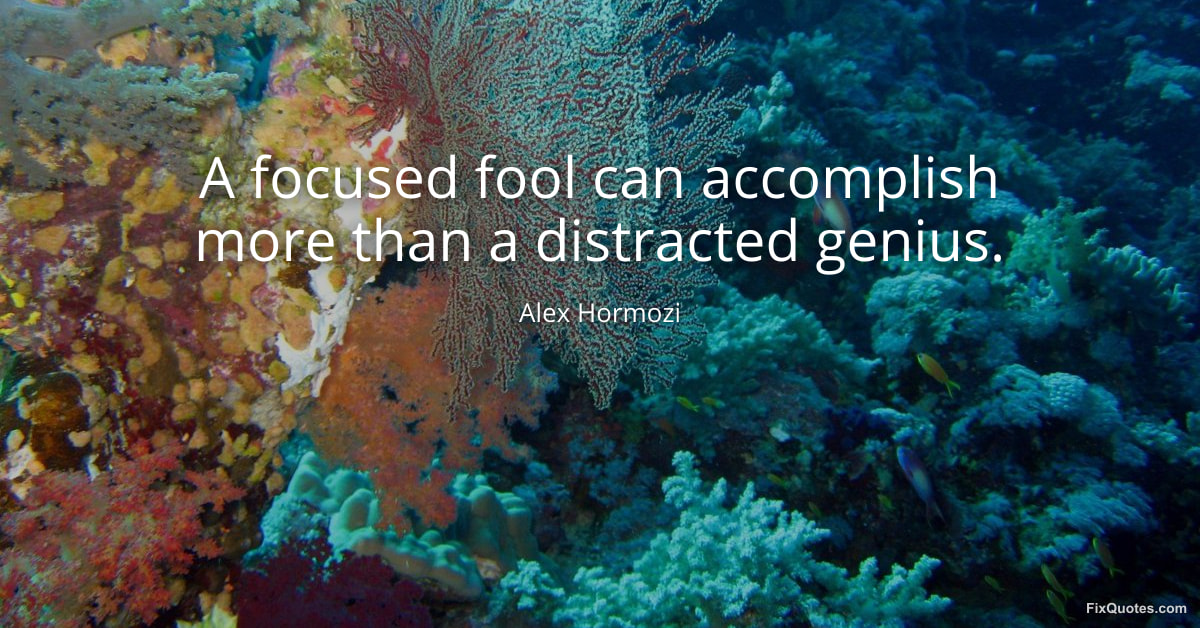
"A focused fool can accomplish more than a distracted genius"
About this Quote
Hormozi’s line is a gut-punch to a culture that fetishizes “genius” while quietly rewarding follow-through. Calling someone a “focused fool” is deliberately abrasive: it strips away the flattering myth that talent is destiny and replaces it with a harsher, more democratic metric - attention applied over time. The insult is the point. If even a fool can win with focus, then the rest of us lose our excuses.
The subtext is pure operator mentality, the kind that comes out of entrepreneurial trenches where outcomes don’t care about IQ, taste, or potential. Startups and sales aren’t graded on brilliance; they’re graded on shipped work, calls made, offers tested, and boring repetition. “Distracted genius” isn’t just a dig at smart people with too many tabs open. It’s a diagnosis of modern status: being clever is socially rewarded, but being consistent is what compounds. The quote flatters discipline while shaming scatter - a rhetorical combo that plays well in hustle-adjacent spaces because it’s both motivating and accusatory.
Context matters: Hormozi speaks to an audience drowning in optionality (tools, platforms, ideas) and starving for constraint. Focus becomes a competitive advantage precisely because it’s rare and uncomfortable. The line also smuggles in a business lesson: execution is a force multiplier, while distraction is a tax on talent. In a marketplace of constant novelty, the “fool” who keeps showing up can look, from a distance, like a genius.
The subtext is pure operator mentality, the kind that comes out of entrepreneurial trenches where outcomes don’t care about IQ, taste, or potential. Startups and sales aren’t graded on brilliance; they’re graded on shipped work, calls made, offers tested, and boring repetition. “Distracted genius” isn’t just a dig at smart people with too many tabs open. It’s a diagnosis of modern status: being clever is socially rewarded, but being consistent is what compounds. The quote flatters discipline while shaming scatter - a rhetorical combo that plays well in hustle-adjacent spaces because it’s both motivating and accusatory.
Context matters: Hormozi speaks to an audience drowning in optionality (tools, platforms, ideas) and starving for constraint. Focus becomes a competitive advantage precisely because it’s rare and uncomfortable. The line also smuggles in a business lesson: execution is a force multiplier, while distraction is a tax on talent. In a marketplace of constant novelty, the “fool” who keeps showing up can look, from a distance, like a genius.
Quote Details
| Topic | Self-Discipline |
|---|
More Quotes by Alex
Add to List