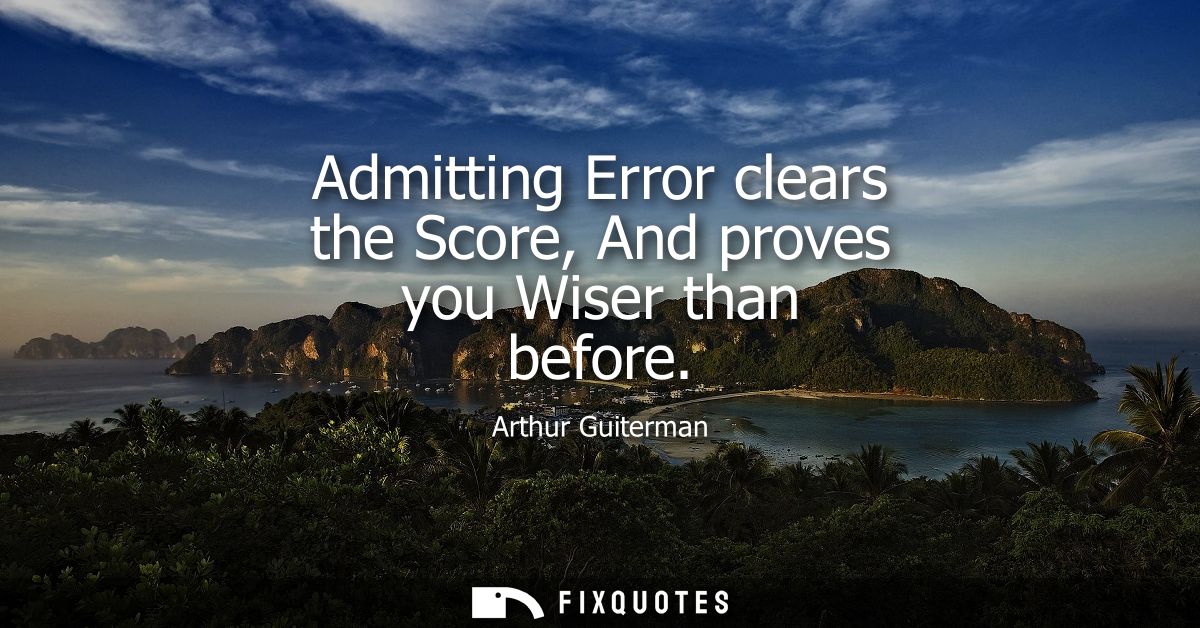
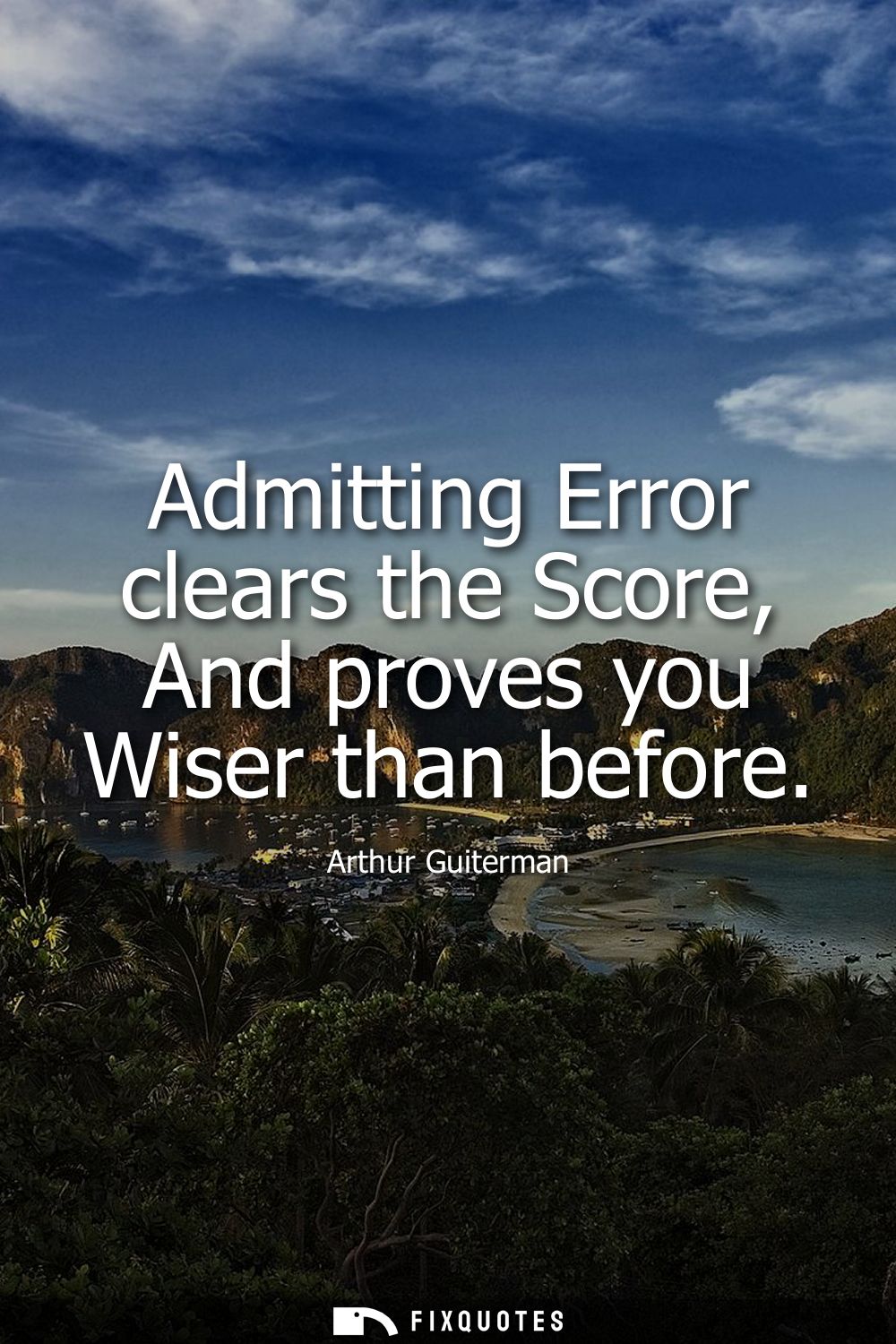
"Admitting Error clears the Score, And proves you Wiser than before"
About this Quote
Admitting you were wrong is usually framed as a loss, a ding to the ego, a public surrender. Guiterman flips that math with the neat, almost singsong logic of a comedian who knows that pride is expensive and denial is even pricier. "Clears the Score" borrows from games, debts, and social ledgers: error isn’t just a private mistake, it’s a running account that keeps accruing interest the longer you pretend it isn’t there. The phrase turns apology into bookkeeping. Pay what you owe, stop the penalties.
The second line tightens the punch: admitting error doesn’t just restore your reputation, it upgrades your status. "Proves you Wiser than before" is a sly reframing of humiliation as evidence of intelligence. Not "makes you" wiser - "proves you" wiser. The subtext is social: people aren’t evaluating your perfection; they’re watching how you handle imperfection. Owning the mistake becomes a performance of character, the kind that reads as maturity rather than weakness.
Context matters here. Guiterman wrote in an era when public decorum and "saving face" were major social currencies, especially among the middle-class audiences humorists courted. His couplet offers a practical ethic disguised as a rhyme: the fastest route back to dignity is transparency. It’s moral advice with a grin, engineered to slide past defensiveness. The wit isn’t ornamental; it’s the delivery system for a hard truth about how quickly self-deception turns into social debt.
The second line tightens the punch: admitting error doesn’t just restore your reputation, it upgrades your status. "Proves you Wiser than before" is a sly reframing of humiliation as evidence of intelligence. Not "makes you" wiser - "proves you" wiser. The subtext is social: people aren’t evaluating your perfection; they’re watching how you handle imperfection. Owning the mistake becomes a performance of character, the kind that reads as maturity rather than weakness.
Context matters here. Guiterman wrote in an era when public decorum and "saving face" were major social currencies, especially among the middle-class audiences humorists courted. His couplet offers a practical ethic disguised as a rhyme: the fastest route back to dignity is transparency. It’s moral advice with a grin, engineered to slide past defensiveness. The wit isn’t ornamental; it’s the delivery system for a hard truth about how quickly self-deception turns into social debt.
Quote Details
| Topic | Learning from Mistakes |
|---|
More Quotes by Arthur
Add to List