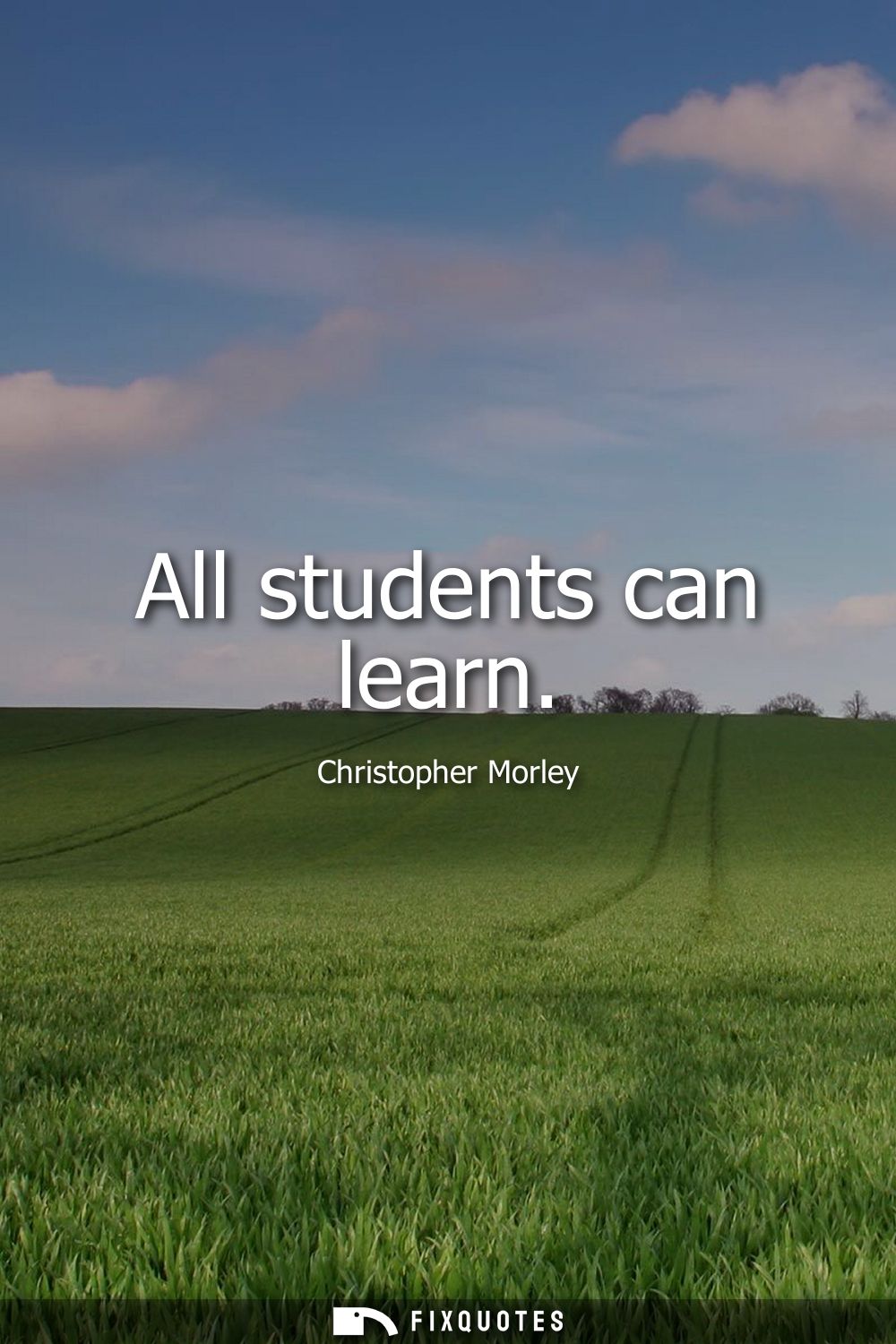
"All students can learn"
About this Quote
"All students can learn" reads like a bland motivational poster until you clock the quiet provocation inside it. Morley wasn’t a school-reform bureaucrat; he was a literary man with a journalist’s nose for complacency. The line works by refusing the escape hatches adults love: the myth of the "unteachable kid", the alibi of fixed intelligence, the convenient sorting of children into winners worth investing in and stragglers worth managing. Four words, zero wiggle room.
The specific intent is less to flatter students than to indict systems. If all students can learn, then failure stops being a personality trait and becomes a design problem: curriculum that assumes one tempo, classrooms built for compliance over curiosity, assessments that reward decoding the teacher rather than understanding the material. The sentence is deceptively universal; its real target is the selective compassion of institutions that preach opportunity while rationing patience.
The subtext also pushes back against an older, early-20th-century faith in gatekeeping - the era’s appetite for tracking, IQ testing, and the belief that talent is a scarce resource. Morley’s phrasing doesn’t romanticize struggle or promise equal outcomes. It’s a claim about capacity, not sameness, which is why it still lands: it demands differentiated effort without lapsing into sentimentality.
Culturally, the line survives because it’s both humane and inconvenient. It turns every "some kids just don’t..". into a question: don’t learn, or weren’t taught in a way that recognized them as teachable?
The specific intent is less to flatter students than to indict systems. If all students can learn, then failure stops being a personality trait and becomes a design problem: curriculum that assumes one tempo, classrooms built for compliance over curiosity, assessments that reward decoding the teacher rather than understanding the material. The sentence is deceptively universal; its real target is the selective compassion of institutions that preach opportunity while rationing patience.
The subtext also pushes back against an older, early-20th-century faith in gatekeeping - the era’s appetite for tracking, IQ testing, and the belief that talent is a scarce resource. Morley’s phrasing doesn’t romanticize struggle or promise equal outcomes. It’s a claim about capacity, not sameness, which is why it still lands: it demands differentiated effort without lapsing into sentimentality.
Culturally, the line survives because it’s both humane and inconvenient. It turns every "some kids just don’t..". into a question: don’t learn, or weren’t taught in a way that recognized them as teachable?
Quote Details
| Topic | Student |
|---|
More Quotes by Christopher
Add to List