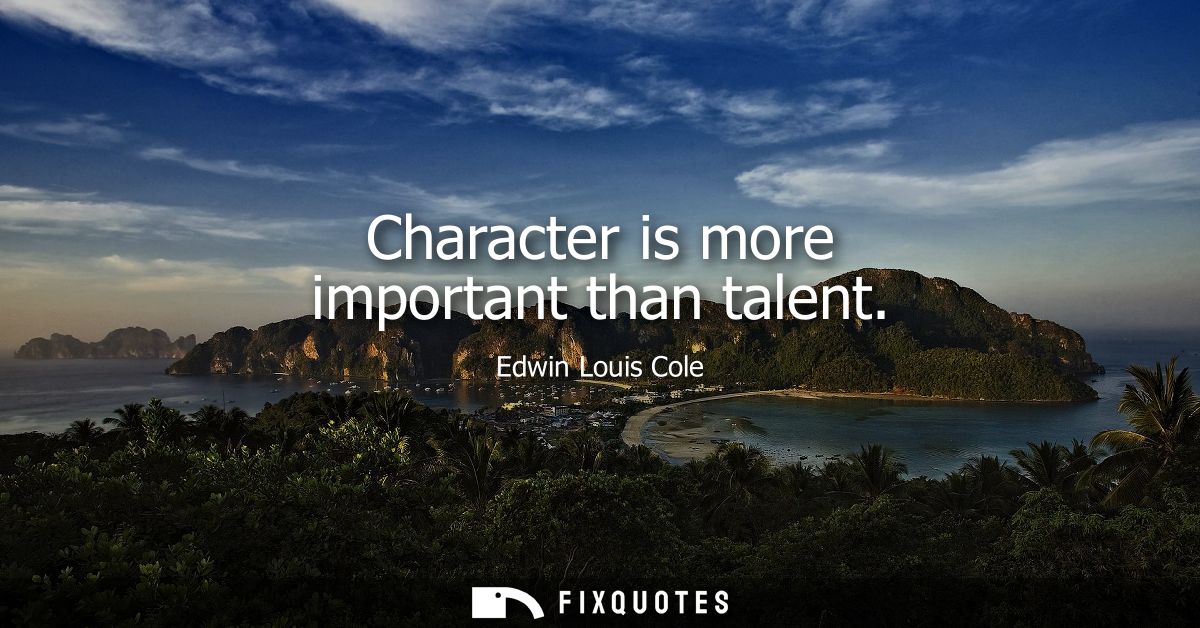
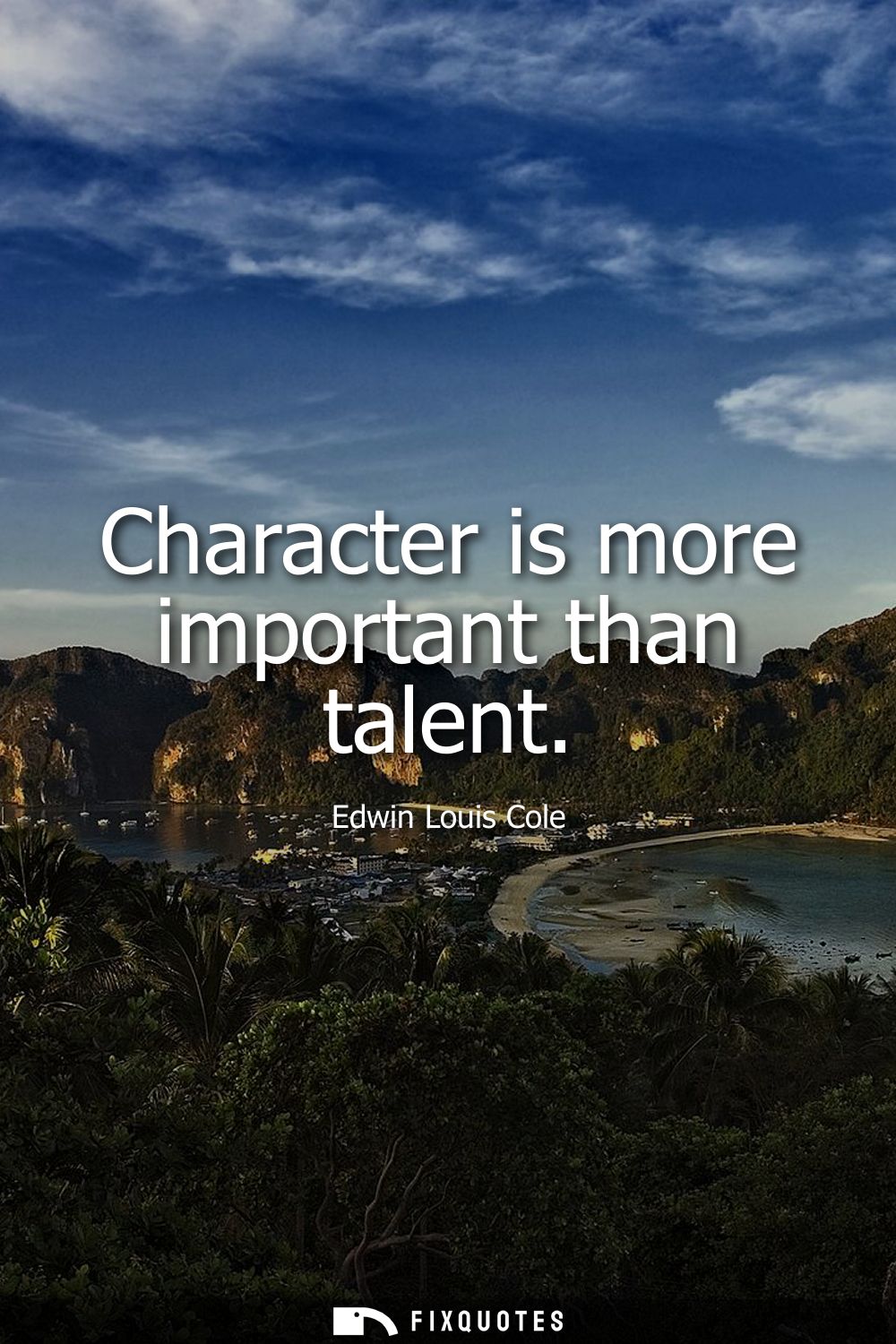
"Character is more important than talent"
About this Quote
In an age that loves prodigies and viral “genius,” Edwin Louis Cole’s line is a deliberate rebuke: stop confusing flash with foundation. “Talent” is the easy idol here, a word that flatters the gifted and excuses everyone else. “Character,” by contrast, is stubbornly unglamorous. It implies habits, restraint, accountability, and the willingness to do the right thing when no one is scoring your performance. The sentence works because it’s not a nuanced comparison; it’s a hierarchy. Cole isn’t balancing two virtues, he’s demoting one.
Cole’s context matters. Best known for men’s leadership writing rooted in Christian moral teaching, he’s speaking to a culture of self-improvement that can tilt into self-celebration. The subtext is pastoral and corrective: gifts are real, but they’re morally neutral. Talent can serve ego, seduction, even harm. Character is what keeps power from curdling. In that framework, talent without character isn’t just incomplete; it’s dangerous, because it accelerates whatever’s already inside you.
The quote also functions as a social diagnosis. Institutions routinely reward output and charisma because they’re legible and measurable. Character is slower, harder to audit, and often only becomes visible under stress. Cole is arguing for a different metric of leadership: not who can impress, but who can be trusted. That’s why the line persists; it’s less a motivational poster than a warning label for ambition.
Cole’s context matters. Best known for men’s leadership writing rooted in Christian moral teaching, he’s speaking to a culture of self-improvement that can tilt into self-celebration. The subtext is pastoral and corrective: gifts are real, but they’re morally neutral. Talent can serve ego, seduction, even harm. Character is what keeps power from curdling. In that framework, talent without character isn’t just incomplete; it’s dangerous, because it accelerates whatever’s already inside you.
The quote also functions as a social diagnosis. Institutions routinely reward output and charisma because they’re legible and measurable. Character is slower, harder to audit, and often only becomes visible under stress. Cole is arguing for a different metric of leadership: not who can impress, but who can be trusted. That’s why the line persists; it’s less a motivational poster than a warning label for ambition.
Quote Details
| Topic | Honesty & Integrity |
|---|
More Quotes by Edwin
Add to List