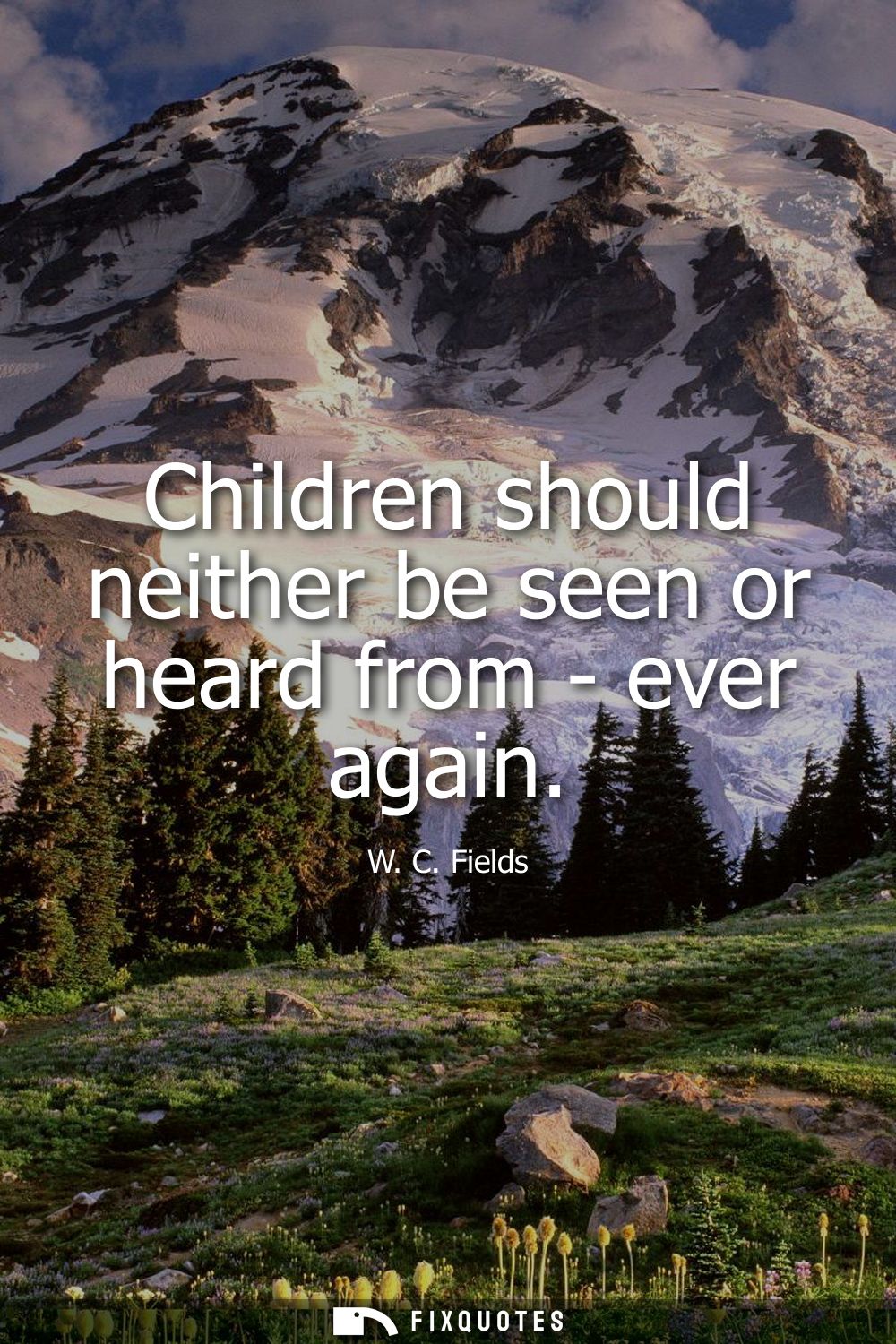
"Children should neither be seen or heard from - ever again"
About this Quote
Fields lands the punch by dressing outright misanthropy in the stiff collar of etiquette. The line riffs on the old Victorian admonition that children should be "seen and not heard", then snaps it into something more extreme: not just quiet kids, but erased kids. The comedy isn’t merely in the cruelty; it’s in how casually he escalates a familiar social rule into a gleeful, authoritarian impossibility. That jump is the engine: you recognize the premise, then you’re jolted by the absolutism.
The intent isn’t policy, it’s persona. Fields cultivated a screen identity as the put-upon adult - annoyed, cornered, perpetually one tantrum away from drink - and children are his perfect antagonists. They represent noise, chaos, public disruption, and the sentimental expectations society piles onto adults: be patient, be nurturing, pretend this is charming. His gag is a refusal of that moral script. It lets the audience momentarily vent their own forbidden irritations while keeping a safe distance through hyperbole.
The subtext is also about modernity and performance. In the early 20th-century entertainment world Fields inhabited, sweetness was a currency; kid-centered sentiment sold. His line spits in that currency, using deadpan exaggeration to puncture the era’s saccharine innocence. It’s a cynical wink: the world keeps demanding you adore children, so he responds with an answer so excessive it becomes a confession of fatigue - and a dare to laugh at it.
The intent isn’t policy, it’s persona. Fields cultivated a screen identity as the put-upon adult - annoyed, cornered, perpetually one tantrum away from drink - and children are his perfect antagonists. They represent noise, chaos, public disruption, and the sentimental expectations society piles onto adults: be patient, be nurturing, pretend this is charming. His gag is a refusal of that moral script. It lets the audience momentarily vent their own forbidden irritations while keeping a safe distance through hyperbole.
The subtext is also about modernity and performance. In the early 20th-century entertainment world Fields inhabited, sweetness was a currency; kid-centered sentiment sold. His line spits in that currency, using deadpan exaggeration to puncture the era’s saccharine innocence. It’s a cynical wink: the world keeps demanding you adore children, so he responds with an answer so excessive it becomes a confession of fatigue - and a dare to laugh at it.
Quote Details
| Topic | Sarcastic |
|---|---|
| Source | Help us find the source |
| Cite |
Citation Formats
APA Style (7th ed.)
Fields, W. C. (2026, January 18). Children should neither be seen or heard from - ever again. FixQuotes. https://fixquotes.com/quotes/children-should-neither-be-seen-or-heard-from--2222/
Chicago Style
Fields, W. C. "Children should neither be seen or heard from - ever again." FixQuotes. January 18, 2026. https://fixquotes.com/quotes/children-should-neither-be-seen-or-heard-from--2222/.
MLA Style (9th ed.)
"Children should neither be seen or heard from - ever again." FixQuotes, 18 Jan. 2026, https://fixquotes.com/quotes/children-should-neither-be-seen-or-heard-from--2222/. Accessed 13 Feb. 2026.
More Quotes by C. Fields
Add to List