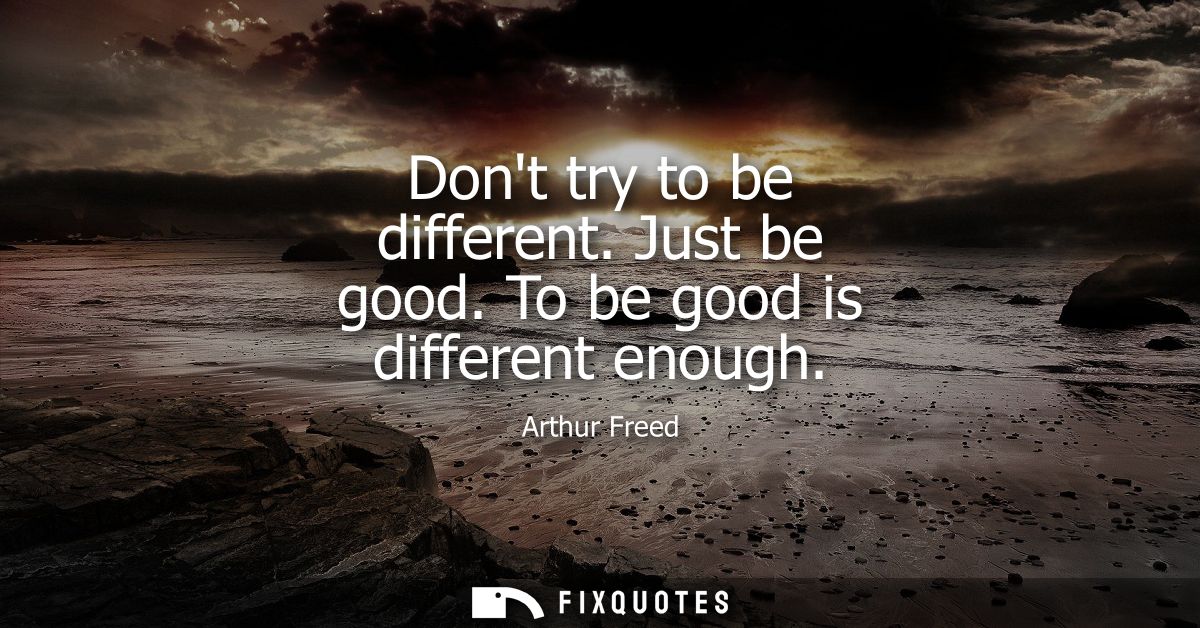
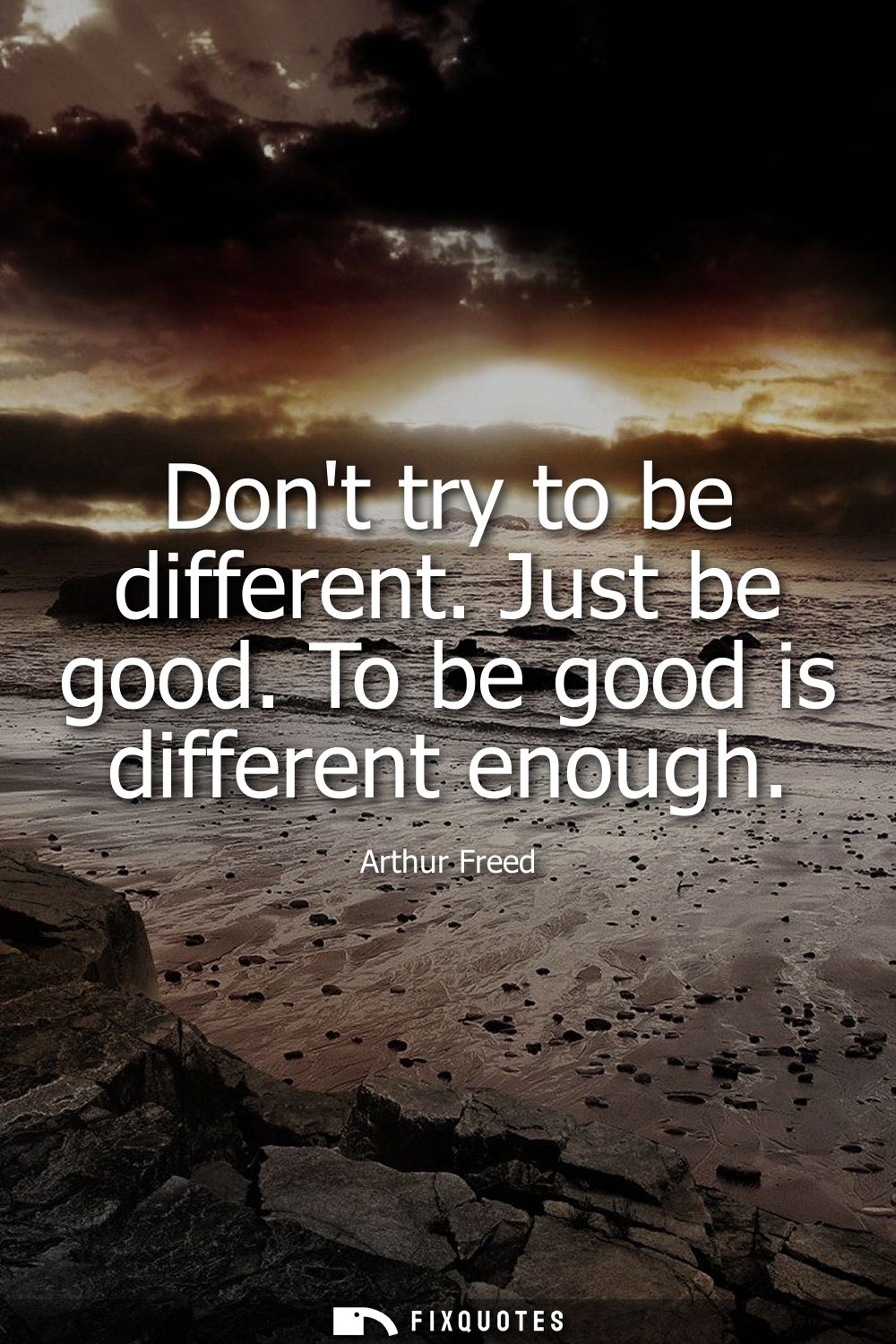
"Don't try to be different. Just be good. To be good is different enough"
About this Quote
Novelty is the cheapest currency in show business, and Arthur Freed is warning you not to get paid in it. “Don’t try to be different” sounds almost heretical in an industry built on the pitch of “never seen before,” but Freed - the producer behind MGM’s Freed Unit and the gleaming machinery of the Hollywood musical - understood a quieter truth: audiences don’t fall for eccentricity, they fall for craft that makes the extraordinary look effortless.
The line is calibrated like a producer’s note. “Just be good” strips away the romance of the tortured original and replaces it with a workman’s ethic: rehearsal, revision, taste. The subtext is managerial and surprisingly humane: stop performing your uniqueness and start earning it. “To be good is different enough” flips the usual hierarchy. Difference isn’t the goal; it’s the side effect of mastery. In a marketplace where everyone is chasing a gimmick, competence becomes the rarest spectacle.
Context matters. Freed’s era industrialized creativity. Studio systems standardized everything from lighting to stardom, which made “being different” easy to fake (a hat, a scandal, a hook) and “being good” hard to sustain (timing, choreography, song integration, narrative rhythm). The quote is less anti-originality than anti-posturing: if your work is genuinely strong, it will separate itself without the anxious self-branding. Freed is arguing for a kind of invisible innovation - the sort that looks, to the public, like magic, and to the people backstage, like discipline.
The line is calibrated like a producer’s note. “Just be good” strips away the romance of the tortured original and replaces it with a workman’s ethic: rehearsal, revision, taste. The subtext is managerial and surprisingly humane: stop performing your uniqueness and start earning it. “To be good is different enough” flips the usual hierarchy. Difference isn’t the goal; it’s the side effect of mastery. In a marketplace where everyone is chasing a gimmick, competence becomes the rarest spectacle.
Context matters. Freed’s era industrialized creativity. Studio systems standardized everything from lighting to stardom, which made “being different” easy to fake (a hat, a scandal, a hook) and “being good” hard to sustain (timing, choreography, song integration, narrative rhythm). The quote is less anti-originality than anti-posturing: if your work is genuinely strong, it will separate itself without the anxious self-branding. Freed is arguing for a kind of invisible innovation - the sort that looks, to the public, like magic, and to the people backstage, like discipline.
Quote Details
| Topic | Honesty & Integrity |
|---|
More Quotes by Arthur
Add to List