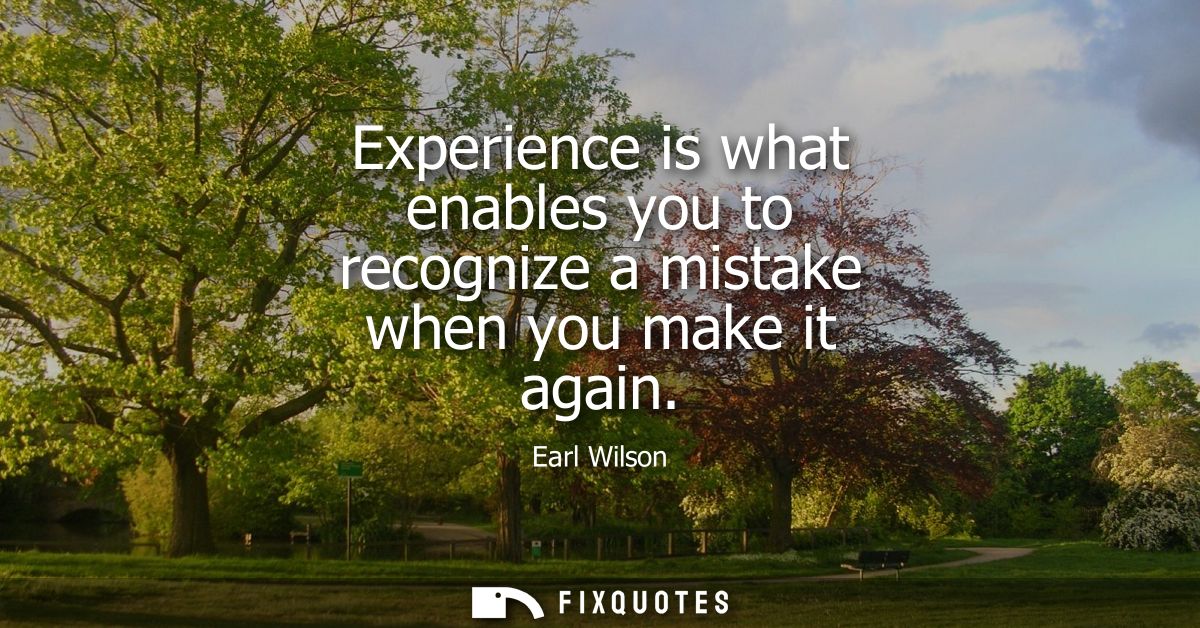
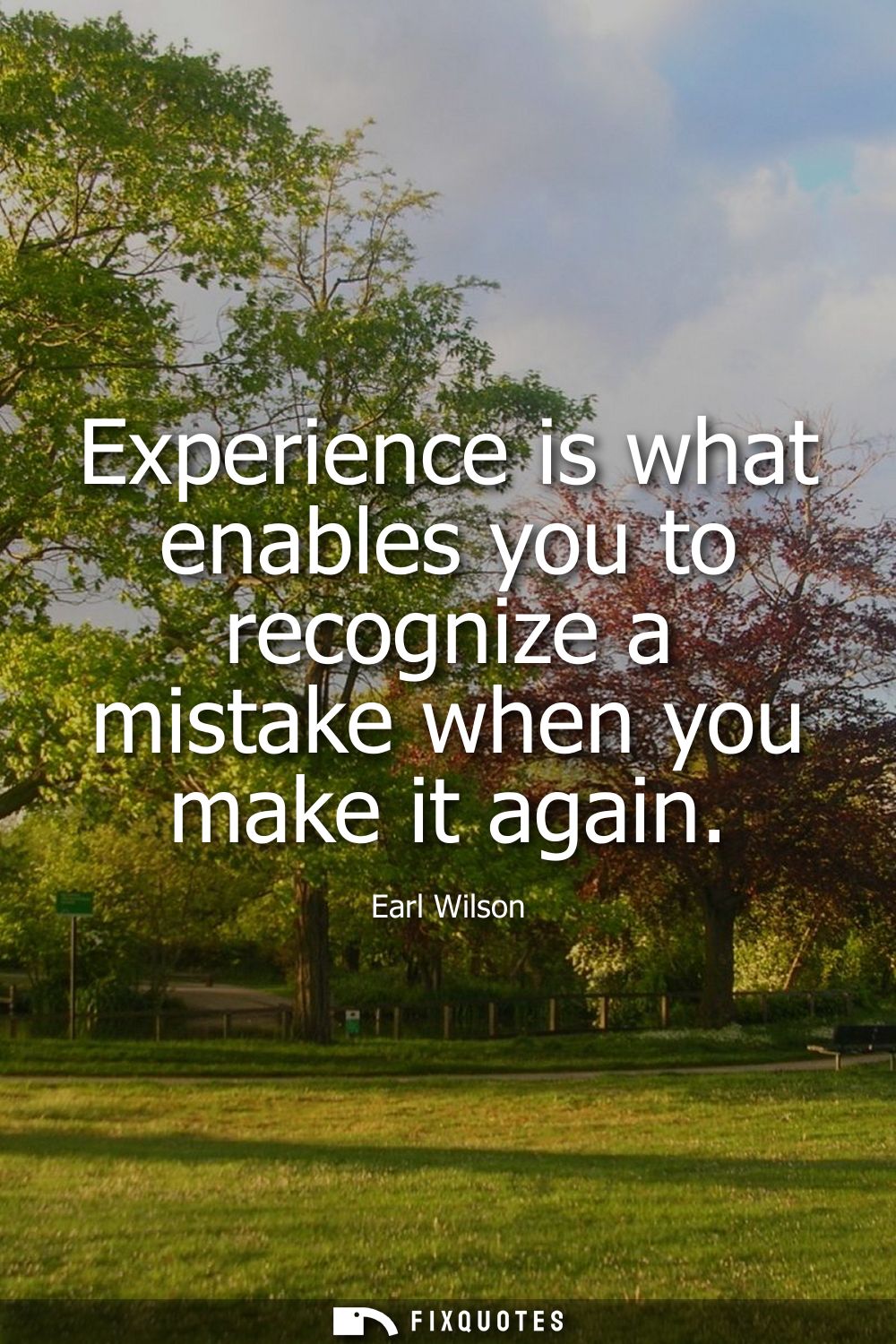
"Experience is what enables you to recognize a mistake when you make it again"
About this Quote
“Experience is what enables you to recognize a mistake when you make it again” lands like a locker-room joke that stings because it’s true. Wilson frames experience not as wisdom’s trophy, but as the bruises you can name on impact. The punchline is the reversal: we expect experience to prevent failure; he downgrades it to improved pattern recognition mid-failure. That’s funny, but it’s also an indictment of how learning actually works under pressure.
As an athlete’s line, it carries the implicit rhythm of repetition: drills, film study, the same situations returning in different uniforms. The subtext is that the body and mind don’t evolve through lofty insight; they evolve through reruns. You don’t stop biting on the pump fake because you read a philosophy book. You stop because you’ve been burned, you’ve watched yourself get burned, and you’ve internalized the cost. Then you still bite sometimes, except now there’s a half-second of awareness: Oh no, not this again.
Wilson also hints at the uncomfortable truth that growth is often reactive, not proactive. “Recognize” is a modest verb: it’s the moment the ego cracks open and admits accountability while the mistake is already in motion. That makes the quote feel contemporary in a culture obsessed with optimization. It rejects the clean narrative of self-improvement and replaces it with something grittier: progress as a shrinking gap between error and awareness. In sports and in life, that gap is where better decisions eventually live.
As an athlete’s line, it carries the implicit rhythm of repetition: drills, film study, the same situations returning in different uniforms. The subtext is that the body and mind don’t evolve through lofty insight; they evolve through reruns. You don’t stop biting on the pump fake because you read a philosophy book. You stop because you’ve been burned, you’ve watched yourself get burned, and you’ve internalized the cost. Then you still bite sometimes, except now there’s a half-second of awareness: Oh no, not this again.
Wilson also hints at the uncomfortable truth that growth is often reactive, not proactive. “Recognize” is a modest verb: it’s the moment the ego cracks open and admits accountability while the mistake is already in motion. That makes the quote feel contemporary in a culture obsessed with optimization. It rejects the clean narrative of self-improvement and replaces it with something grittier: progress as a shrinking gap between error and awareness. In sports and in life, that gap is where better decisions eventually live.
Quote Details
| Topic | Learning from Mistakes |
|---|
More Quotes by Earl
Add to List