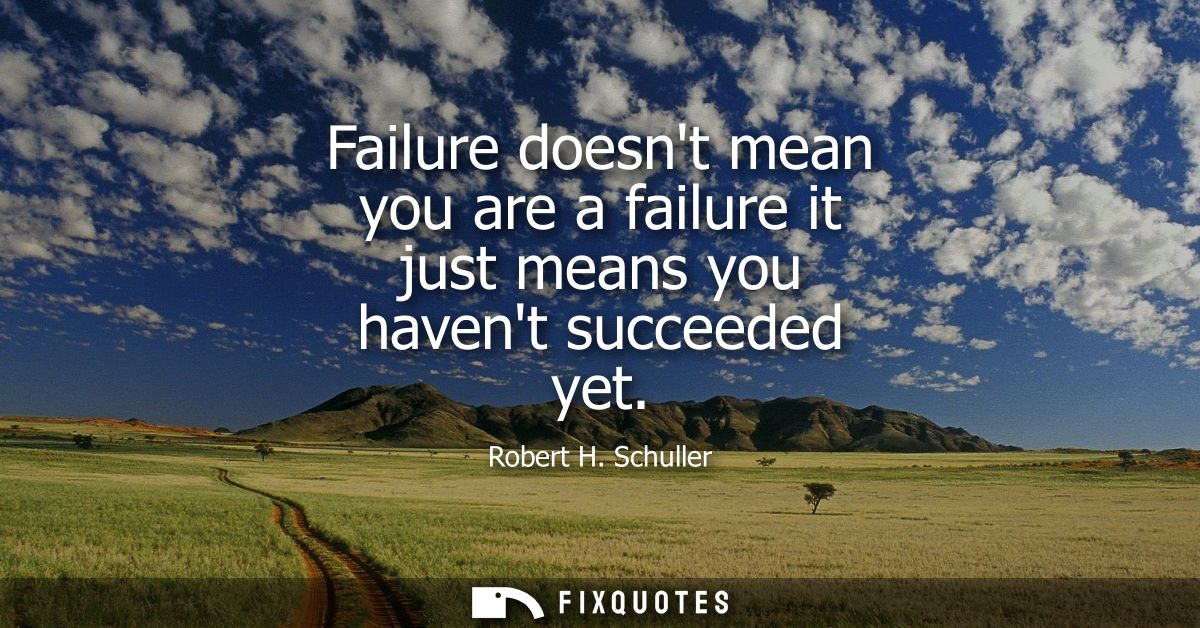
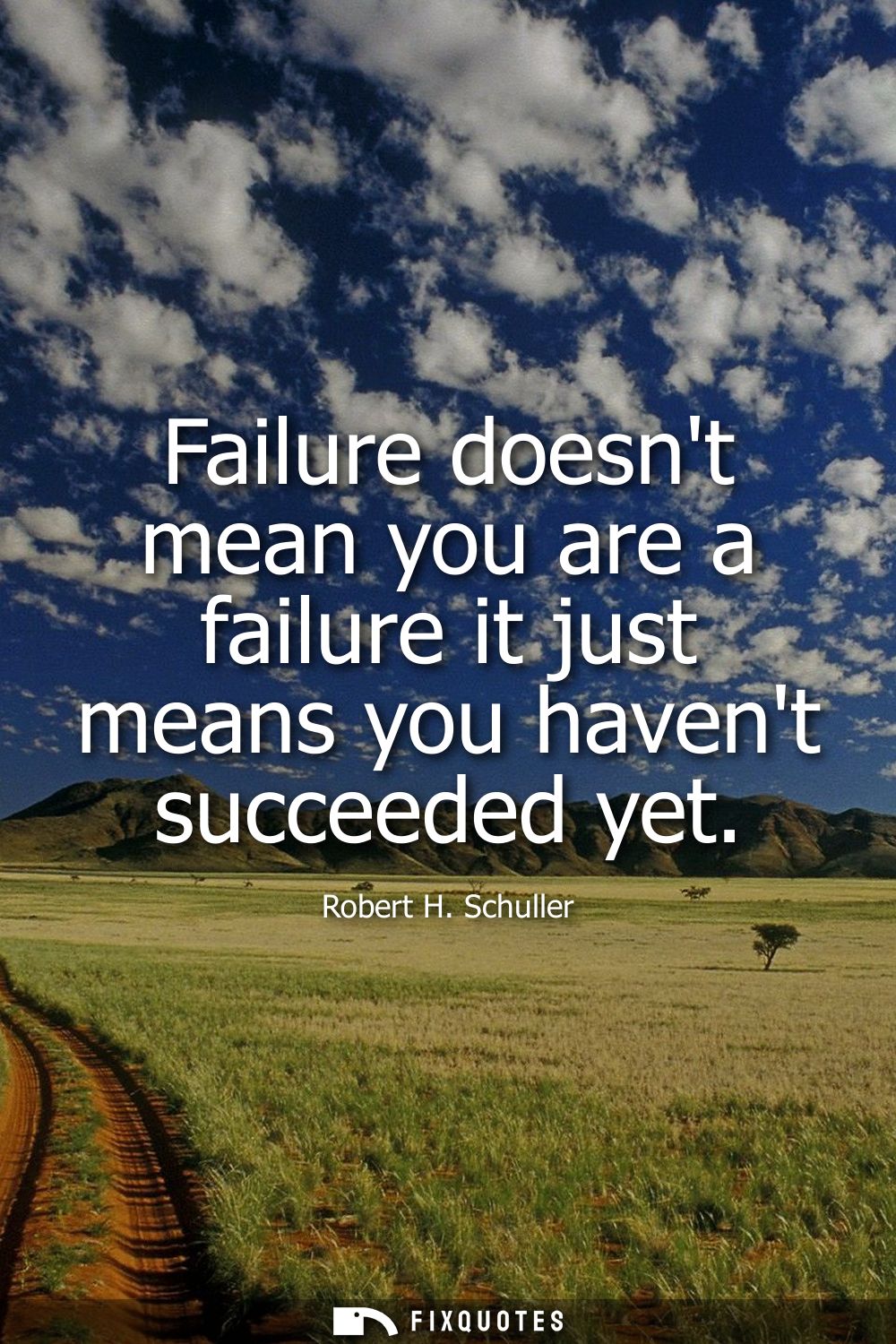
"Failure doesn't mean you are a failure it just means you haven't succeeded yet"
About this Quote
Schuller turns failure from a verdict into a delay. The sentence separates an outcome from an identity, insisting that a failed attempt does not define a failed person. The small word yet carries the weight of the message. It opens a future horizon, implying that time, learning, and persistence can convert the present setback into eventual success. That reframing strips failure of its shame and relocates it to the realm of process, where missteps are not moral judgments but data points on a longer path.
Such a stance aligns with a growth-centered view of human effort: ability is not fixed, and results evolve when skills, strategies, and conditions improve. It also invites resilience. If the measure of self is not tied to a single outcome, the courage to try again survives disappointment. The phrase suggests a practical sequence: grieve what did not work, extract the lesson, adjust, and continue. It is not naive optimism; it is disciplined hope anchored in action.
The line reflects Schullers larger ministry of possibility thinking. As a televangelist who built the Crystal Cathedral and hosted the Hour of Power, he crafted messages that merged spiritual assurance with motivational clarity, speaking to people who feared that a setback had erased their worth or their destiny. Within that tradition, failure becomes an occasion for grace and creativity rather than despair.
There is a useful caution tucked within the encouragement. Calling something not-yet-success does not excuse repeating the same approach. Progress depends on iteration, honest feedback, and the willingness to change tactics while holding fast to a meaningful goal. Perseverance and adaptability must travel together. Understood this way, the statement offers a humane, energizing standard: let outcomes inform you without naming you, and let time plus effort plus learning do their quiet work until the result catches up with your intent.
Such a stance aligns with a growth-centered view of human effort: ability is not fixed, and results evolve when skills, strategies, and conditions improve. It also invites resilience. If the measure of self is not tied to a single outcome, the courage to try again survives disappointment. The phrase suggests a practical sequence: grieve what did not work, extract the lesson, adjust, and continue. It is not naive optimism; it is disciplined hope anchored in action.
The line reflects Schullers larger ministry of possibility thinking. As a televangelist who built the Crystal Cathedral and hosted the Hour of Power, he crafted messages that merged spiritual assurance with motivational clarity, speaking to people who feared that a setback had erased their worth or their destiny. Within that tradition, failure becomes an occasion for grace and creativity rather than despair.
There is a useful caution tucked within the encouragement. Calling something not-yet-success does not excuse repeating the same approach. Progress depends on iteration, honest feedback, and the willingness to change tactics while holding fast to a meaningful goal. Perseverance and adaptability must travel together. Understood this way, the statement offers a humane, energizing standard: let outcomes inform you without naming you, and let time plus effort plus learning do their quiet work until the result catches up with your intent.
Quote Details
| Topic | Never Give Up |
|---|
More Quotes by Robert
Add to List