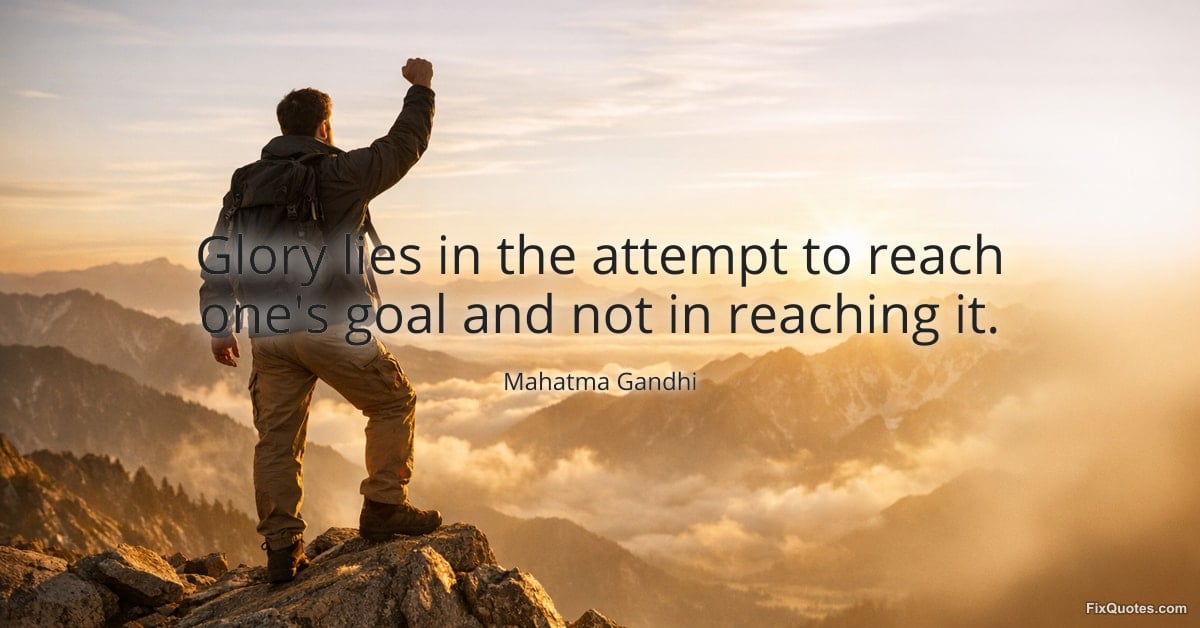
"Glory lies in the attempt to reach one's goal and not in reaching it"
About this Quote
Gandhi’s line flips the usual scoreboard: the triumph is not the trophy, but the discipline of striving under pressure. Coming from a political leader who turned moral philosophy into mass action, it’s less self-help than strategic messaging. Gandhi knew that movements built on perfect outcomes break the moment history refuses to cooperate. By relocating “glory” to the attempt, he inoculates his followers against despair, fatigue, and the inevitable half-wins of political struggle.
The subtext is almost logistical. Nonviolent resistance demands sustained participation from ordinary people who can’t be promised quick victory and who are asked to absorb real costs - jail, beatings, social ostracism - without retaliating. If the only meaningful validation were “reaching the goal,” the entire project would be psychologically impossible. Gandhi offers a different currency: dignity earned in the act of trying, especially when trying is risky and slow.
Rhetorically, the sentence is spare and absolute, like a proverb designed to travel. It uses a clean opposition (“attempt” versus “reaching”) to reroute ambition away from ego and toward process. That matters because Gandhi’s politics relied on self-purification as much as public protest; the means had to be ethically coherent with the ends.
Context sharpens the point: decolonization was not a straight line and independence did not arrive as a tidy moral reward. Partition and communal violence complicated any easy narrative of arrival. The quote anticipates that mess. It’s a way of keeping moral authority intact even when the destination, once reached, fails to feel like glory.
The subtext is almost logistical. Nonviolent resistance demands sustained participation from ordinary people who can’t be promised quick victory and who are asked to absorb real costs - jail, beatings, social ostracism - without retaliating. If the only meaningful validation were “reaching the goal,” the entire project would be psychologically impossible. Gandhi offers a different currency: dignity earned in the act of trying, especially when trying is risky and slow.
Rhetorically, the sentence is spare and absolute, like a proverb designed to travel. It uses a clean opposition (“attempt” versus “reaching”) to reroute ambition away from ego and toward process. That matters because Gandhi’s politics relied on self-purification as much as public protest; the means had to be ethically coherent with the ends.
Context sharpens the point: decolonization was not a straight line and independence did not arrive as a tidy moral reward. Partition and communal violence complicated any easy narrative of arrival. The quote anticipates that mess. It’s a way of keeping moral authority intact even when the destination, once reached, fails to feel like glory.
Quote Details
| Topic | Perseverance |
|---|
More Quotes by Mahatma
Add to List