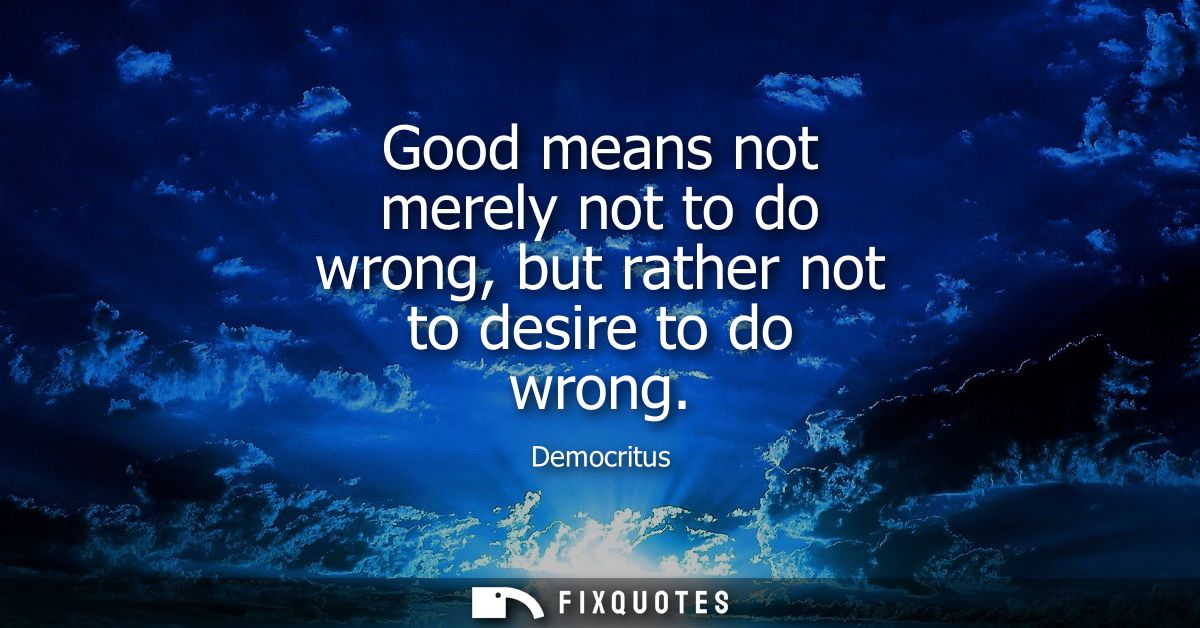
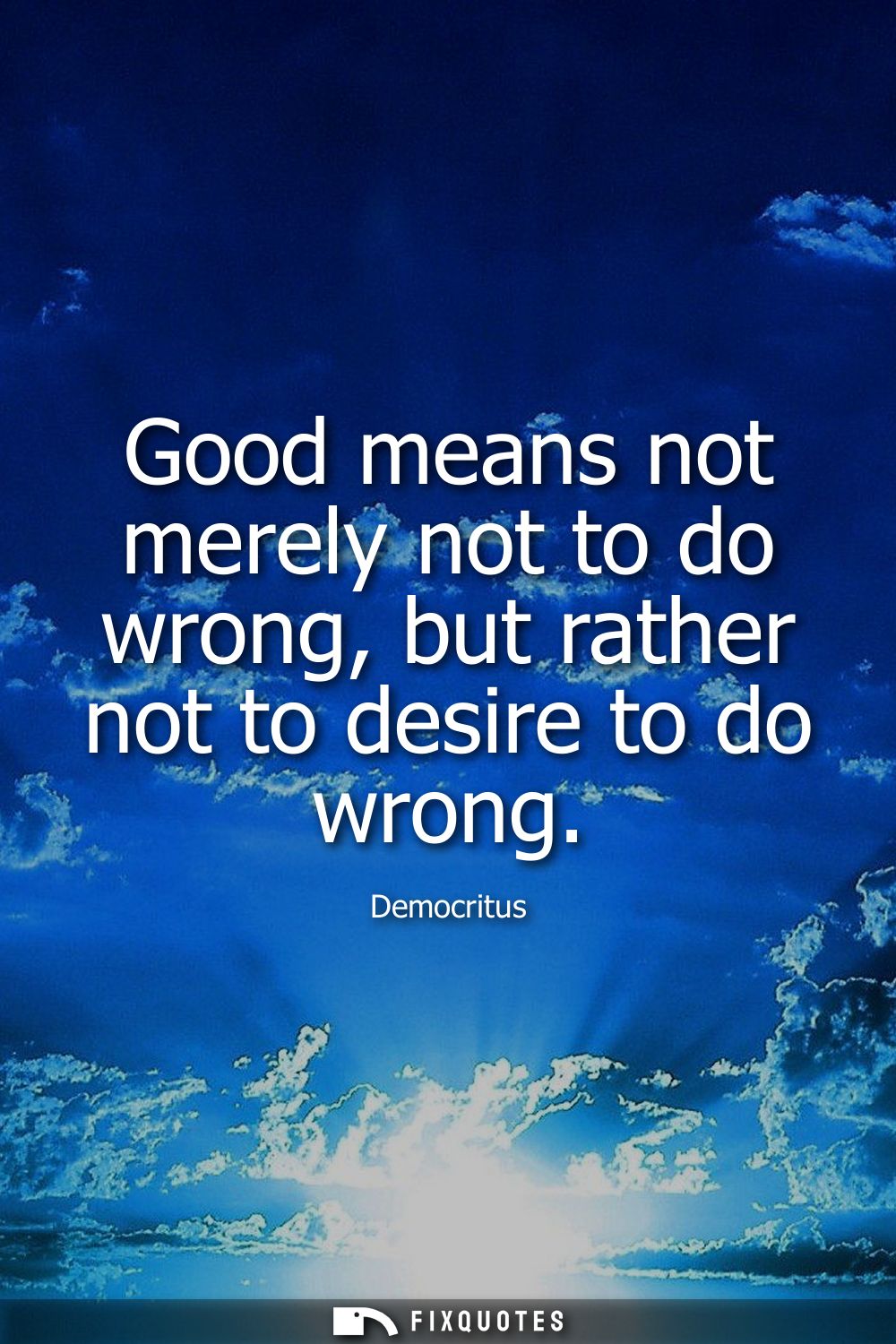
"Good means not merely not to do wrong, but rather not to desire to do wrong"
About this Quote
The phrasing does quiet philosophical work: “not merely” demotes rule-following to the beginner level, while “rather” elevates a more demanding, more intimate ethic. Democritus isn’t impressed by restraint that depends on surveillance, fear, or convenience. If you don’t steal because the locks are strong, you’re not good; you’re managed. Goodness, here, is a kind of psychological alignment where temptation itself has been defanged.
That fits Democritus’s broader project as an early Greek thinker interested in cheerfulness (euthymia) and the self’s equilibrium. In a city-state culture where reputation and public honor policed conduct, this is a pointed reorientation: the real arena is private. The subtext is slightly suspicious of public virtue, the kind that performs well in the agora and rots in solitude. It also anticipates later “virtue ethics” (think Aristotle, then the Stoics): character over checklist, habituation over confession, the moral life as something you cultivate until your impulses change.
It’s an ethics that doesn’t flatter us. It asks for renovation, not just restraint.
Quote Details
| Topic | Ethics & Morality |
|---|---|
| Source | Help us find the source |
| Cite |
Citation Formats
APA Style (7th ed.)
Democritus. (2026, January 17). Good means not merely not to do wrong, but rather not to desire to do wrong. FixQuotes. https://fixquotes.com/quotes/good-means-not-merely-not-to-do-wrong-but-rather-27217/
Chicago Style
Democritus. "Good means not merely not to do wrong, but rather not to desire to do wrong." FixQuotes. January 17, 2026. https://fixquotes.com/quotes/good-means-not-merely-not-to-do-wrong-but-rather-27217/.
MLA Style (9th ed.)
"Good means not merely not to do wrong, but rather not to desire to do wrong." FixQuotes, 17 Jan. 2026, https://fixquotes.com/quotes/good-means-not-merely-not-to-do-wrong-but-rather-27217/. Accessed 3 Apr. 2026.