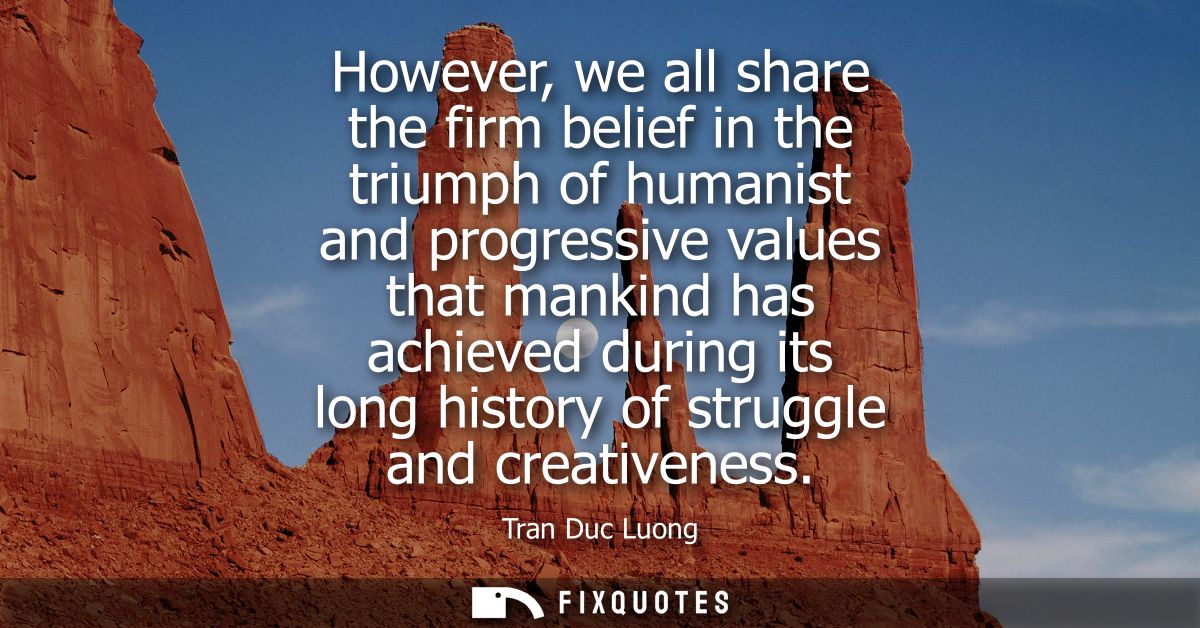
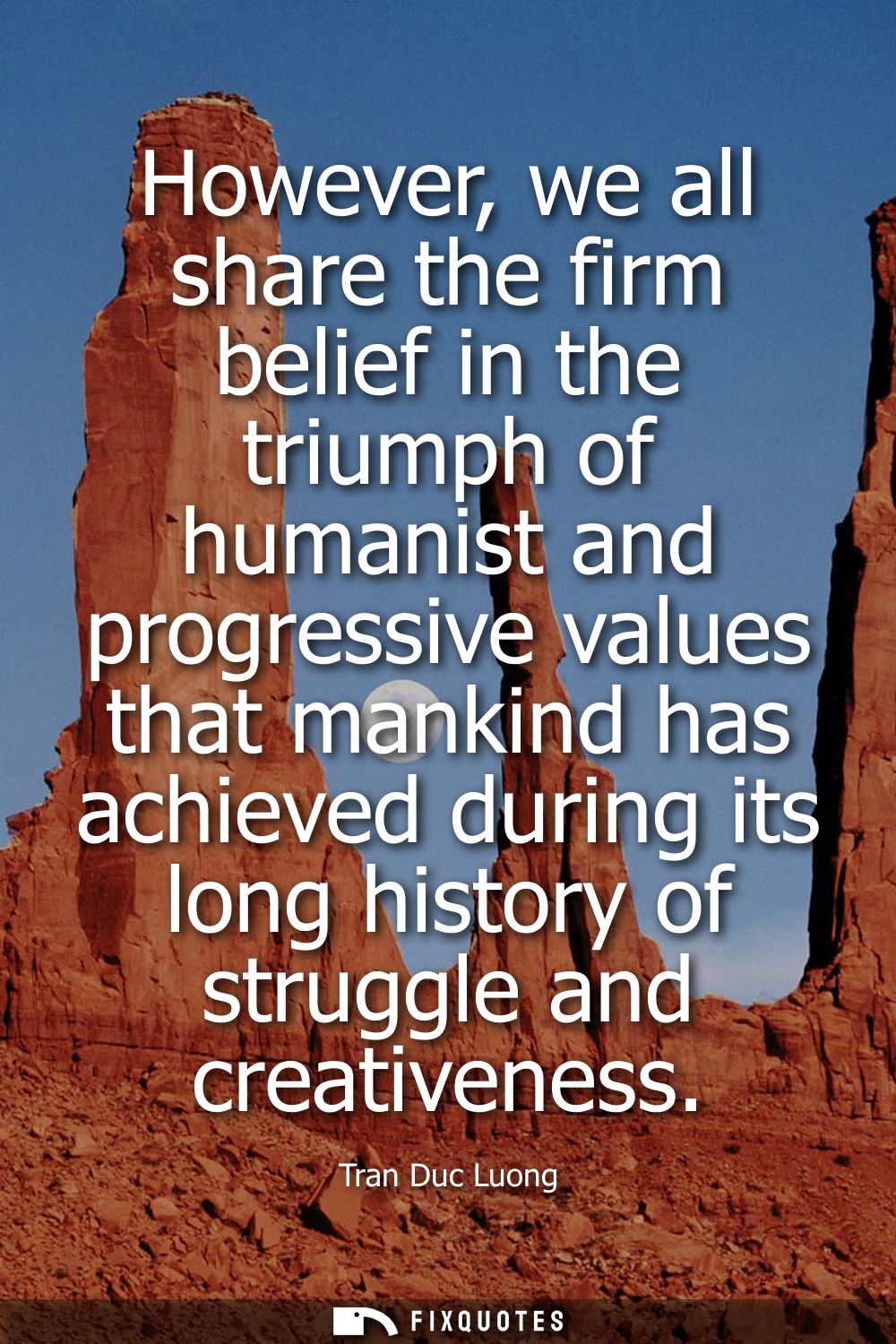
"However, we all share the firm belief in the triumph of humanist and progressive values that mankind has achieved during its long history of struggle and creativeness"
About this Quote
The sentence marries optimism with sobriety: a confident trust in the eventual triumph of humanist and progressive values, grounded not in wishful thinking but in the accumulated record of humanitys struggles and creative breakthroughs. The cadence situates progress as the outcome of conflict and invention, implying that moral advancement does not arrive by drift or decree; it is earned through effort, sacrifice, and the imaginative capacity to build new institutions, ideas, and solidarities.
Spoken by Tran Duc Luong, a Vietnamese leader shaped by war, reconstruction, and reform, the line resonates with Vietnams own trajectory. A nation that endured colonialism and prolonged conflict later embraced renewal and global integration while affirming socialist ideals. That history makes the phrase long history of struggle and creativeness more than abstract rhetoric. It points to a lived experience in which hardship forged ingenuity, and where national development was framed as part of a broader human march toward dignity, education, scientific progress, and social justice.
Calling these values humanist and progressive bridges domestic ideology with universal aspirations. Humanism invokes the worth of the person, compassion, and the cultivation of knowledge; progressive signals forward-looking policy, social inclusion, and modernization. The inclusive we all share positions such commitments as common ground across nations and systems, a diplomatic move suited to post-Cold War appeals for cooperation, peace, and development.
Triumph here is not a guaranteed endpoint but a directional bet on what history has shown is possible: abolition of entrenched injustices, decolonization, expanded rights, and remarkable scientific gains. At the same time, the statement acknowledges fragility. Values prevail only if people continue the work of struggle and creativeness, confronting setbacks with innovation and solidarity.
Ultimately the message is a pledge and an invitation: to align national endeavors with a universal ethic, to keep faith with the record of human progress, and to extend it through further courageous, imaginative action.
Spoken by Tran Duc Luong, a Vietnamese leader shaped by war, reconstruction, and reform, the line resonates with Vietnams own trajectory. A nation that endured colonialism and prolonged conflict later embraced renewal and global integration while affirming socialist ideals. That history makes the phrase long history of struggle and creativeness more than abstract rhetoric. It points to a lived experience in which hardship forged ingenuity, and where national development was framed as part of a broader human march toward dignity, education, scientific progress, and social justice.
Calling these values humanist and progressive bridges domestic ideology with universal aspirations. Humanism invokes the worth of the person, compassion, and the cultivation of knowledge; progressive signals forward-looking policy, social inclusion, and modernization. The inclusive we all share positions such commitments as common ground across nations and systems, a diplomatic move suited to post-Cold War appeals for cooperation, peace, and development.
Triumph here is not a guaranteed endpoint but a directional bet on what history has shown is possible: abolition of entrenched injustices, decolonization, expanded rights, and remarkable scientific gains. At the same time, the statement acknowledges fragility. Values prevail only if people continue the work of struggle and creativeness, confronting setbacks with innovation and solidarity.
Ultimately the message is a pledge and an invitation: to align national endeavors with a universal ethic, to keep faith with the record of human progress, and to extend it through further courageous, imaginative action.
Quote Details
| Topic | Human Rights |
|---|
More Quotes by Tran
Add to List