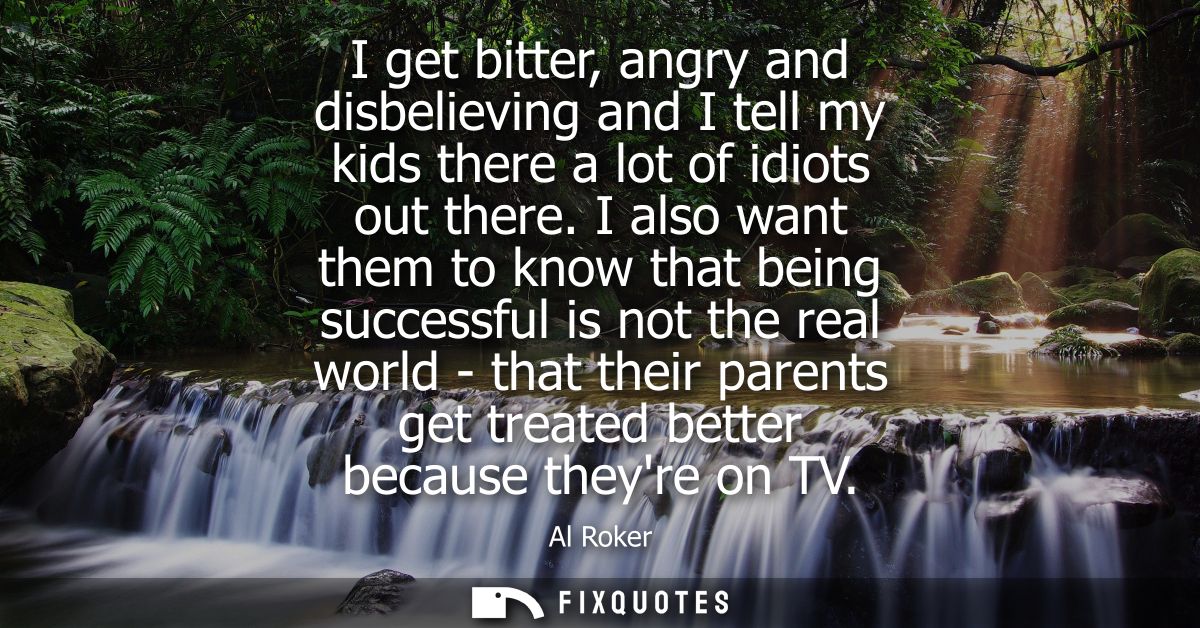
"I get bitter, angry and disbelieving and I tell my kids there a lot of idiots out there. I also want them to know that being successful is not the real world - that their parents get treated better because they're on TV"
About this Quote
This quote from Al Roker exposes an extensive commentary on popularity, success, and social values. Roker begins by confessing to experiencing negative emotions-- bitterness, anger, and shock-- recommending a level of disappointment and disillusionment with society. This raw emotional admission is quite relatable, as lots of people face such feelings when faced with oppression or irrationality worldwide.
Roker then discusses informing his kids that "there are a great deal of idiots out there". This blunt statement can be seen as both protective and instructional. As a parent, he is likely attempting to prepare his kids for the harsh realities of life, motivating them to be important thinkers who can recognize foolishness and lack of knowledge on the planet around them. By doing so, Roker intends to equip his children with the tools required to navigate an intricate world filled with varying opinions and habits.
The second part of the quote moves to a reflection on success and its perception in society. Roker's assertion that "succeeding is not the real life" challenges the standard concept that success, specifically of the public and monetary range, equates to real fulfillment or truth. This declaration appears to emphasize the disparity in between viewed success and real, everyday experiences.
When Roker notes that his household is treated better due to the fact that they are on TV, he highlights the shallow nature of fame. This acknowledgment of preferential treatment based upon celebrity status serves as a tip of social biases that focus on popularity and presence over character and authenticity. Roker appears to be warning his kids versus valuing superficial honors and advises them that genuine worth lies beyond public understanding.
In essence, Al Roker's commentary is a candid tip of the flawed nature of societal values. By sharing these insights with his kids, he hopes to impart in them a sense of groundedness that goes beyond popularity and stresses credibility, vital awareness, and real worth.
About the Author