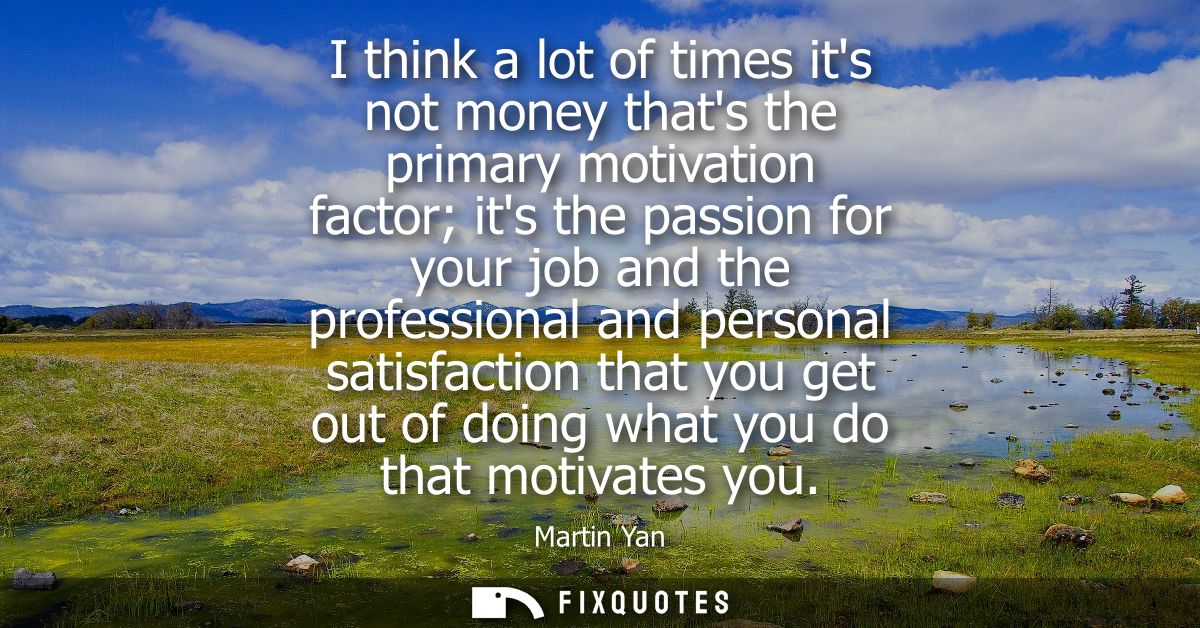
"I think a lot of times it's not money that's the primary motivation factor; it's the passion for your job and the professional and personal satisfaction that you get out of doing what you do that motivates you"
About this Quote
Martin Yan’s words highlight a profound truth about human motivation, especially in the context of career and work. While financial incentives undoubtedly play a role in how people choose their occupations or career paths, Yan suggests that money is not always at the core of what truly drives individuals to excel. Instead, it is the love for what they do, their passion, and the sense of fulfillment and accomplishment that fuels their commitment and dedication.
The intrinsic satisfaction gained from engaging in meaningful tasks is often far more sustaining and rewarding than external rewards alone. When people are passionate about their work, they are more likely to approach challenges creatively, invest additional time and effort, and demonstrate resilience during setbacks. This intrinsic motivation leads to a deeper sense of professional pride and personal joy. The pleasure of mastering a skill, the gratification that comes with positively impacting others, or the joy of creative expression all contribute to lasting workplace satisfaction.
Moreover, when professional roles align with personal values and interests, people experience a sense of purpose that is invaluable. This personal and professional harmony goes beyond earning a paycheck; it fosters enthusiasm, loyalty, and a desire for continuous improvement. Employees who genuinely care about their work often inspire others, contribute innovative ideas, and help build positive workplace cultures, making organizations stronger and more adaptive.
Yan’s perspective is particularly relevant in industries driven by creativity, craftsmanship, or service, where passion is essential for excellence. Even in high-paying professions, those who find deeper meaning in their work often report higher levels of happiness and lower levels of stress or burnout. Ultimately, the best motivator is not simply the promise of external rewards but the internal fulfillment that comes from doing something personally meaningful and professionally gratifying, motivating individuals to innovate, persevere, and take pride in their contributions.
The intrinsic satisfaction gained from engaging in meaningful tasks is often far more sustaining and rewarding than external rewards alone. When people are passionate about their work, they are more likely to approach challenges creatively, invest additional time and effort, and demonstrate resilience during setbacks. This intrinsic motivation leads to a deeper sense of professional pride and personal joy. The pleasure of mastering a skill, the gratification that comes with positively impacting others, or the joy of creative expression all contribute to lasting workplace satisfaction.
Moreover, when professional roles align with personal values and interests, people experience a sense of purpose that is invaluable. This personal and professional harmony goes beyond earning a paycheck; it fosters enthusiasm, loyalty, and a desire for continuous improvement. Employees who genuinely care about their work often inspire others, contribute innovative ideas, and help build positive workplace cultures, making organizations stronger and more adaptive.
Yan’s perspective is particularly relevant in industries driven by creativity, craftsmanship, or service, where passion is essential for excellence. Even in high-paying professions, those who find deeper meaning in their work often report higher levels of happiness and lower levels of stress or burnout. Ultimately, the best motivator is not simply the promise of external rewards but the internal fulfillment that comes from doing something personally meaningful and professionally gratifying, motivating individuals to innovate, persevere, and take pride in their contributions.
Quote Details
| Topic | Career |
|---|
More Quotes by Martin
Add to List