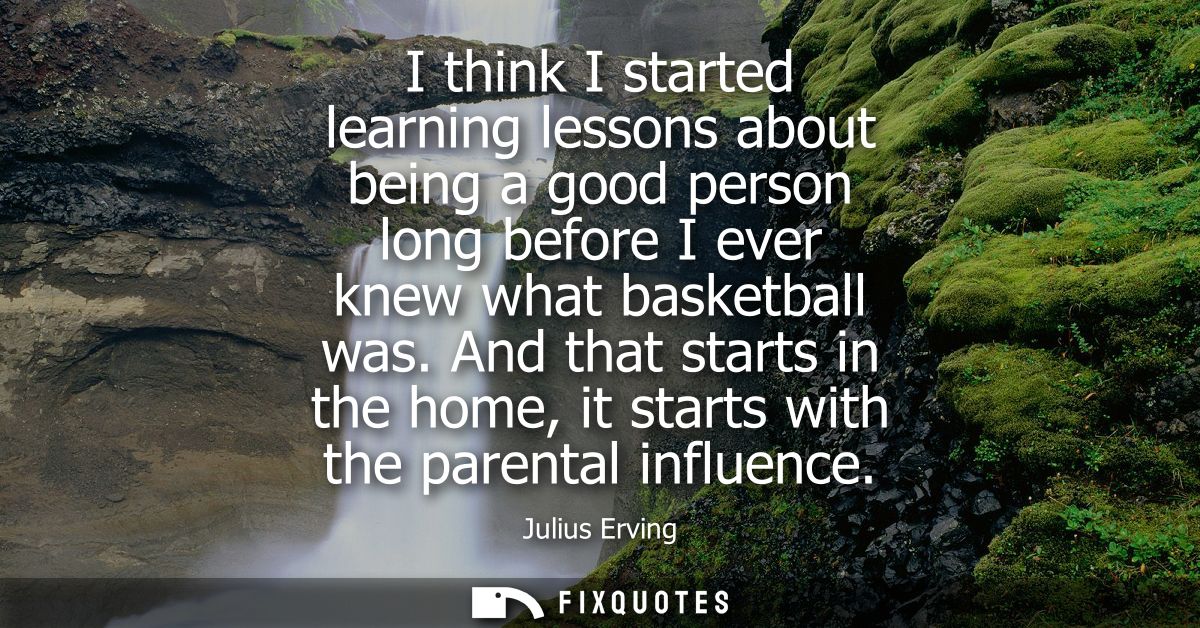
"I think I started learning lessons about being a good person long before I ever knew what basketball was. And that starts in the home, it starts with the parental influence"
About this Quote
Julius Erving points beyond the arena to the earliest arena of all: the home. Before trophies, highlight reels, and professional identity, he insists the foundation is character, and character is first taught by the people who feed you, correct you, and show you how to treat others. That order matters. Skill can be honed in gyms and film rooms, but the habits that shape a life — empathy, humility, discipline, respect — are patterned long before the first whistle.
The sentiment carries special weight because of who is speaking. Dr. J revolutionized basketball with elegance and imagination, yet his public image has always been grace under pressure, a calm center amid spectacle. He embodies the idea that excellence is not only vertical leap and touch at the rim but also the steadying force of integrity. When he credits parental influence, he is explaining the invisible scaffolding behind the visible artistry.
The home imparts more than rules; it offers models of how to respond to adversity and success. A child watches how adults apologize, show up on time, share credit, and keep promises. Later, under the lights, those scripts play out in how an athlete handles a bad call, a benching, a headline, or a championship. Coaches can refine technique and teammates can push performance, but a moral compass is inherited, absorbed, and tested over years.
There is also a quiet cultural critique here. Sports culture often treats character as an accessory to winning. Erving reverses that: winning becomes an expression of character. Even for those whose early home life was fractured, the principle directs attention to the surrogate homes that sustain young people — mentors, teachers, extended family, community programs — and the urgent need to build them.
By anchoring greatness in parental influence, Erving reminds fans and families that the first practice is not a drill but a daily example. The measure of a good player begins with the making of a good person.
The sentiment carries special weight because of who is speaking. Dr. J revolutionized basketball with elegance and imagination, yet his public image has always been grace under pressure, a calm center amid spectacle. He embodies the idea that excellence is not only vertical leap and touch at the rim but also the steadying force of integrity. When he credits parental influence, he is explaining the invisible scaffolding behind the visible artistry.
The home imparts more than rules; it offers models of how to respond to adversity and success. A child watches how adults apologize, show up on time, share credit, and keep promises. Later, under the lights, those scripts play out in how an athlete handles a bad call, a benching, a headline, or a championship. Coaches can refine technique and teammates can push performance, but a moral compass is inherited, absorbed, and tested over years.
There is also a quiet cultural critique here. Sports culture often treats character as an accessory to winning. Erving reverses that: winning becomes an expression of character. Even for those whose early home life was fractured, the principle directs attention to the surrogate homes that sustain young people — mentors, teachers, extended family, community programs — and the urgent need to build them.
By anchoring greatness in parental influence, Erving reminds fans and families that the first practice is not a drill but a daily example. The measure of a good player begins with the making of a good person.
Quote Details
| Topic | Parenting |
|---|
More Quotes by Julius
Add to List