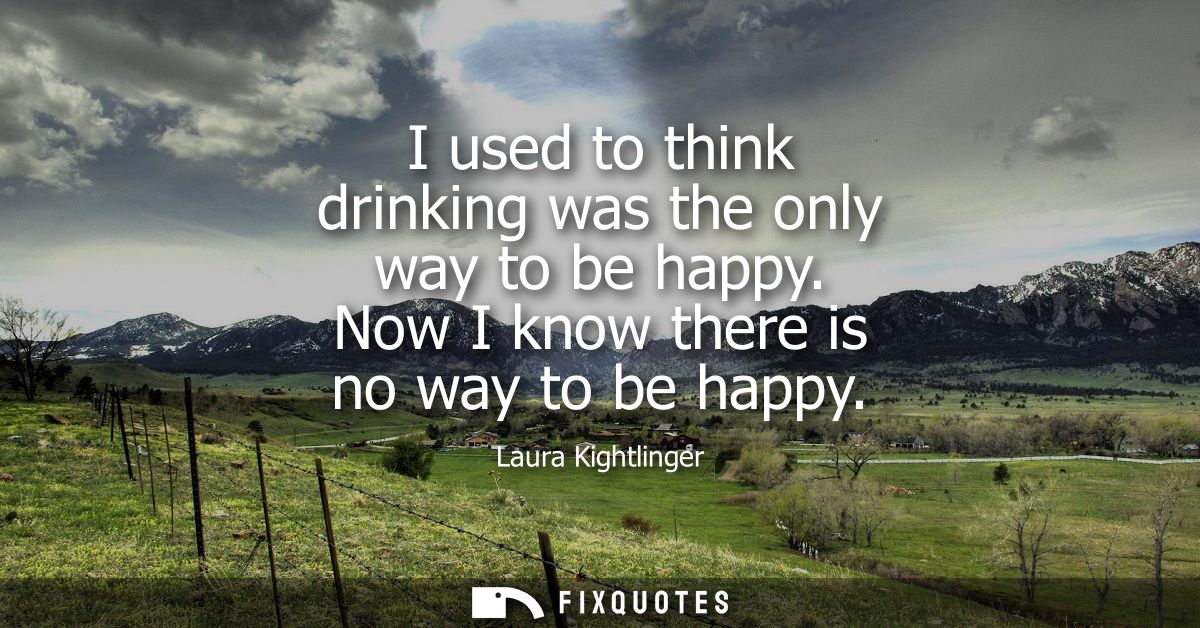
"I used to think drinking was the only way to be happy. Now I know there is no way to be happy"
About this Quote
The intent is misdirection with a sting. She frames drinking not as a moral failing but as a strategy, a workaround for a happiness economy that promises results if you just pick the right product, habit, or identity. The subtext is: the problem wasn't only alcohol; the problem was believing happiness is a destination with a reliable route. That turns the joke from confession into critique.
As a comedian, Kightlinger weaponizes fatalism to produce intimacy. The line gives listeners permission to admit what optimism often forbids: that "being happy" can feel like an exhausting performance, and that sobriety (or therapy, or success) doesn't magically install permanent joy. The comedy lives in the overcorrection - from "only way" to "no way" - a stark binary that mirrors how addicts, perfectionists, and strivers alike tend to think. It's not a manifesto of despair so much as a sharp snapshot of modern disillusionment, delivered with the deadpan courage to disappoint the expected moral.
Quote Details
| Topic | Dark Humor |
|---|---|
| Source | Help us find the source |
| Cite |
Citation Formats
APA Style (7th ed.)
Kightlinger, Laura. (2026, January 15). I used to think drinking was the only way to be happy. Now I know there is no way to be happy. FixQuotes. https://fixquotes.com/quotes/i-used-to-think-drinking-was-the-only-way-to-be-136333/
Chicago Style
Kightlinger, Laura. "I used to think drinking was the only way to be happy. Now I know there is no way to be happy." FixQuotes. January 15, 2026. https://fixquotes.com/quotes/i-used-to-think-drinking-was-the-only-way-to-be-136333/.
MLA Style (9th ed.)
"I used to think drinking was the only way to be happy. Now I know there is no way to be happy." FixQuotes, 15 Jan. 2026, https://fixquotes.com/quotes/i-used-to-think-drinking-was-the-only-way-to-be-136333/. Accessed 28 Mar. 2026.