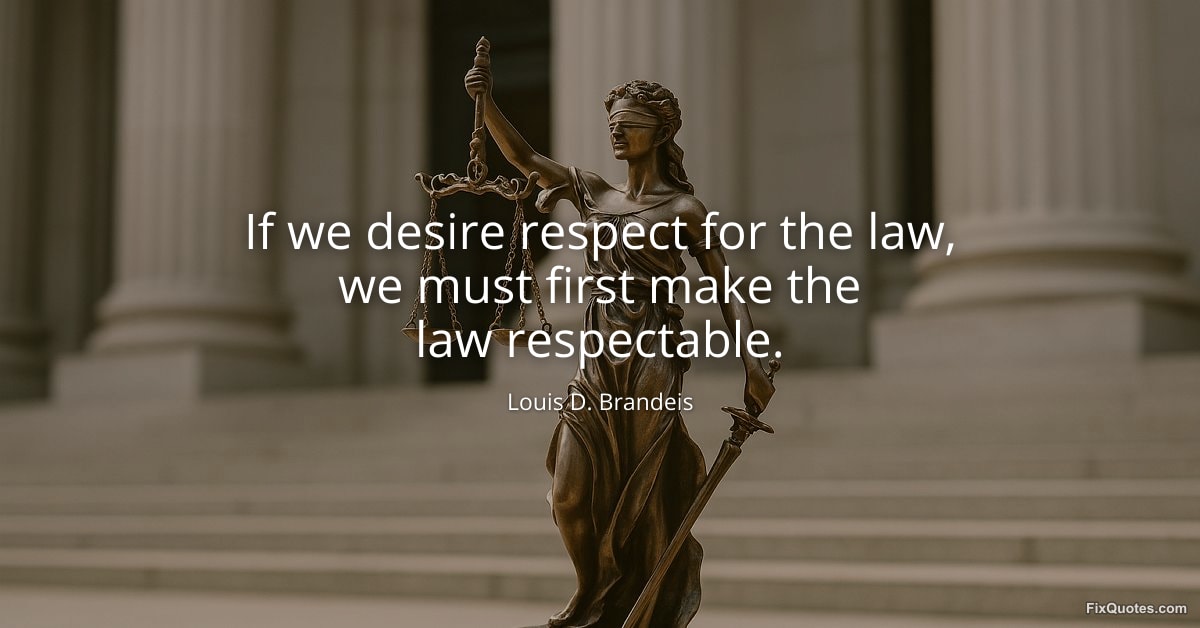
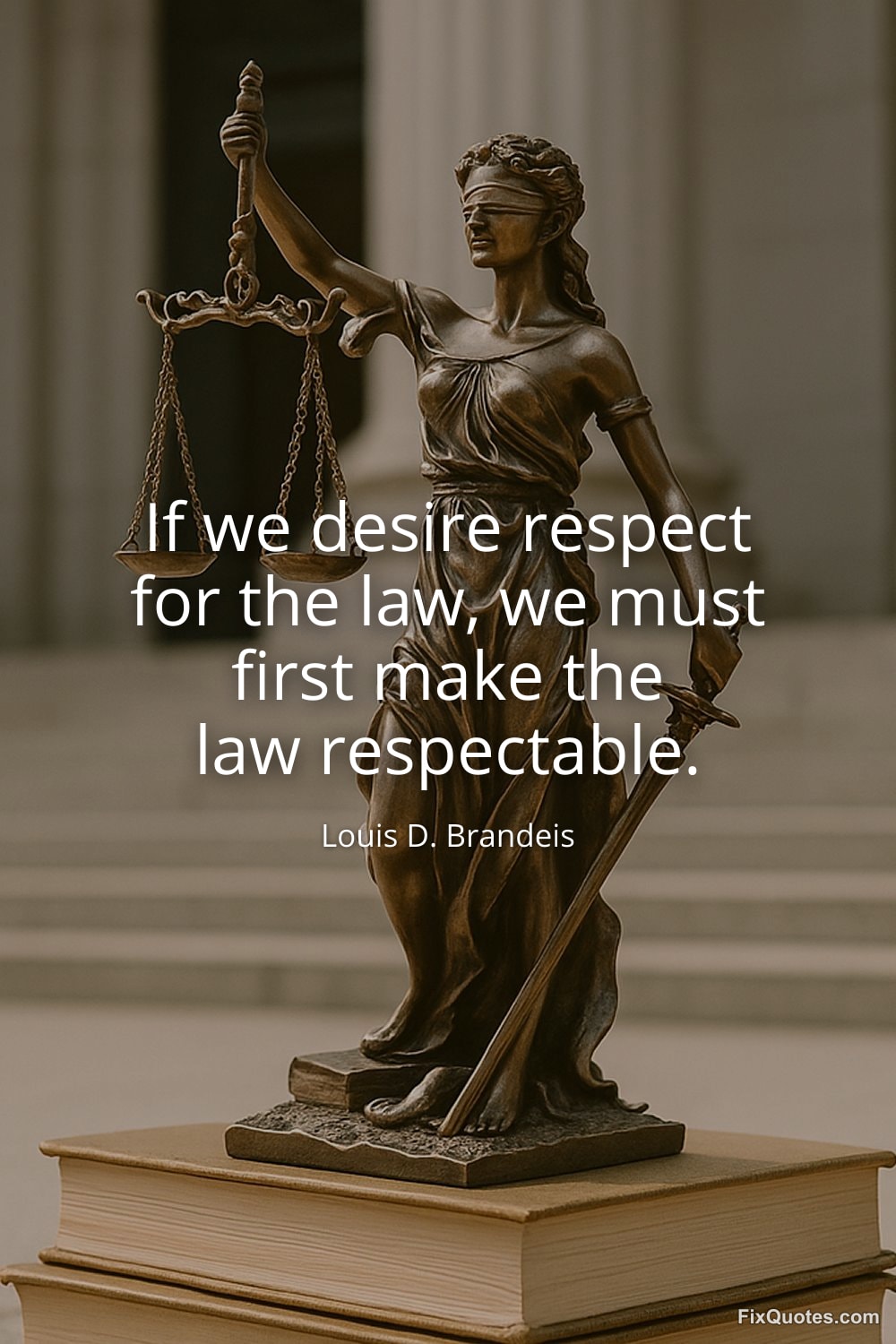
"If we desire respect for the law, we must first make the law respectable"
About this Quote
Brandeis, writing and speaking in an era of industrial monopolies, machine politics, and widening inequality, understood that “the law” is not an abstract ideal but a daily encounter. People meet it through police stops, courtroom delays, labor injunctions, corrupt zoning boards, and the unequal ability to hire counsel. When those encounters feel selective or predatory, calls to “respect the law” read less like patriotism and more like demand for compliance. The quote’s subtext is almost prosecutorial: you don’t get to scold the public for cynicism while running a system that manufactures it.
The word “respectable” is doing quiet but brutal work. It’s a moral term, not a procedural one. Brandeis implies that legality alone is insufficient; law must appear worthy in its aims and methods. That suggests transparent rules, fair enforcement, and institutions that don’t exempt the powerful or humiliate the vulnerable. He’s also warning lawmakers and judges about the fragile feedback loop of legitimacy: once law is seen as a tool of insiders, people stop cooperating, and the entire enterprise of governance becomes harder, harsher, and more coercive.
It’s reform dressed as common sense, and that’s why it still stings.
Quote Details
| Topic | Justice |
|---|---|
| Source | Help us find the source |
| Cite |
Citation Formats
APA Style (7th ed.)
Brandeis, Louis D. (2026, January 14). If we desire respect for the law, we must first make the law respectable. FixQuotes. https://fixquotes.com/quotes/if-we-desire-respect-for-the-law-we-must-first-121087/
Chicago Style
Brandeis, Louis D. "If we desire respect for the law, we must first make the law respectable." FixQuotes. January 14, 2026. https://fixquotes.com/quotes/if-we-desire-respect-for-the-law-we-must-first-121087/.
MLA Style (9th ed.)
"If we desire respect for the law, we must first make the law respectable." FixQuotes, 14 Jan. 2026, https://fixquotes.com/quotes/if-we-desire-respect-for-the-law-we-must-first-121087/. Accessed 7 Mar. 2026.