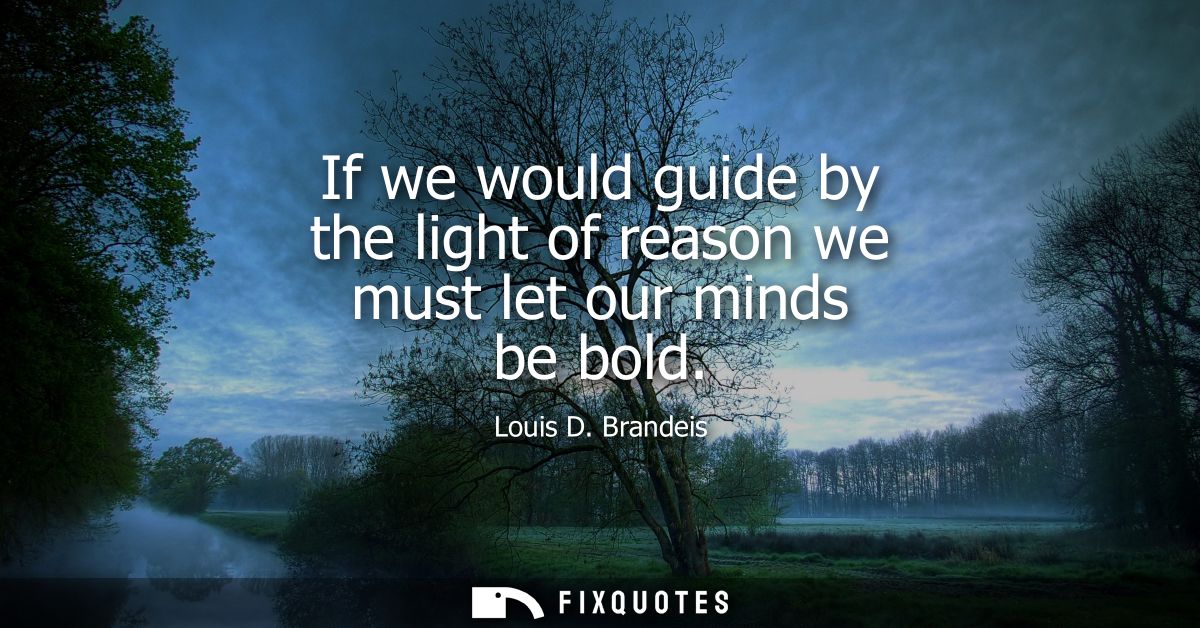
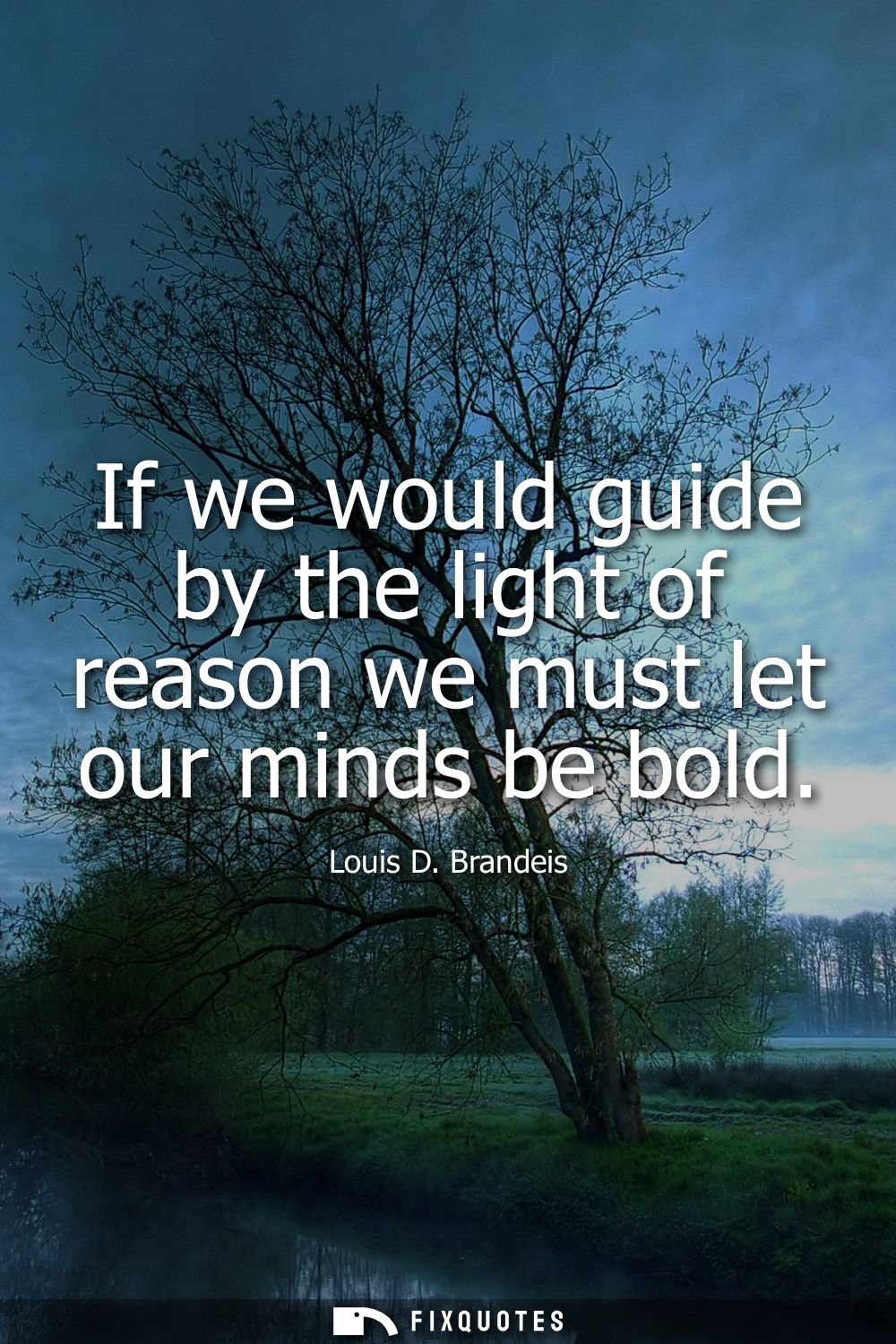
"If we would guide by the light of reason, we must let our minds be bold"
About this Quote
The line also quietly rebukes the version of “reason” that hides behind caution. Courts and institutions often treat restraint as synonymous with objectivity. Brandeis insists that timidity is its own bias: fear of being wrong, fear of public backlash, fear of dissent. Boldness, here, isn’t swagger; it’s the capacity to entertain unpopular premises and to revise conclusions when evidence demands it. That is a radical demand in a judicial culture built on precedent, where yesterday’s decisions can become today’s blinders.
Context matters: Brandeis is remembered for pushing American law to take modern realities seriously - corporate power, privacy, labor rights, democratic participation. His “Brandeis brief” relied on social facts, not just citations, signaling that reason has to engage the world as it is, not as doctrine pretends it to be. The sentence is a compact manifesto for enlightened judging: reason as illumination, boldness as the courage to look directly into it.
Quote Details
| Topic | Reason & Logic |
|---|---|
| Source | Help us find the source |
| Cite |
Citation Formats
APA Style (7th ed.)
Brandeis, Louis D. (2026, February 18). If we would guide by the light of reason, we must let our minds be bold. FixQuotes. https://fixquotes.com/quotes/if-we-would-guide-by-the-light-of-reason-we-must-72297/
Chicago Style
Brandeis, Louis D. "If we would guide by the light of reason, we must let our minds be bold." FixQuotes. February 18, 2026. https://fixquotes.com/quotes/if-we-would-guide-by-the-light-of-reason-we-must-72297/.
MLA Style (9th ed.)
"If we would guide by the light of reason, we must let our minds be bold." FixQuotes, 18 Feb. 2026, https://fixquotes.com/quotes/if-we-would-guide-by-the-light-of-reason-we-must-72297/. Accessed 10 Mar. 2026.