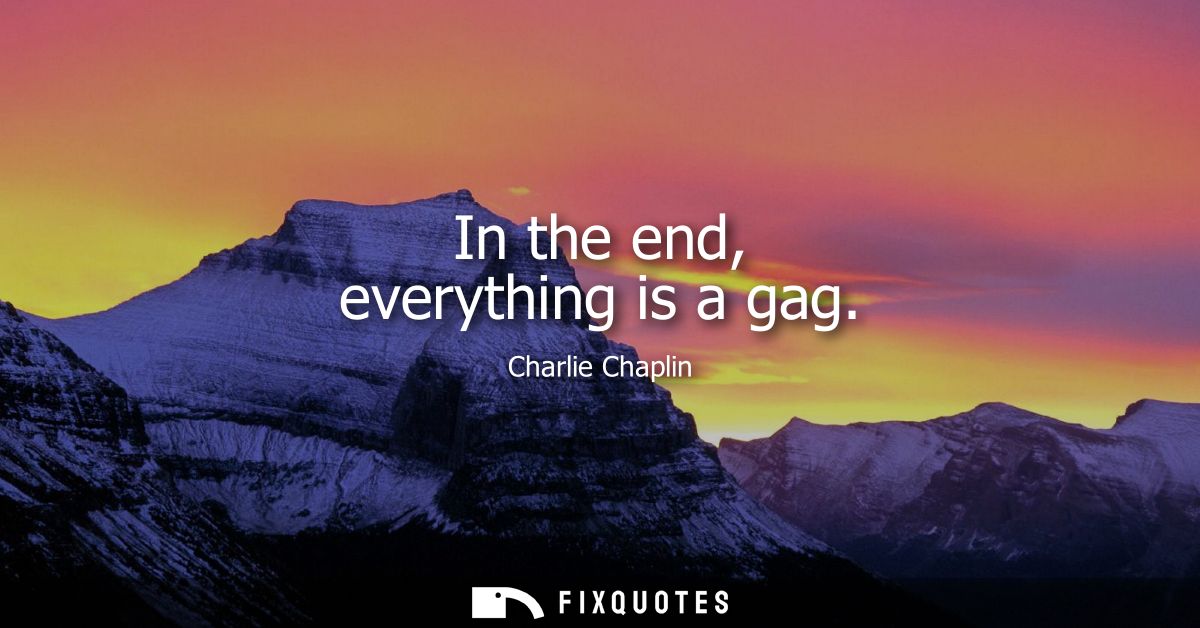
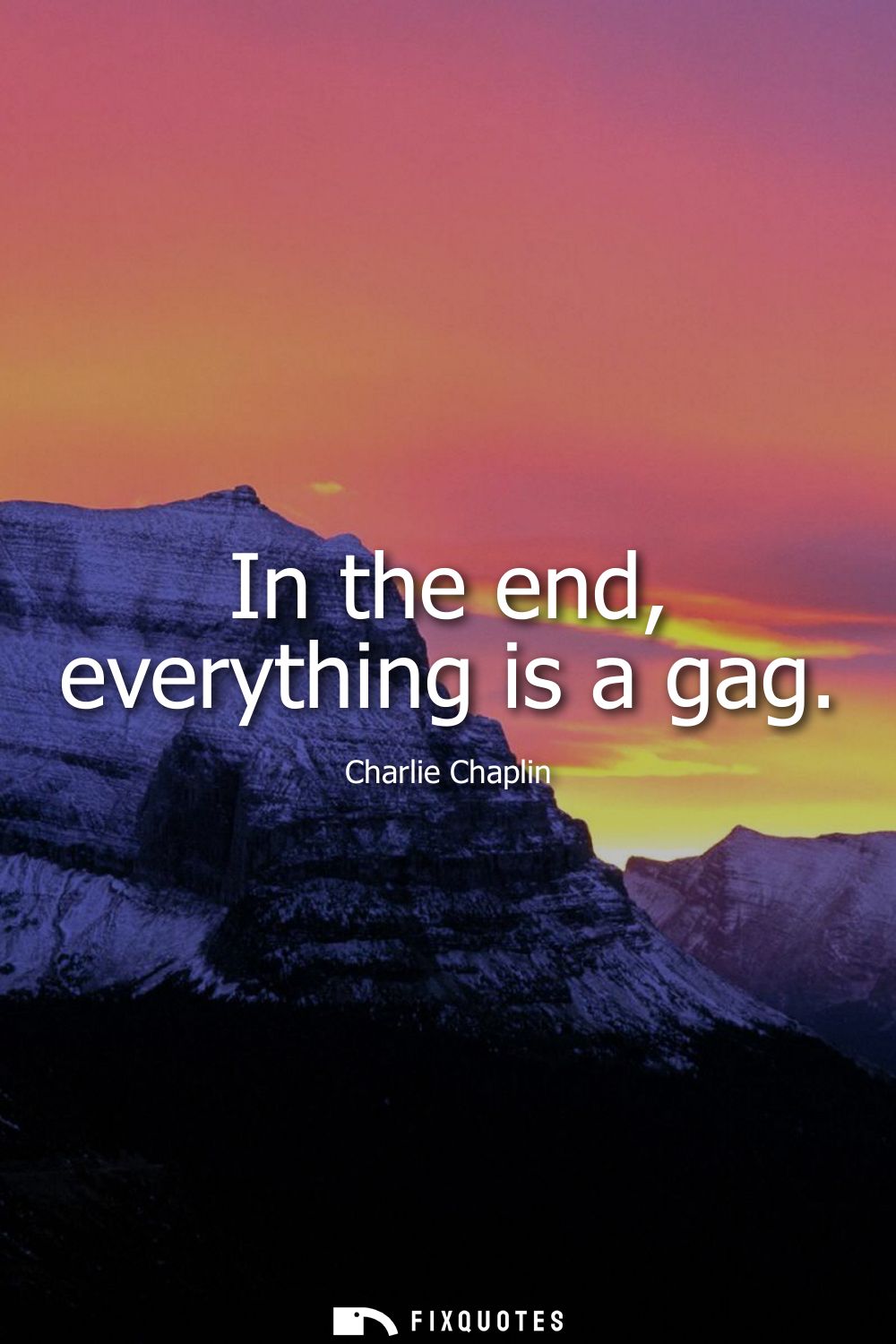
"In the end, everything is a gag"
About this Quote
Chaplin’s line lands like a rimshot after a pratfall: not a cozy “laugh through the pain” slogan, but a bleakly practical worldview from someone who turned misery into choreography. “In the end” is doing heavy lifting. It’s the horizon where plots collapse, bodies fail, politics curdle, and the grand speeches get swallowed by time. What’s left isn’t meaning so much as timing. A gag is a mechanism: set-up, misdirection, impact. Chaplin is implying that life, too, runs on that structure, whether we consent or not.
The subtext is both defiance and surrender. Chaplin built an empire on the Tramp’s dignity getting repeatedly undercut by the world’s indifference - hunger, cops, factory gears, the punchline of poverty. Calling everything “a gag” is a way to steal back control from catastrophe: if the universe insists on humiliating you, you can at least frame it, cut it, and make it play. It’s also a warning about how easily seriousness can become performance. Chaplin knew that politics could be staged, sympathy could be manipulated, even righteousness could be costumed. (He spent his later years watching fame turn into suspicion, then exile.)
Context matters: silent comedy wasn’t “light”; it was the art of communicating trauma without language, smuggling critique past censors and audiences looking for escape. Chaplin’s genius was turning the punchline into an indictment. The gag isn’t a dismissal of reality; it’s his tool for surviving it - and exposing how absurd the so-called normal world really is.
The subtext is both defiance and surrender. Chaplin built an empire on the Tramp’s dignity getting repeatedly undercut by the world’s indifference - hunger, cops, factory gears, the punchline of poverty. Calling everything “a gag” is a way to steal back control from catastrophe: if the universe insists on humiliating you, you can at least frame it, cut it, and make it play. It’s also a warning about how easily seriousness can become performance. Chaplin knew that politics could be staged, sympathy could be manipulated, even righteousness could be costumed. (He spent his later years watching fame turn into suspicion, then exile.)
Context matters: silent comedy wasn’t “light”; it was the art of communicating trauma without language, smuggling critique past censors and audiences looking for escape. Chaplin’s genius was turning the punchline into an indictment. The gag isn’t a dismissal of reality; it’s his tool for surviving it - and exposing how absurd the so-called normal world really is.
Quote Details
| Topic | Witty One-Liners |
|---|
More Quotes by Charlie
Add to List