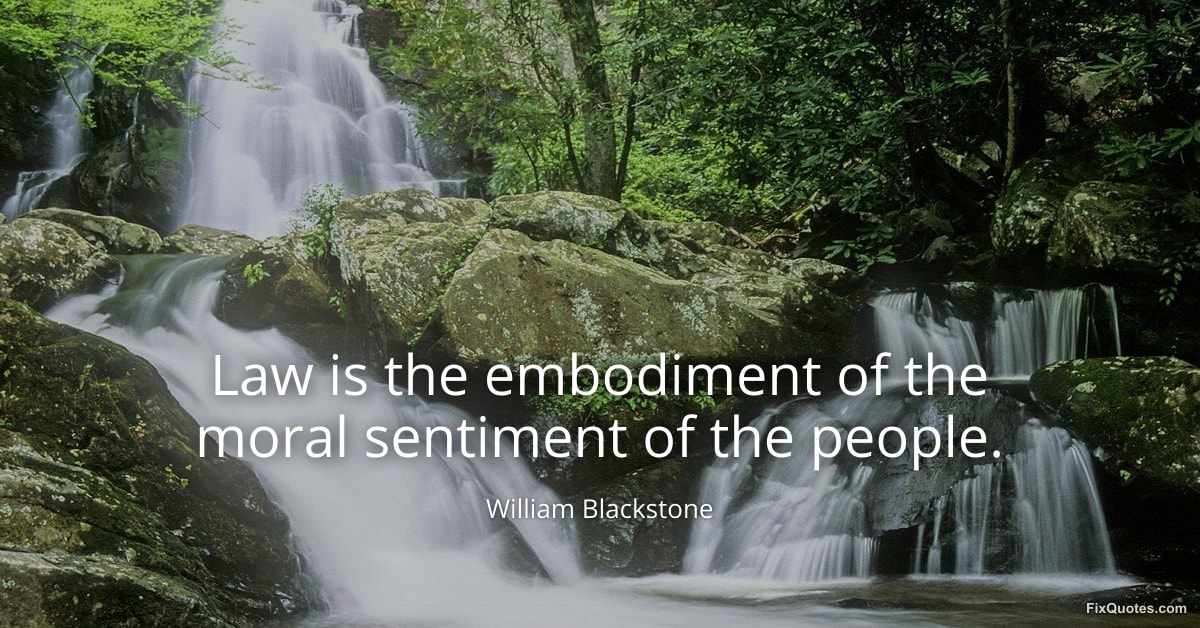
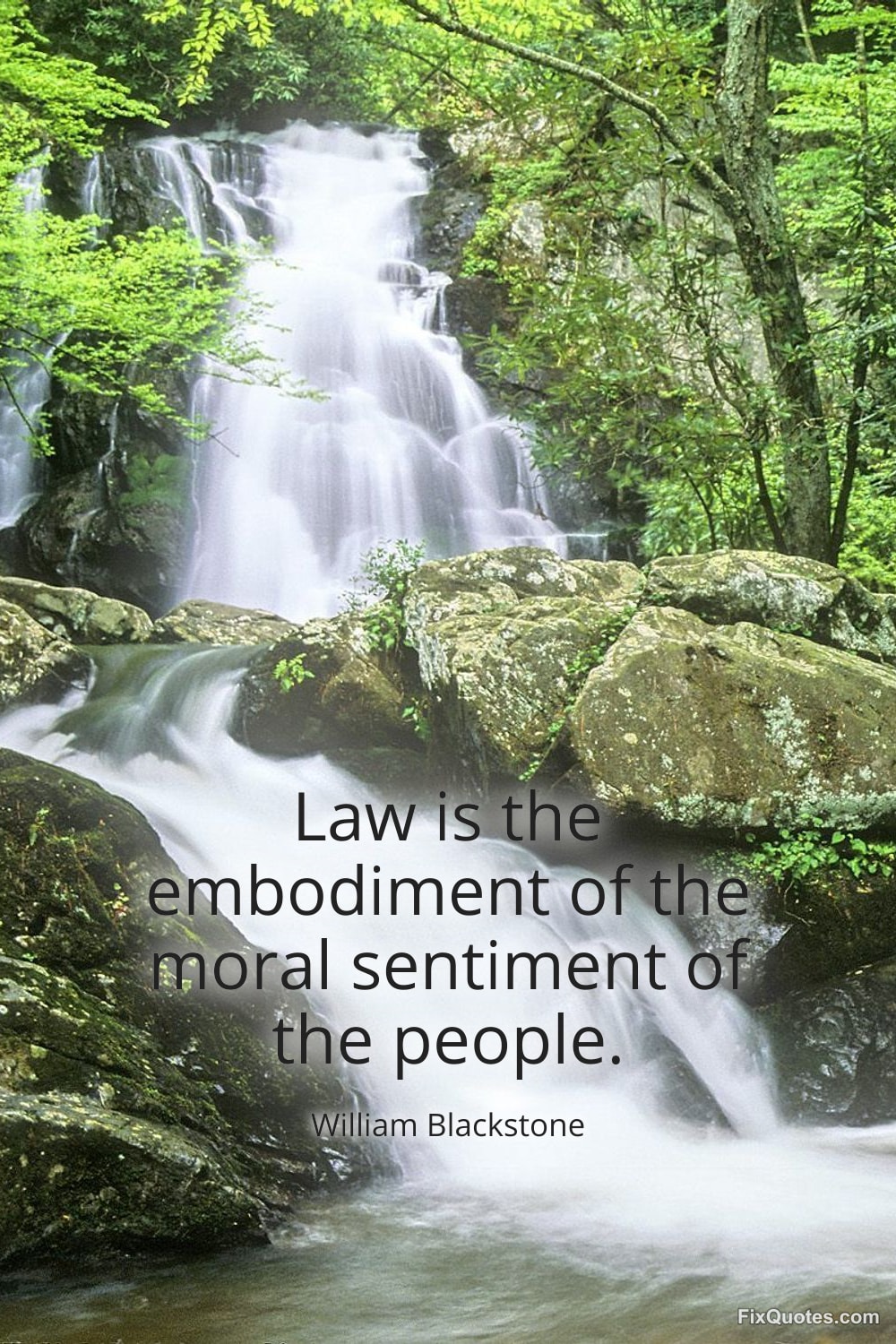
"Law is the embodiment of the moral sentiment of the people"
About this Quote
Blackstone’s line flatters the public while quietly licensing the bench. “Law” isn’t described as a cold instrument of power; it’s “the embodiment” of “moral sentiment” - a word choice that makes statutes feel almost organic, like a society’s conscience given legal muscle. Coming from an 18th-century English judge and systematizer of common law, the intent is partly conservative and partly strategic: if law reflects the people’s moral sense, then the existing legal order gains democratic legitimacy without surrendering real control to the crowd.
The subtext is a careful balancing act between popular will and elite interpretation. “Sentiment” is deliberately squishy. It’s not the people’s explicit demands, let alone their anger; it’s their moral atmosphere, the thing you can plausibly claim to detect even when voters are divided or inarticulate. That ambiguity is useful to a jurist. It makes room for judges to act as translators of “the people” rather than mere technicians applying rules. You don’t just enforce the law; you channel a national temperament.
Context matters: Blackstone is writing in a Britain that’s proud of its unwritten constitution and common-law tradition, a system that justifies itself by continuity and custom. By tying legality to morality, he also deflects a destabilizing question: if law is merely power, why obey? His answer is reassurance with a warning baked in. If the moral sentiment shifts, law should follow - but only through the slow, respectable machinery that people like Blackstone oversee.
The subtext is a careful balancing act between popular will and elite interpretation. “Sentiment” is deliberately squishy. It’s not the people’s explicit demands, let alone their anger; it’s their moral atmosphere, the thing you can plausibly claim to detect even when voters are divided or inarticulate. That ambiguity is useful to a jurist. It makes room for judges to act as translators of “the people” rather than mere technicians applying rules. You don’t just enforce the law; you channel a national temperament.
Context matters: Blackstone is writing in a Britain that’s proud of its unwritten constitution and common-law tradition, a system that justifies itself by continuity and custom. By tying legality to morality, he also deflects a destabilizing question: if law is merely power, why obey? His answer is reassurance with a warning baked in. If the moral sentiment shifts, law should follow - but only through the slow, respectable machinery that people like Blackstone oversee.
Quote Details
| Topic | Ethics & Morality |
|---|
More Quotes by William
Add to List