"My parents had broken through the shackles of dogma"
About this Quote
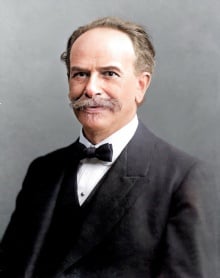
Franz Boas, widely recognized as the father of American anthropology, grew up during a period when rigid social and intellectual conventions molded much of Western thought. When he notes that his parents had broken through the shackles of dogma, he is evoking a powerful image of personal and intellectual liberation. Dogma represents fixed beliefs, often inherited and rarely questioned, that dictate not just religious faith but social behavior, cultural norms, and modes of thinking. The shackles symbolize restriction and confinement, a sense of being held captive by established doctrines that limit curiosity and the pursuit of truth.
Boas’s acknowledgment of his parents’ escape from these restrictions reveals the foundation of his own intellectual orientation. Instead of adhering to unquestioned traditions or ideologies, his parents fostered an environment grounded in critical thinking and open-mindedness. This background provided Boas with the freedom to question, explore, and redefine established norms; it laid the groundwork for his later arguments against scientific racism, cultural hierarchy, and a belief in immutable traits of civilization and difference.
The phrase also emphasizes the courage required to challenge prevailing beliefs in one’s society. Breaking through dogma is rarely easy; it can mean confronting orthodoxy, enduring alienation, and facing backlash from those committed to tradition. Boas expresses admiration for his parents, not only for their independence but for their willingness to pursue truth over conformity. For Boas, the rejection of dogma is not merely a personal act, but an ethical one, an imperative to seek knowledge with integrity and an open mind.
Ultimately, this spirit of intellectual liberty and skepticism, modeled by his parents, shaped Boas’s scientific methodology and his relentless advocacy for objectivity, cultural relativism, and the recognition of all human societies as deserving of respect and study. His parents’ break from dogma becomes the wellspring of his lifelong dedication to combating prejudice, ignorance, and the temptation to accept ideas without scrutiny.
About the Author