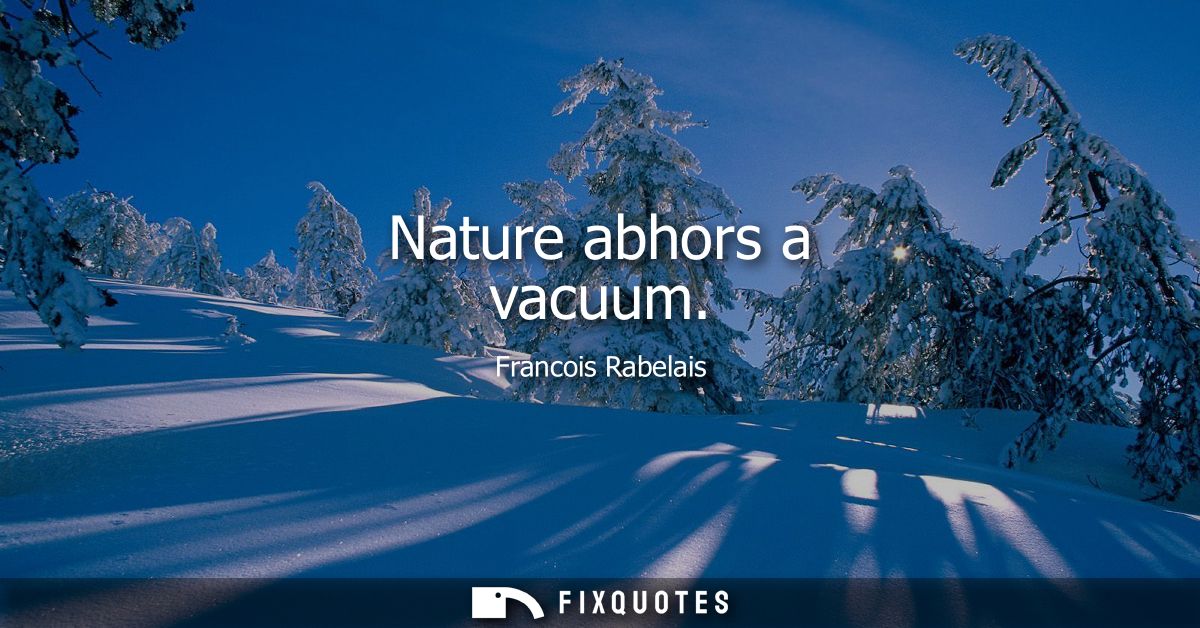
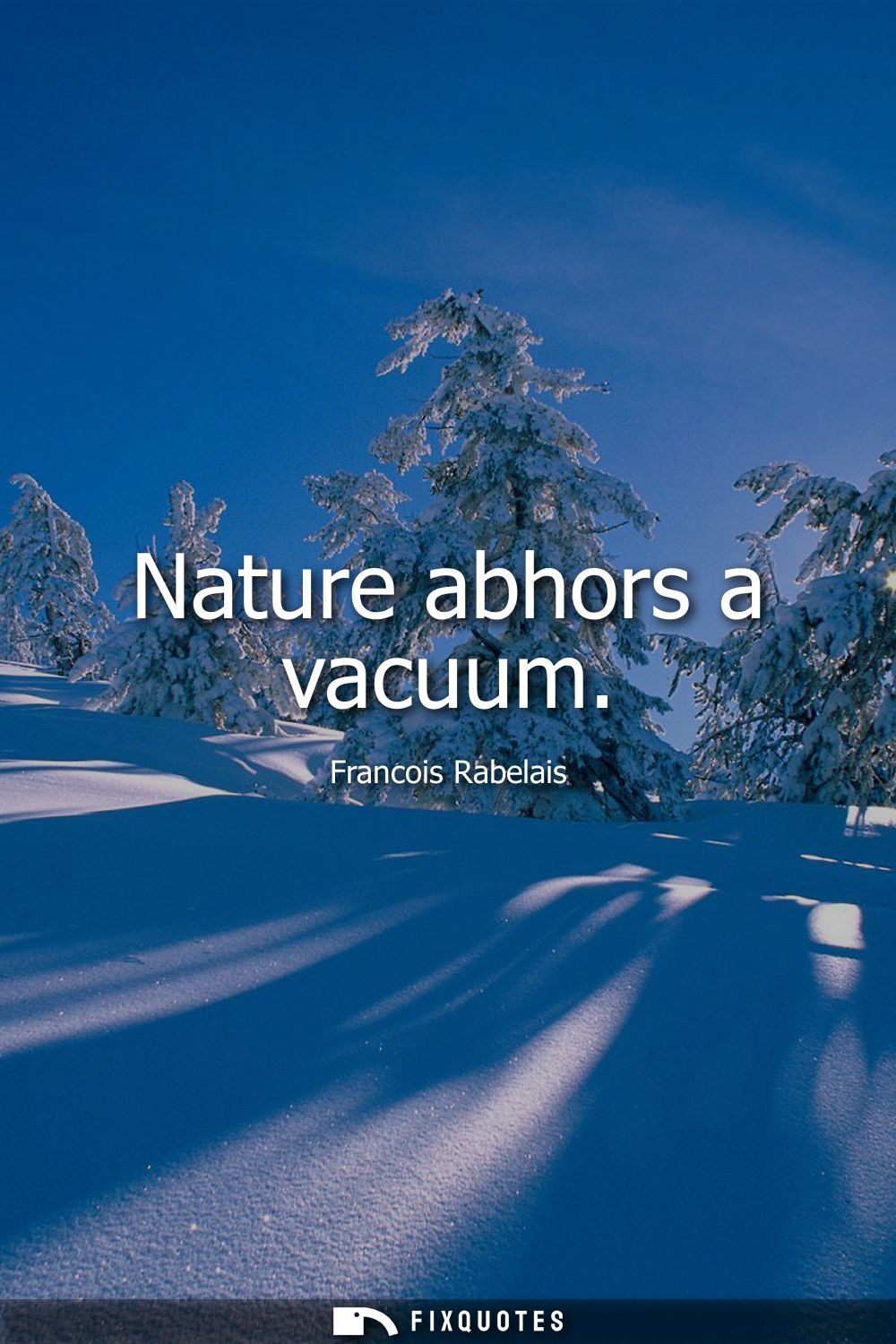
"Nature abhors a vacuum"
About this Quote
The phrase "Nature abhors a vacuum" is generally credited to the 16th-century French author François Rabelais, though its origins may trace back even further to Aristotle. The stating is based on the observation that empty spaces, or vacuums, tend to be quickly filled by surrounding matter. However, this quotation provides a rich metaphorical analysis beyond its actual clinical implications.
At its core, the expression recommends that vacuum is abnormal and that nature has a tendency to fill any spaces. In physical terms, we can see this concept used in various natural processes; for instance, when air rushes into an area that has been vacated or when water flows to lower levels to fill areas. This can be reached numerous other areas of life and idea.
Metaphorically, "Nature abhors a vacuum" can be interpreted to explain how people, as part of nature, intuitively fill spaces in their lives. For instance, when emotional or spiritual gaps appear, individuals typically seek to fill them with activities, relationships, or beliefs. This shows a wider propensity to seek balance and consistency, aligning with the human desire to find meaning and purpose in life.
In a societal context, Rabelais's observation might indicate how communities or groups react to disturbances. For example, if a management position ends up being uninhabited, there is usually a quick transfer to fill that position, guaranteeing stability and connection.
On a philosophical level, the quote can provoke conversation about the universe's resistance to true emptiness. It stimulates reflections on the interconnectivity of all things, where voids are anomalies that trigger movement, modification, or adjustment.
Ultimately, the expression "Nature abhors a vacuum" serves as an engaging tip of the constant flux and interconnectedness in the world, where emptiness is but a short-lived state, rapidly changed by the forces around it. It beautifully captures mankind's everlasting quest to fill uninhabited spaces, both physically and metaphorically, with meaning and compound.
More details
About the Author