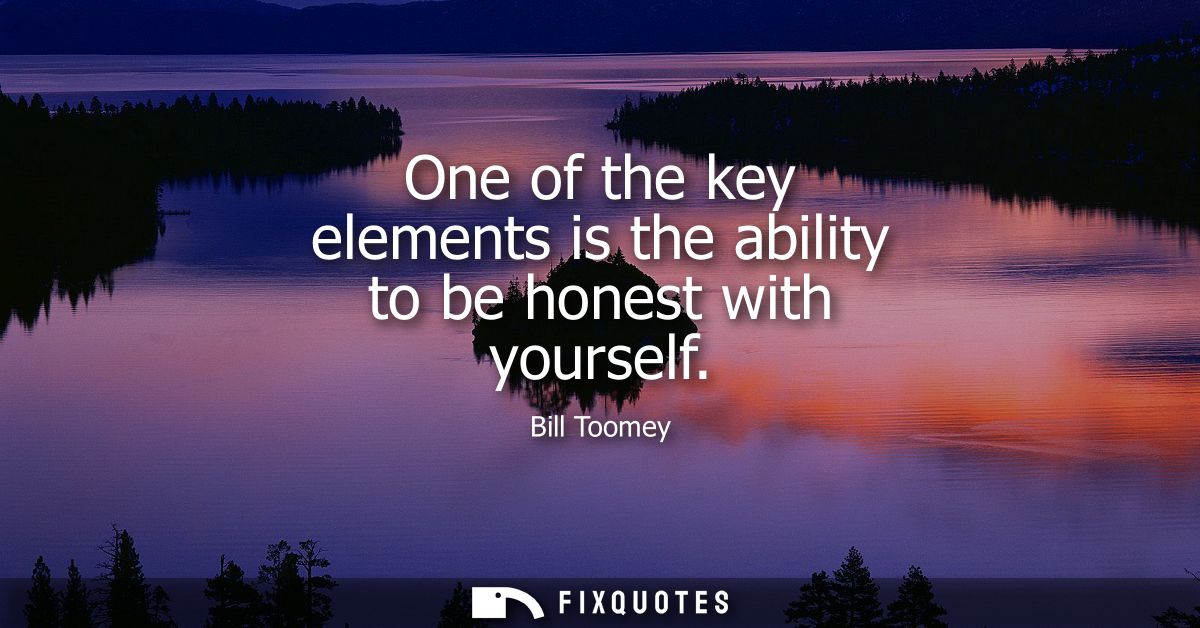
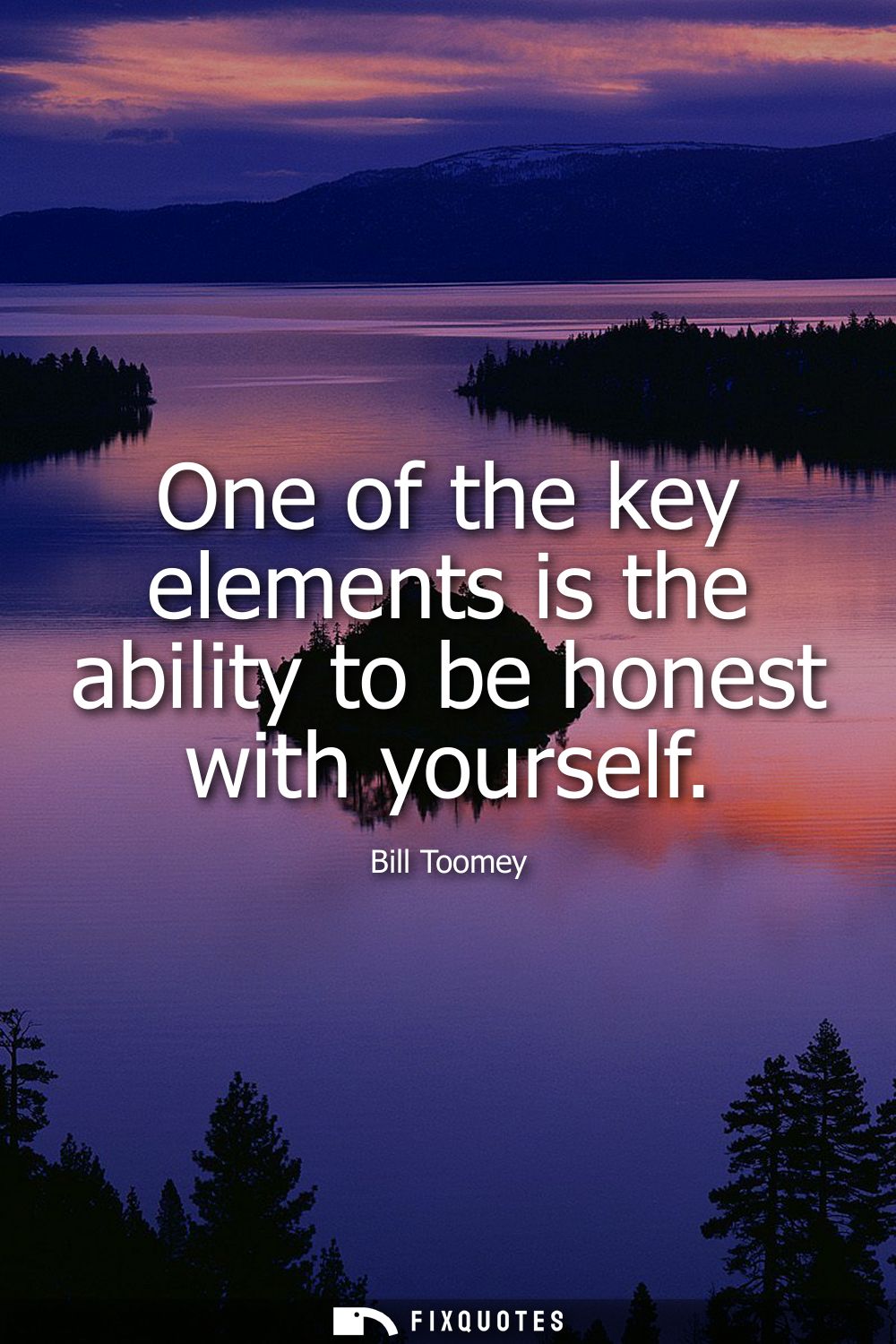
"One of the key elements is the ability to be honest with yourself"
About this Quote
Progress starts when the scoreboard inside your head matches reality. Being honest with yourself is not self-flagellation; it is precision. It is the habit of calling things by their right names, especially when pride, fear, or wishful thinking would blur the view. That clarity lets you set the right goals, choose the next drill, and accept where you are without confusing it for where you want to be.
Bill Toomey knew how ruthless that clarity must be. As a decathlete he had to manage ten different events, each demanding a different blend of speed, strength, technique, and endurance. Deny a weakness in the hurdles, and you pay for it on the scoreboard. Inflate your confidence in the pole vault, and you risk early misses that wreck the day. The decathlon also forces strategy: setting opening heights, deciding how hard to press in the 400, saving enough for the 1500. Mexico City in 1968 added altitude to the calculus, punishing anyone who misjudged conditioning or pacing. Only an unvarnished self-assessment could tell you when to push, when to adjust, and when to accept a limitation long enough to train it away.
Self-honesty also protects against the twin traps of denial and despair. Denial says, I am fine as I am; despair says, I can never change. Honest appraisal rejects both. It admits the missed marks, the frayed nerves, the fatigue, and then translates them into a plan. It turns emotion into data and data into action. Coaches and teammates can guide you, but their feedback matters only if your inner narrator is telling the truth.
The lesson extends far beyond sport. Creative work, leadership, relationships, and health all reward the same discipline. Speak plainly to yourself about your motives, your habits, your results. Then do the next right thing. That is how growth compounds, how confidence is earned, and how excellence becomes possible.
Bill Toomey knew how ruthless that clarity must be. As a decathlete he had to manage ten different events, each demanding a different blend of speed, strength, technique, and endurance. Deny a weakness in the hurdles, and you pay for it on the scoreboard. Inflate your confidence in the pole vault, and you risk early misses that wreck the day. The decathlon also forces strategy: setting opening heights, deciding how hard to press in the 400, saving enough for the 1500. Mexico City in 1968 added altitude to the calculus, punishing anyone who misjudged conditioning or pacing. Only an unvarnished self-assessment could tell you when to push, when to adjust, and when to accept a limitation long enough to train it away.
Self-honesty also protects against the twin traps of denial and despair. Denial says, I am fine as I am; despair says, I can never change. Honest appraisal rejects both. It admits the missed marks, the frayed nerves, the fatigue, and then translates them into a plan. It turns emotion into data and data into action. Coaches and teammates can guide you, but their feedback matters only if your inner narrator is telling the truth.
The lesson extends far beyond sport. Creative work, leadership, relationships, and health all reward the same discipline. Speak plainly to yourself about your motives, your habits, your results. Then do the next right thing. That is how growth compounds, how confidence is earned, and how excellence becomes possible.
Quote Details
| Topic | Honesty & Integrity |
|---|
More Quotes by Bill
Add to List