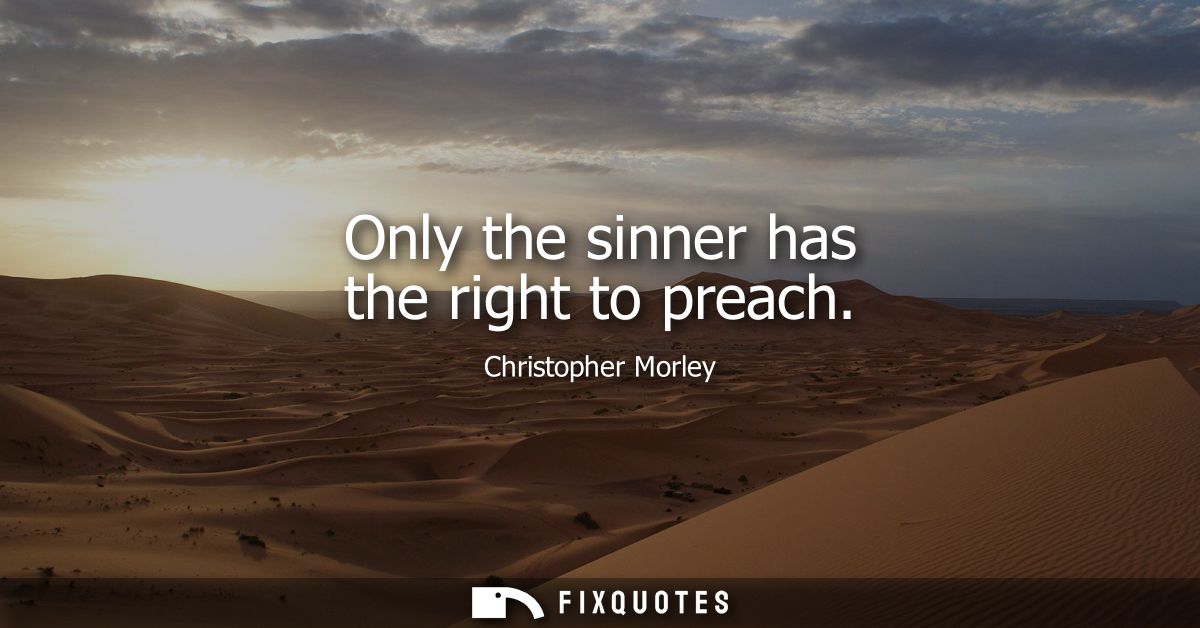
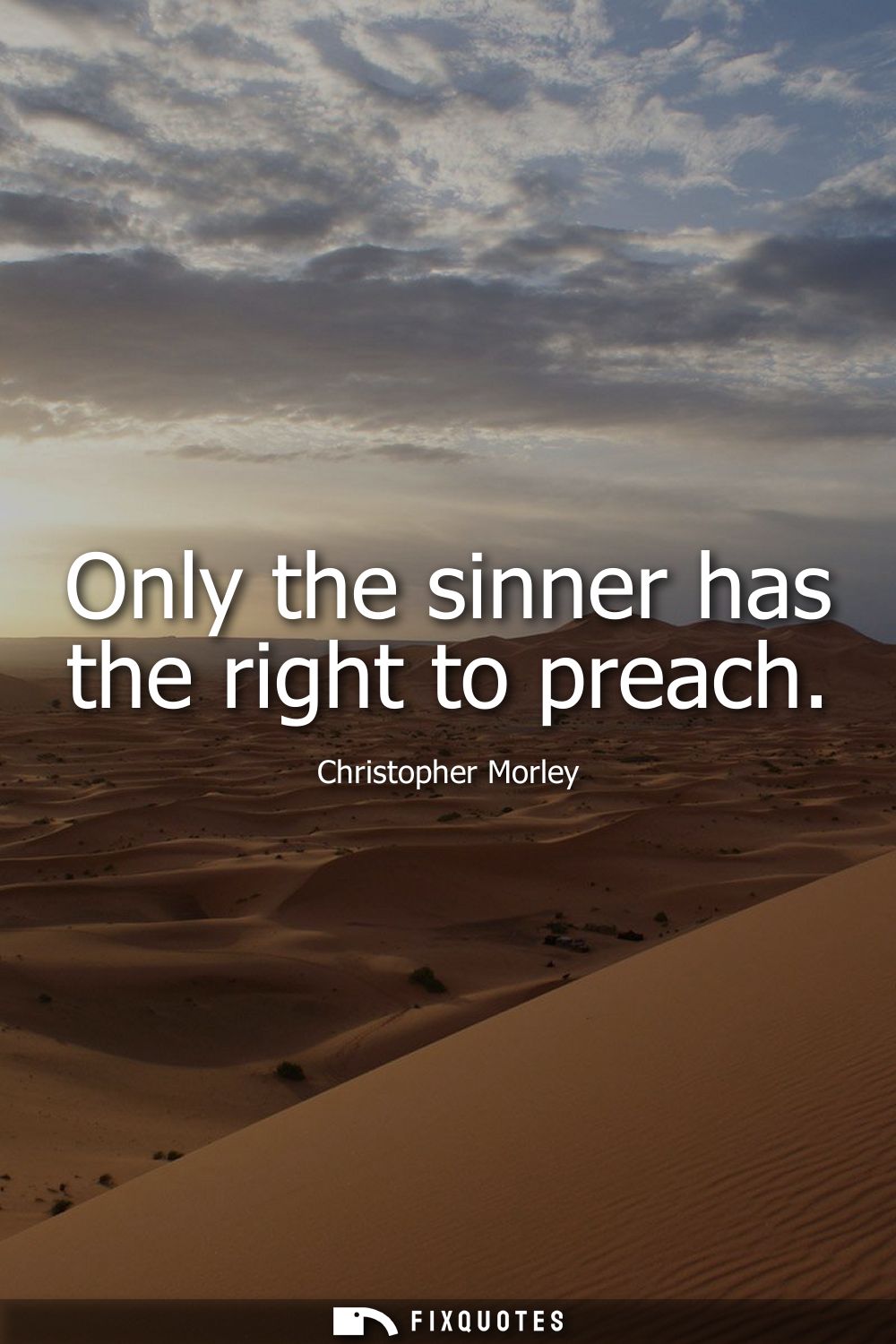
"Only the sinner has the right to preach"
About this Quote
Christopher Morley's assertion, "Only the sinner has the right to preach", is a thought-provoking declaration that looks into the nature of human experience, morality, and authenticity. This quote suggests an unconventional viewpoint on who is truly equipped to provide guidance or moral commentary.
First of all, Morley's words may indicate that real understanding and empathy come from individual experience. A "sinner", having erred and possibly faced the repercussions of their actions, possesses an unique form of knowledge acquired through living and learning. This understanding cultivates empathy, enabling them to link more deeply with others facing similar battles. Their insights are not simply theoretical but are substantiated of personal trials and errors, making their assistance relatable and sensible.
Additionally, the quote challenges the traditional view of morality and righteousness. It questions the credibility of those who preach from a pedestal of perceived excellence. By highlighting the sinner's right to preach, Morley might be critiquing hypocrisy, recommending that those who confess their flaws and gain from them have more stability than self-proclaimed apotheosis of virtue who might lack self-awareness. It talks to the value of humility and the strength discovered in vulnerability-- the ability to acknowledge one's imperfections.
In addition, Morley's statement could be interpreted as a call for inclusivity and understanding in moral conversations. It reminds us that everybody, regardless of their past, has important insights and should have to be heard. It democratizes the concept of who is qualified to speak on moral matters, stressing that knowledge does not only reside with the generally "virtuous" but frequently with those who have actually strolled a less straightforward path.
In essence, Morley's quote highlights that the authority to assist others does not originate from a life lacking errors however from the guts to face, gain from, and grow beyond them. It promotes a more flexible and realistic view of humankind, where growth and understanding are possible for everybody, no matter their past.
About the Author