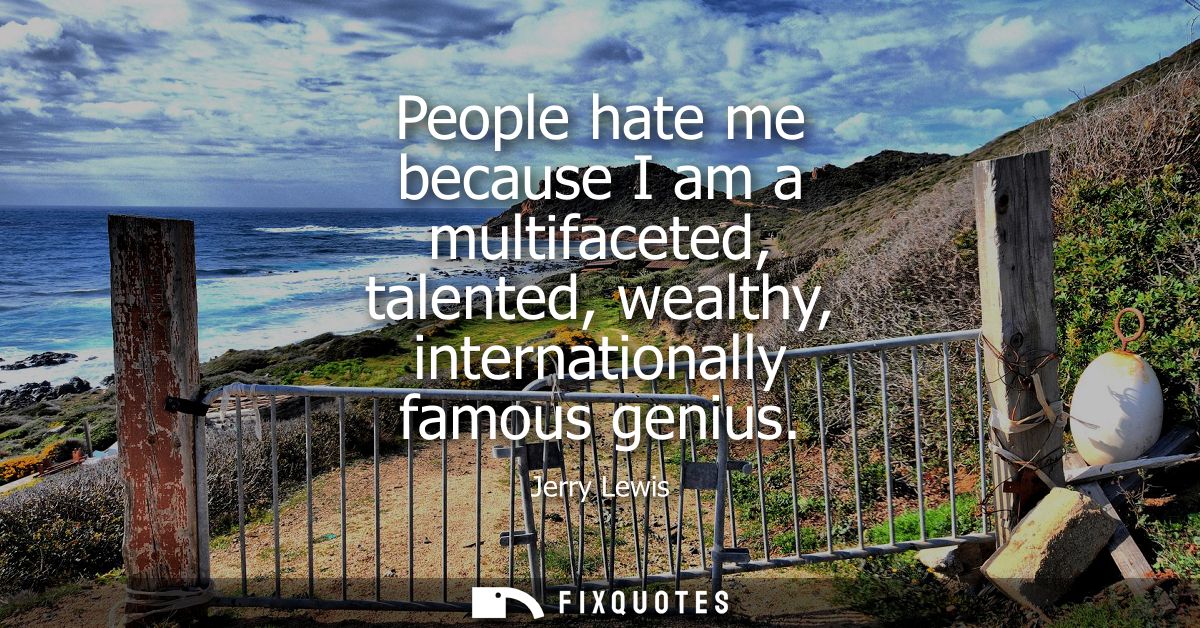
"People hate me because I am a multifaceted, talented, wealthy, internationally famous genius"
About this Quote
The subtext is defensive. Lewis often carried a chip on his shoulder about being dismissed as mere slapstick while aspiring to be taken seriously as a craftsman and director. The joke smuggles in a grievance: people don’t just dislike him; they resent his success, his ambition, his insistence on being more than a clown. That’s a familiar celebrity complaint, but Lewis sharpens it into caricature, which is how comedians tell the truth without begging for sympathy.
Context matters: Lewis existed in the long hangover of his split with Dean Martin, the shift from nightclub kings to TV omnipresence, and the era when critics started treating comedy as an art form only after it had proven it could suffer. His line is a little manifesto and a little shield: if you mock me, you’re proving my premise; if you admire me, you’re admitting the premise was a joke. Either way, he stays in control of the laugh.
Quote Details
| Topic | Sarcastic |
|---|---|
| Source | Help us find the source |
| Cite |
Citation Formats
APA Style (7th ed.)
Lewis, Jerry. (2026, January 17). People hate me because I am a multifaceted, talented, wealthy, internationally famous genius. FixQuotes. https://fixquotes.com/quotes/people-hate-me-because-i-am-a-multifaceted-62389/
Chicago Style
Lewis, Jerry. "People hate me because I am a multifaceted, talented, wealthy, internationally famous genius." FixQuotes. January 17, 2026. https://fixquotes.com/quotes/people-hate-me-because-i-am-a-multifaceted-62389/.
MLA Style (9th ed.)
"People hate me because I am a multifaceted, talented, wealthy, internationally famous genius." FixQuotes, 17 Jan. 2026, https://fixquotes.com/quotes/people-hate-me-because-i-am-a-multifaceted-62389/. Accessed 27 Mar. 2026.