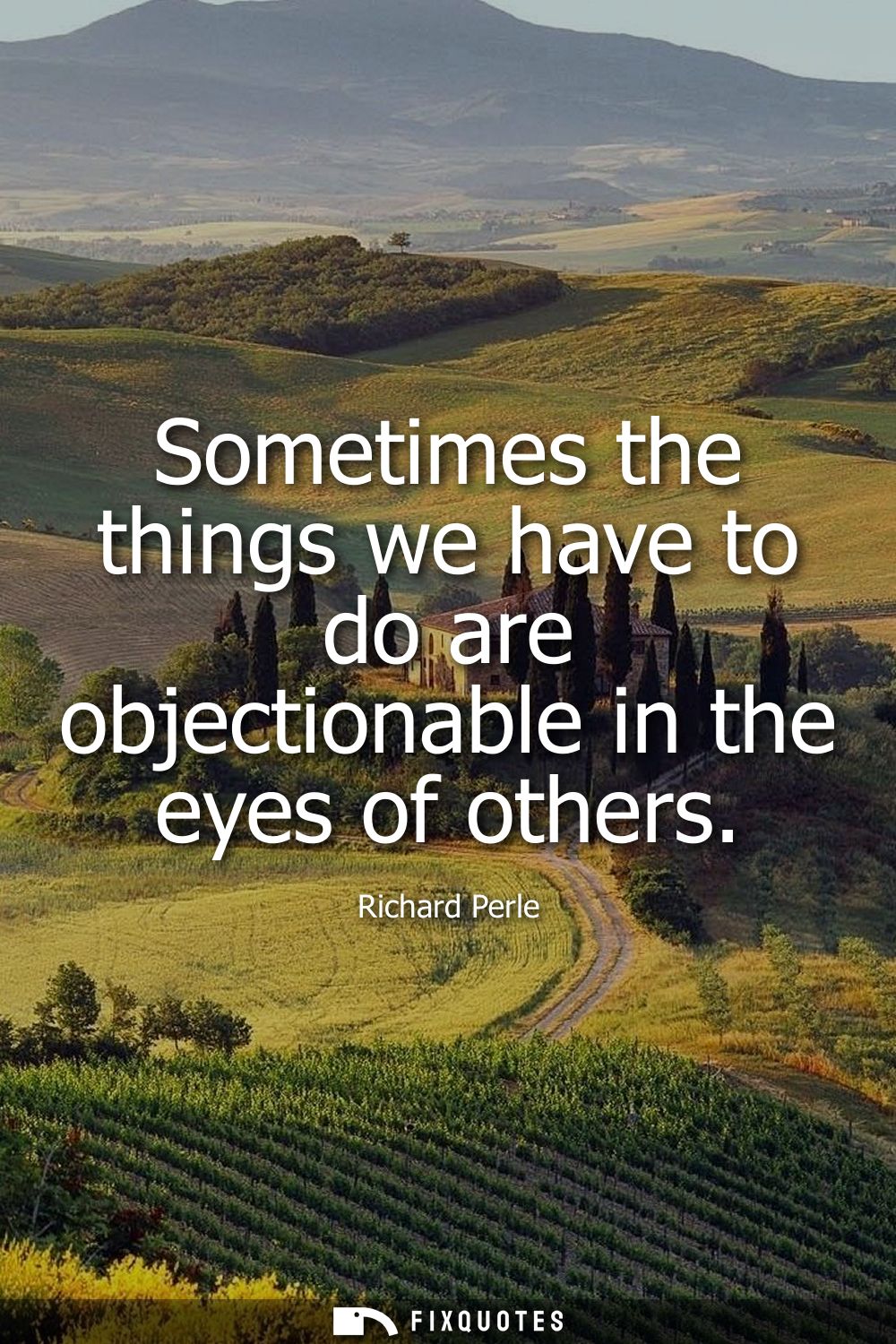
"Sometimes the things we have to do are objectionable in the eyes of others"
About this Quote
A line like this is how power asks to be forgiven in advance. Richard Perle, a national security insider best known for hardline arguments around American force and post-9/11 policy, frames controversy not as a warning sign but as background noise: other people will object; the job remains. The elegance is in its vagueness. "Things we have to do" turns choices into obligations, sanding off agency and, with it, accountability. It is the grammar of inevitability.
"Objectionable in the eyes of others" finishes the maneuver. The moral charge is relocated from the act to the audience: disapproval becomes a matter of perspective, almost aesthetics, rather than an indictment grounded in law, evidence, or consequences. It also draws a boundary around who's allowed to count as "others". In Perle's world, critics are frequently outsiders to the real work - naive liberals, foreign publics, even allies - people with clean hands because they don't have to make decisions.
The intent is partly pragmatic: reassure a policymaking class that backlash is the price of seriousness. The subtext is more revealing: if you're inside the room, your discomfort is a luxury; if you're outside, your outrage is a misunderstanding. In the context of American interventionism, this sentence reads like a preemptive defense of covert action, aggressive war planning, and collateral damage - not by denying harm, but by suggesting harm is sometimes the cost of protecting a larger order. It's an argument designed to keep the operator feeling righteous while everyone else is left arguing with a shrug.
"Objectionable in the eyes of others" finishes the maneuver. The moral charge is relocated from the act to the audience: disapproval becomes a matter of perspective, almost aesthetics, rather than an indictment grounded in law, evidence, or consequences. It also draws a boundary around who's allowed to count as "others". In Perle's world, critics are frequently outsiders to the real work - naive liberals, foreign publics, even allies - people with clean hands because they don't have to make decisions.
The intent is partly pragmatic: reassure a policymaking class that backlash is the price of seriousness. The subtext is more revealing: if you're inside the room, your discomfort is a luxury; if you're outside, your outrage is a misunderstanding. In the context of American interventionism, this sentence reads like a preemptive defense of covert action, aggressive war planning, and collateral damage - not by denying harm, but by suggesting harm is sometimes the cost of protecting a larger order. It's an argument designed to keep the operator feeling righteous while everyone else is left arguing with a shrug.
Quote Details
| Topic | Ethics & Morality |
|---|
More Quotes by Richard
Add to List