"The baritone can serve functions that the alto and tenor cannot, in orchestral voicing"
About this Quote
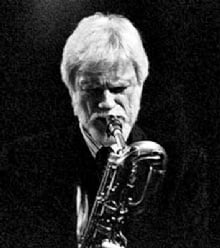
Gerry Mulligan, a distinguished baritone saxophonist, understood the distinct function that the baritone saxophone plays in orchestral and ensemble settings. When he states, "The baritone can serve functions that the alto and tenor can not, in orchestral voicing", he is highlighting the distinctive contributions the baritone saxophone can make within a musical ensemble.
Initially, the baritone saxophone inhabits a lower register than both the alto and tenor saxophones. This permits it to provide a foundational layer to the noise of an ensemble, similar to the double bass or tuba. In orchestral voicing, this lower register is vital since it helps to balance the brighter and higher noises of instruments generally found in the alto and tenor varieties. The baritone sax can strengthen bass lines, improve harmonic richness, and add depth to the overall texture of the music.
Additionally, the baritone's rich tone provides it an unique capability to mix with other instrument sections, such as the brass and low woodwinds. It can function as a bridge between the woodwind and brass sections, improving the cohesion of the ensemble's sound. This bridging capability is less pronounced with the alto or tenor saxophones, which may mix more clearly with a narrow variety of instruments.
In addition, the baritone saxophone can assume diverse functions that surpass support. It can function as a solo instrument, supplying melodic lines with a robust character that differs from the brighter tones of the alto and tenor. Mulligan himself was renowned for making use of the baritone in this way, showcasing its melodic potential in jazz settings.
In summary, Mulligan's quote underscores the flexibility and integral function of the baritone saxophone in orchestral voicing. Its ability to supply foundational assistance, mix uniquely with other instruments, and serve as an effective solo instrument enables it to fulfill functions that the alto and tenor saxophones can not, making it an important aspect of musical ensembles.
About the Author