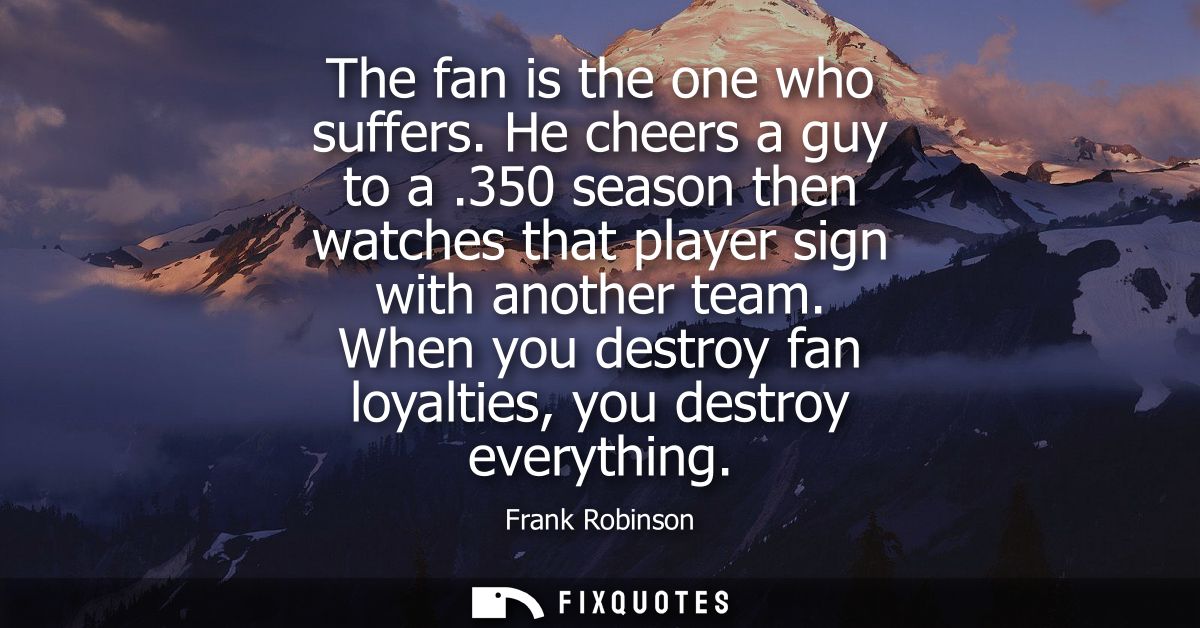
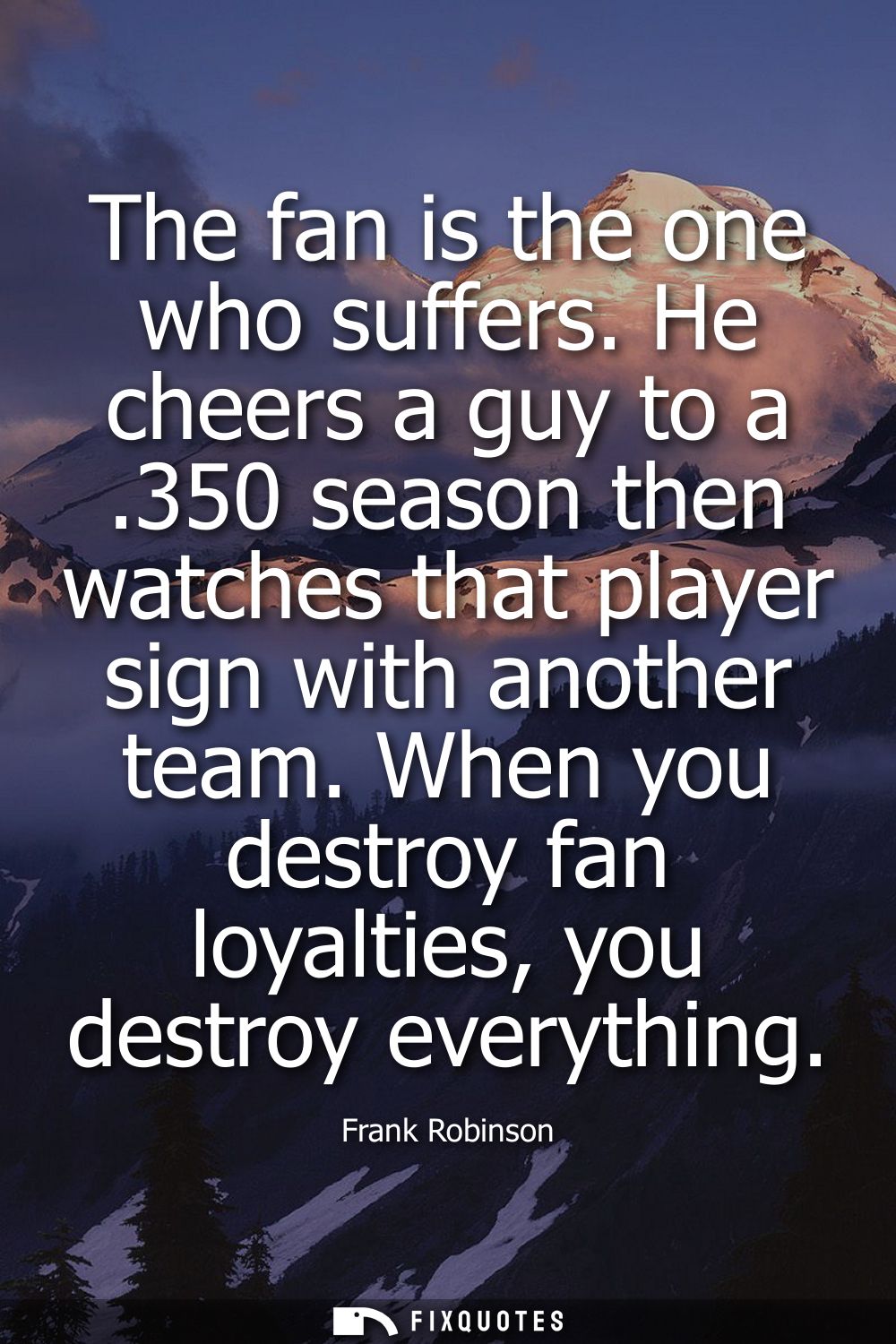
"The fan is the one who suffers. He cheers a guy to a .350 season then watches that player sign with another team. When you destroy fan loyalties, you destroy everything"
About this Quote
Frank Robinson speaks to the quiet heartbreak at the core of modern sports. The fan invests years of attention, money, and identity in a uniform and the person wearing it, only to see that bond severed when a star departs. A .350 season signals more than excellence; it is the kind of year that forges myth. To watch that player sign elsewhere makes the devotion feel transactional. The warning is stark: when the bond between community and club is treated as disposable, the entire enterprise frays.
Robinson understood the business from every angle. A Hall of Famer who was traded from Cincinnati to Baltimore and later became the first Black manager in Major League Baseball, he straddled the reserve-clause era and the dawn of free agency. He experienced both the constraints on player mobility and the upheaval once players gained leverage. His perspective does not deny players their rights; it spotlights the cost when churn becomes the norm. The fan has the least power yet bears the most emotional risk. The .350 image underscores the asymmetry: fans help create value through their loyalty, then see that value leave.
The broader point is about narrative continuity and civic meaning. Sports are sustained by rituals, shared memories, and the feeling that a team embodies a place. Constant turnover erodes that identity, flattening seasons into a series of transactions. Owners may gain flexibility and players may maximize earnings, but if supporters stop believing that a jersey stands for something stable, attendance, TV interest, and cultural relevance suffer. Sustainable success requires a balance: player freedom alongside organizational commitment to continuity, honest communication, and investment in homegrown cores. Without that, the game loses its story, and with it the reason people care. Destroy fan loyalties, and you do not just lose a season; you hollow out the heart that keeps the sport alive.
Robinson understood the business from every angle. A Hall of Famer who was traded from Cincinnati to Baltimore and later became the first Black manager in Major League Baseball, he straddled the reserve-clause era and the dawn of free agency. He experienced both the constraints on player mobility and the upheaval once players gained leverage. His perspective does not deny players their rights; it spotlights the cost when churn becomes the norm. The fan has the least power yet bears the most emotional risk. The .350 image underscores the asymmetry: fans help create value through their loyalty, then see that value leave.
The broader point is about narrative continuity and civic meaning. Sports are sustained by rituals, shared memories, and the feeling that a team embodies a place. Constant turnover erodes that identity, flattening seasons into a series of transactions. Owners may gain flexibility and players may maximize earnings, but if supporters stop believing that a jersey stands for something stable, attendance, TV interest, and cultural relevance suffer. Sustainable success requires a balance: player freedom alongside organizational commitment to continuity, honest communication, and investment in homegrown cores. Without that, the game loses its story, and with it the reason people care. Destroy fan loyalties, and you do not just lose a season; you hollow out the heart that keeps the sport alive.
Quote Details
| Topic | Sports |
|---|
More Quotes by Frank
Add to List