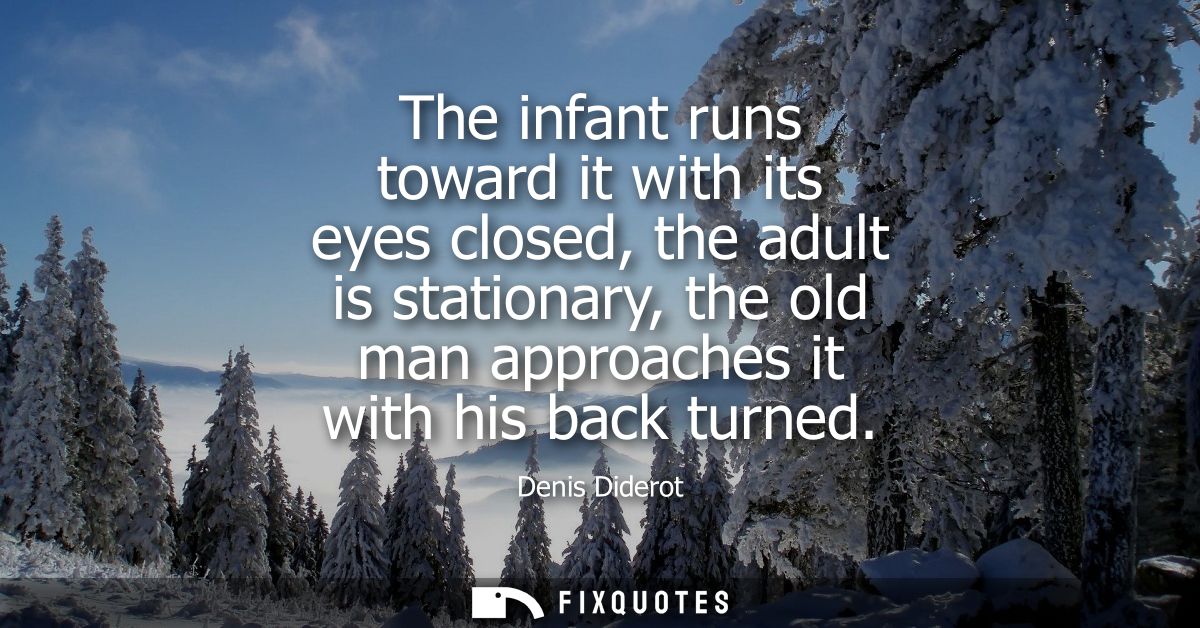
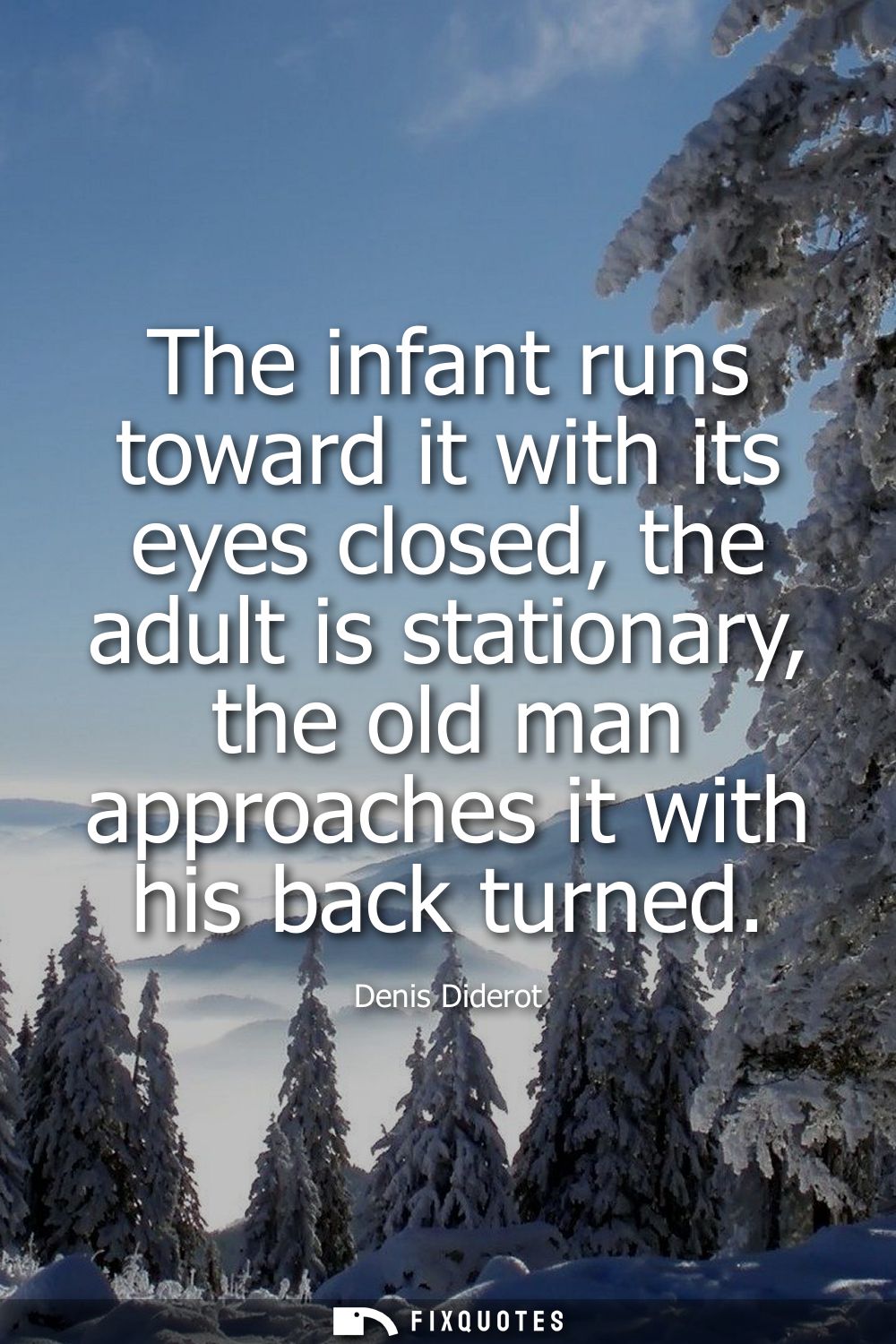
"The infant runs toward it with its eyes closed, the adult is stationary, the old man approaches it with his back turned"
About this Quote
Then the cruelest turn: the old man "approaches it with his back turned". Age brings motion back, but it is motion oriented toward the past. You move closer to the object (death, truth, happiness, meaning - Diderot keeps it deliberately undefined) while refusing to face it. The back turned suggests denial, nostalgia, or the asymmetry of time: you can only understand life in retrospect, yet you cannot re-enter it.
As an editor and encyclopedist, Diderot was obsessed with how humans misread their own condition, how institutions train us to confuse caution with wisdom. The line works because it indicts every stage at once. It offers no heroic arc, just the comedy of self-deception: youth blind, adulthood immobilized, old age advancing in reverse, like progress itself when it forgets to look where it s going.
Quote Details
| Topic | Mortality |
|---|---|
| Source | Help us find the source |
| Cite | Cite this Quote |
Citation Formats
APA Style (7th ed.)
Diderot, Denis. (2026, January 15). The infant runs toward it with its eyes closed, the adult is stationary, the old man approaches it with his back turned. FixQuotes. https://fixquotes.com/quotes/the-infant-runs-toward-it-with-its-eyes-closed-145810/
Chicago Style
Diderot, Denis. "The infant runs toward it with its eyes closed, the adult is stationary, the old man approaches it with his back turned." FixQuotes. January 15, 2026. https://fixquotes.com/quotes/the-infant-runs-toward-it-with-its-eyes-closed-145810/.
MLA Style (9th ed.)
"The infant runs toward it with its eyes closed, the adult is stationary, the old man approaches it with his back turned." FixQuotes, 15 Jan. 2026, https://fixquotes.com/quotes/the-infant-runs-toward-it-with-its-eyes-closed-145810/. Accessed 4 Feb. 2026.