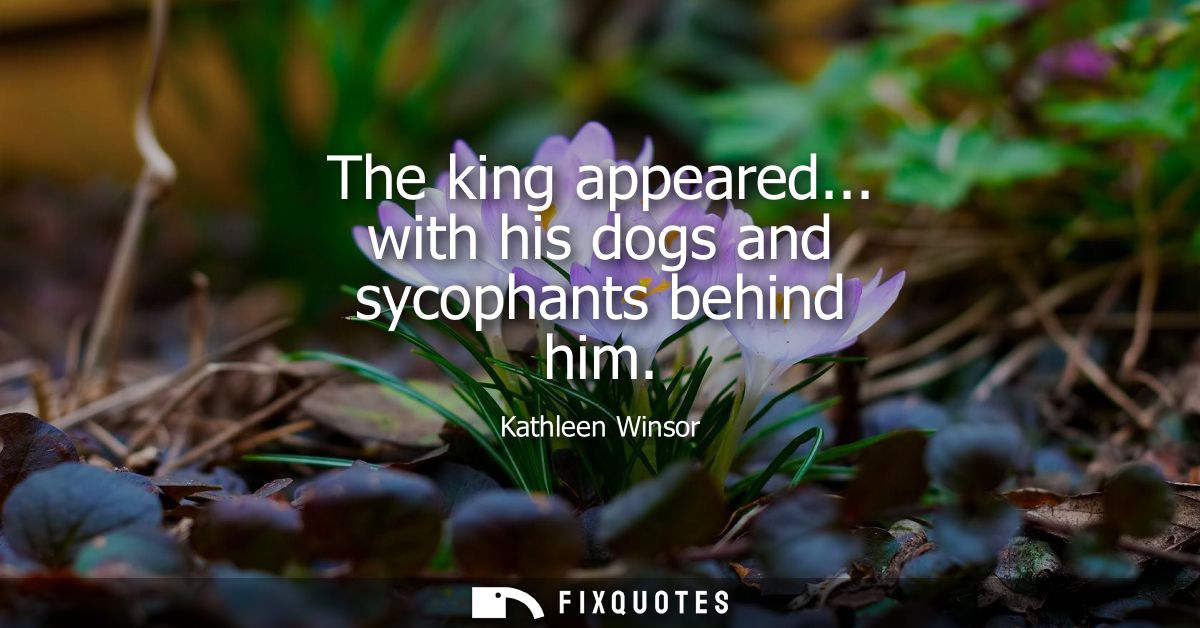
"The king appeared... with his dogs and sycophants behind him"
About this Quote
Power often draws a retinue, both literal and figurative. The image of the king arriving, trailed by his dogs and sycophants, reveals complexities of leadership and the isolating forces that encircle those at the top. The dogs suggest loyalty, but such loyalty is instinctual, perhaps unthinking, animals that follow their master out of habit, affection, or dependence. In contrast, the sycophants embody self-interest disguised as devotion, individuals whose allegiance is contingent on their own gain. The juxtaposition of these two groups behind the king highlights the dual burden of any ruler: reliance on those who follow from obligation or necessity and those who follow for the spoils of proximity to power.
Such a procession tells a deeper story about the environment surrounding rulers. Genuine perspectives or honesty become rarities; flatterers and opportunists set the tone, shaping the king’s perception of himself and his reign. The phrase "with his dogs and sycophants behind him" cuts through the grandeur that might otherwise be ascribed to monarchy. Rather than a solitary, noble figure, the king is portrayed as the center of a crowd, perhaps even weighed down or distorted by their presence. The dogs and sycophants alike are ever-watchful of their status, acting as shadows who echo, reinforce, or strategically challenge the king only when it suits their needs. The king’s actual authority is complicated by the constant undercurrent of manipulation, dependence, and sometimes exploitation from those within arm’s reach.
The trail of followers questions the authenticity of loyalty, forcing a reflection on the dangers of leadership: isolation, manipulation, and the challenge of discerning true friends from self-interested followers. In this view, the image captures not only the external spectacle of power but also the profound loneliness and vulnerability that can haunt those who rule.
About the Author