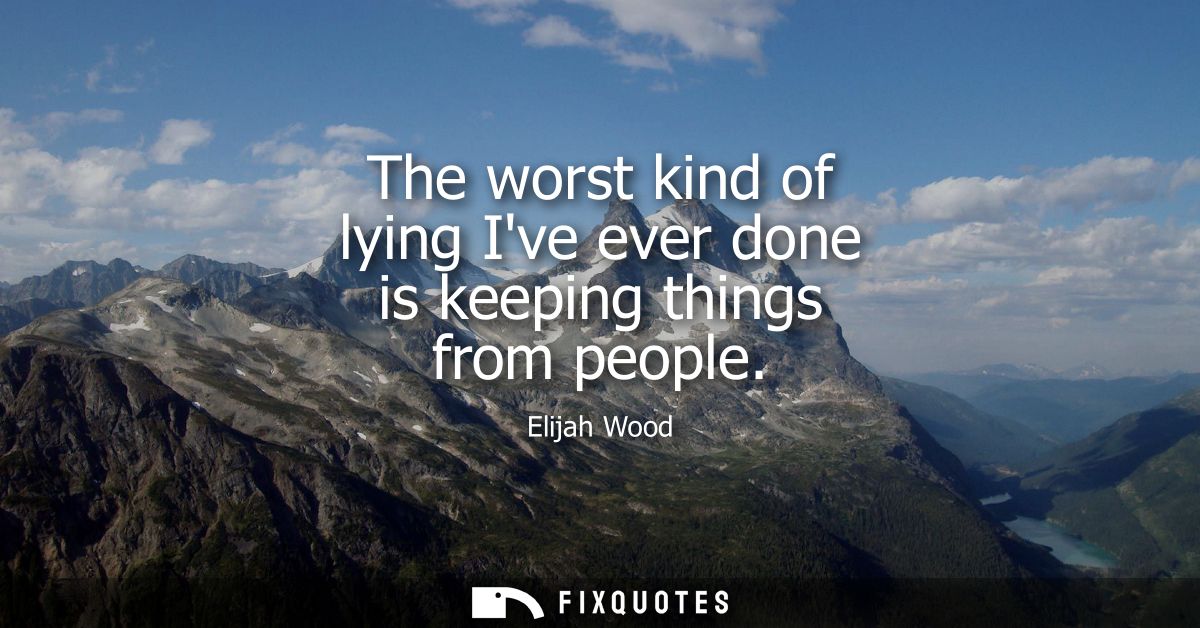
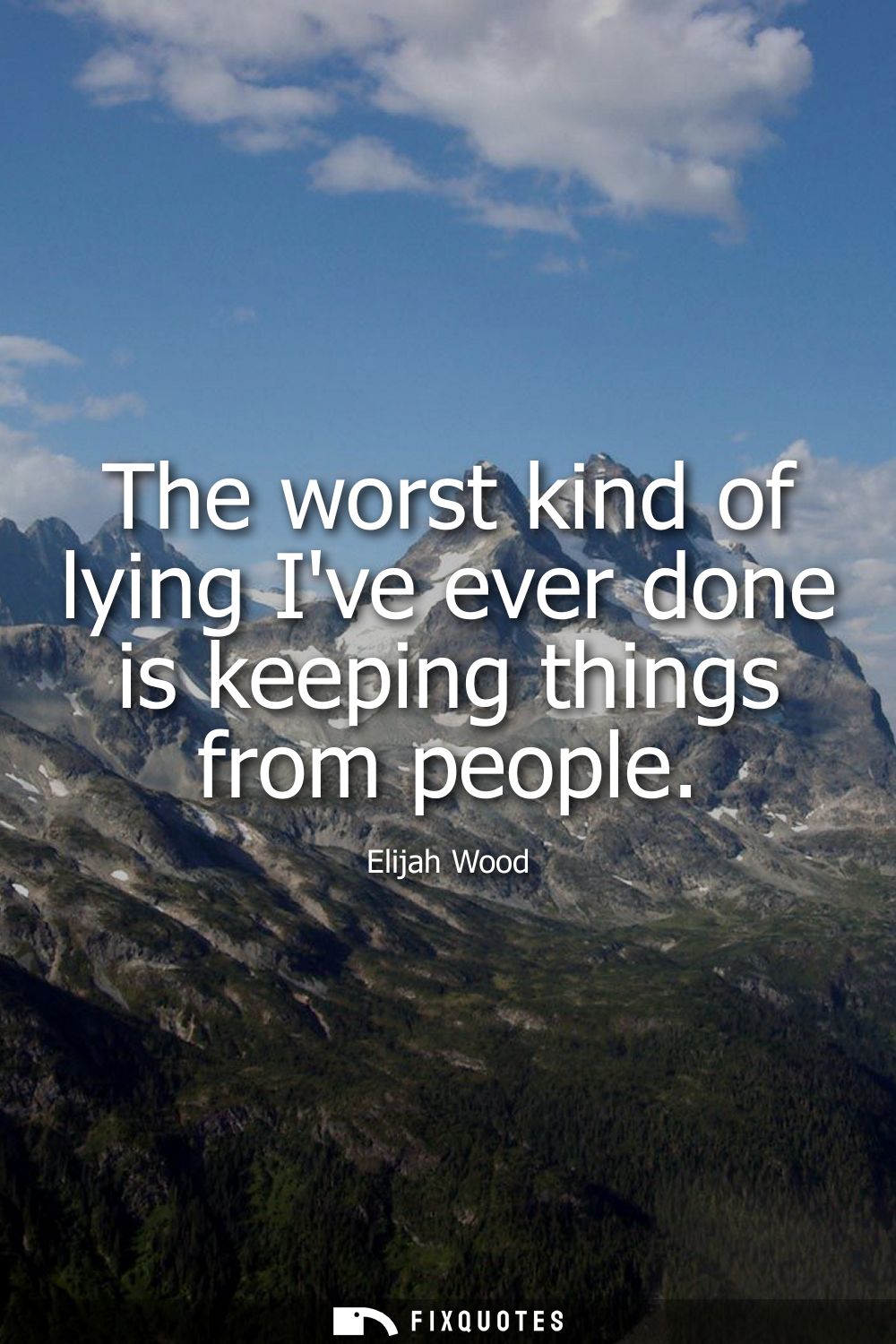
"The worst kind of lying I've ever done is keeping things from people"
About this Quote
Elijah Wood lands on a uncomfortable truth actors know better than most: deception isn’t always a flashy invention, it’s often an edit. By calling omission his “worst kind of lying,” he flips the usual moral hierarchy. We tend to treat silence as the gentler option - less messy than a fabricated story, easier to justify as “protecting” someone. Wood’s phrasing refuses that loophole. “Keeping things from people” isn’t passive; it’s an action with a cost. The harm comes from control: deciding what someone else gets to know, and therefore how they’re allowed to feel and respond.
The intent reads less like a confession of scandal than a small ethical manifesto about relationships under pressure. For a public figure, withholding can feel like survival. Privacy is currency, and publicity is a machine that rewards oversharing while punishing vulnerability. In that context, omission becomes habitual, even professionalized: managing narratives, deflecting questions, curating a persona. Wood’s line quietly admits the psychological toll of that habit when it leaks into real life.
The subtext is guilt mixed with clarity. He’s naming the specific way people rationalize avoidance - “I just didn’t tell them” - and tagging it as lying anyway. It works because it’s plainspoken and personal, not performatively wise. There’s no grand moralism, just a clean, modern reframe: the lie isn’t the fake thing you say; it’s the reality you deny someone access to.
The intent reads less like a confession of scandal than a small ethical manifesto about relationships under pressure. For a public figure, withholding can feel like survival. Privacy is currency, and publicity is a machine that rewards oversharing while punishing vulnerability. In that context, omission becomes habitual, even professionalized: managing narratives, deflecting questions, curating a persona. Wood’s line quietly admits the psychological toll of that habit when it leaks into real life.
The subtext is guilt mixed with clarity. He’s naming the specific way people rationalize avoidance - “I just didn’t tell them” - and tagging it as lying anyway. It works because it’s plainspoken and personal, not performatively wise. There’s no grand moralism, just a clean, modern reframe: the lie isn’t the fake thing you say; it’s the reality you deny someone access to.
Quote Details
| Topic | Honesty & Integrity |
|---|
More Quotes by Elijah
Add to List