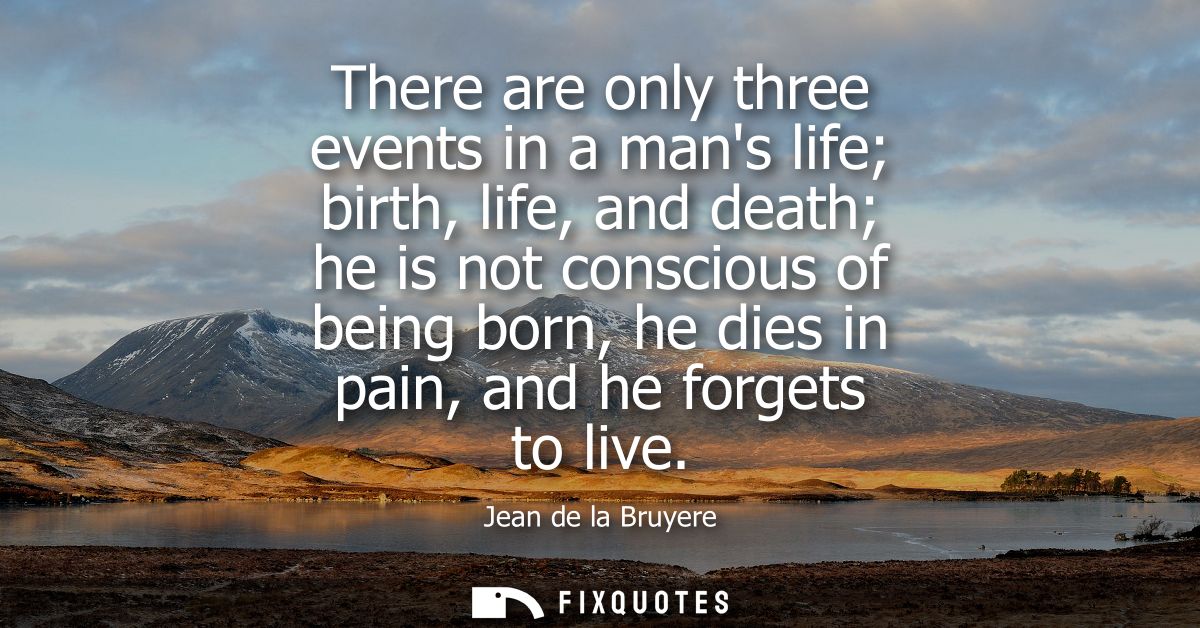
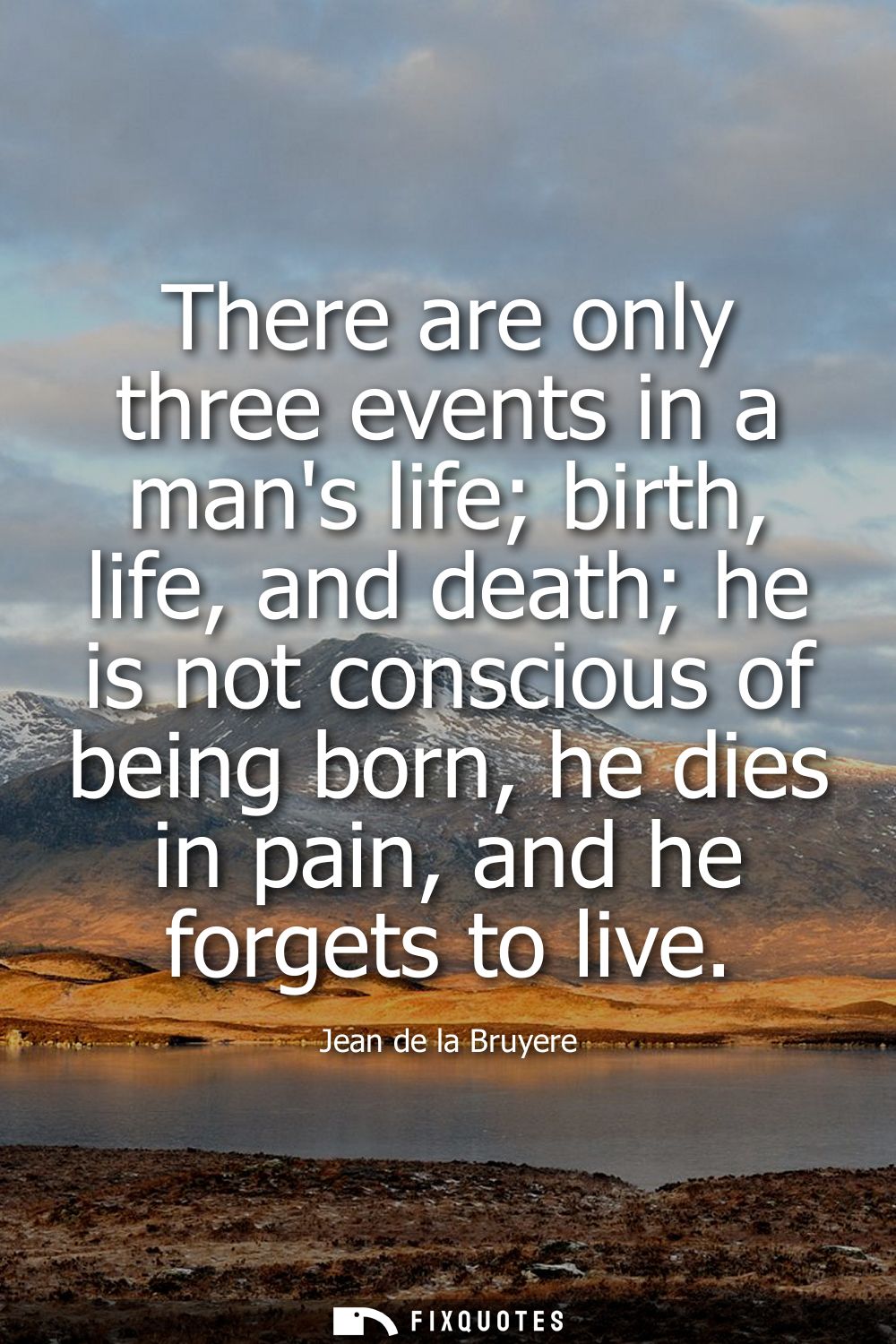
"There are only three events in a man's life; birth, life, and death; he is not conscious of being born, he dies in pain, and he forgets to live"
About this Quote
A neat little guillotine of a sentence: La Bruyere reduces the grand drama of a human existence to three beats, then shows how we botch all of them. The structure is the trick. First, it sounds like a tidy, almost comforting taxonomy - birth, life, death - the kind of aphorism that pretends to offer order. Then he flips it into an indictment. Birth is an event we cannot even witness; death is an event we cannot escape feeling; life, the only stretch where agency might exist, is the one we habitually misplace.
The subtext is moral, but it is not pious. La Bruyere is writing as a keen observer of manners in late 17th-century France, where courtly performance, status anxiety, and social theater could swallow whole days and whole selves. "He forgets to live" lands as a critique of people so busy managing reputation, etiquette, and ambition that they outsource their own existence. Life becomes administration: of appearances, of grievances, of future plans.
The line also smuggles in a darker irony about consciousness. We miss the beginning, we suffer the end, and in the middle we drift - distracted, anesthetized, or obediently occupied. It's cynical, but not nihilistic: the sting is meant to wake you up. If the only fully ours is the "life" portion, then forgetting it is not tragedy by fate; it's failure by habit.
The subtext is moral, but it is not pious. La Bruyere is writing as a keen observer of manners in late 17th-century France, where courtly performance, status anxiety, and social theater could swallow whole days and whole selves. "He forgets to live" lands as a critique of people so busy managing reputation, etiquette, and ambition that they outsource their own existence. Life becomes administration: of appearances, of grievances, of future plans.
The line also smuggles in a darker irony about consciousness. We miss the beginning, we suffer the end, and in the middle we drift - distracted, anesthetized, or obediently occupied. It's cynical, but not nihilistic: the sting is meant to wake you up. If the only fully ours is the "life" portion, then forgetting it is not tragedy by fate; it's failure by habit.
Quote Details
| Topic | Meaning of Life |
|---|
More Quotes by Jean
Add to List